
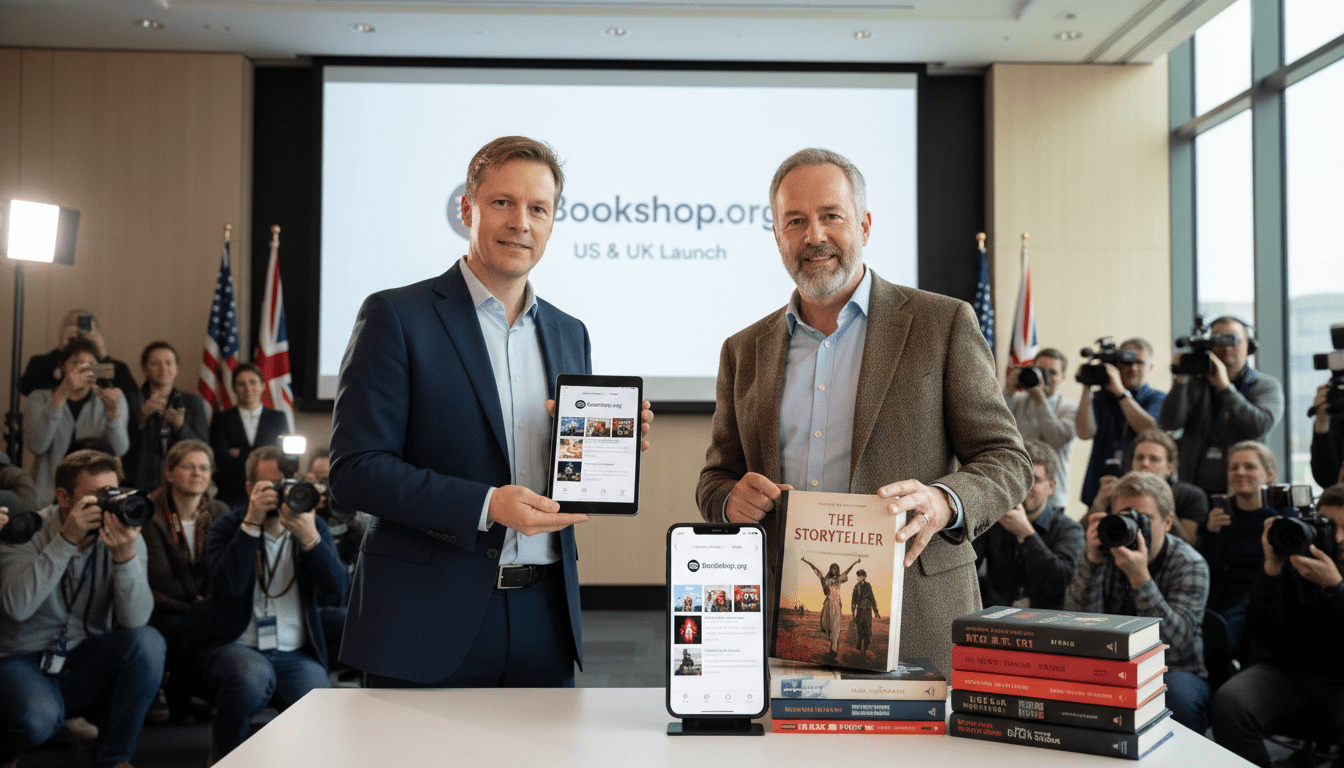
Spotify launches physical book sales in U.S. and U.K., partnering with Bookshop.org
Spotify launches physical book sales in the U.S. and U.K., partnering with Bookshop.org and rolling out Page Match, audiobooks recaps and new charts worldwide.
Spotify launches physical book sales in U.S. and U.K.
Spotify has begun selling physical books through its app in the United States and the United Kingdom, marking a notable expansion beyond digital audio. The move, announced this week, adds a “Get a copy for your bookshelf” option on audiobook pages to link customers to purchase physical editions. This step positions Spotify’s platform as a broader marketplace for book discovery and purchase, integrating commerce into its audio-first ecosystem.
Bookshop.org partnership handles inventory and supports indies
The company is partnering with Bookshop.org to manage pricing, inventory and shipping for physical book purchases made through Spotify. Bookshop.org is an online marketplace that directs proceeds to independent bookstores, giving the tie-up a local-retailer focus rather than a direct challenge to brick-and-mortar partners. When users tap the new button on an audiobook page, they are routed to Bookshop.org to complete the transaction, keeping fulfillment and merchant responsibilities outside Spotify’s core systems.
Android users see the feature first; iOS arrival imminent
The physical book purchase option is available now on Android devices, with Spotify stating that iOS support will follow next week. Launching on Android first allows Spotify to refine the user flow before a staggered iOS rollout, where platform policies and app-store constraints can require additional approvals. Early adopters on Android will therefore be the first to test the checkout pathway and any continuity features that tie purchases back to users’ audiobook libraries.
Page Match expansion aims to bridge print and audio
Spotify has expanded its Page Match feature to support more than 30 additional languages, including French, German and Swedish, enabling users to scan a page from a print or e-book and be directed to the matching section in the audiobook. Since its English-language debut in February, Spotify reports Page Match users stream roughly 55% more audiobook hours per week than other listeners. The company also says 62% of titles matched through the feature were books that those users had never streamed previously, underscoring the tool’s discovery potential.
Audiobook Recaps and charts arrive to boost re-engagement
Alongside physical book sales and Page Match, Spotify has rolled out Audiobook Recaps on Android to help listeners return to a story with short, context-aware audio summaries. The company argues these recaps make it easier for listeners to resume longer works after breaks, improving retention and engagement. Spotify has also extended its Audiobook Charts to Germany, complementing earlier rollouts in the U.S. and the U.K., and providing a new editorial and data-driven path for users to find trending titles.
Strategic push ties to profitability and broader content play
Industry observers view the expansion into physical books and enhanced audiobook features as part of Spotify’s wider strategy to diversify revenue and increase per-user value. The company has been raising subscription prices across markets and is emphasizing features that drive engagement across its music, podcast and audiobook verticals. Spotify’s reach—now measured in hundreds of millions of monthly active listeners—gives it leverage to cross-promote content and merchandise in ways pure-play bookstores or audio platforms cannot easily match.
Spotify reported a surge in monthly active listeners in recent quarters, a figure the company highlights as a reason it can now test commerce features like physical book sales at scale. The integration with Bookshop.org also reduces fulfillment complexity while allowing Spotify to claim a role in the physical book market without building a logistics backbone from scratch.
Market reaction and potential friction with booksellers
Publishers and booksellers may watch closely to see whether Spotify’s model supplements or competes with existing retail channels. By funneling purchases through Bookshop.org, the initiative preserves a linkage to independent sellers, but larger retailers and some publishers could regard the move as an expansion of Spotify’s influence in book discovery. For readers, the convenience of buying a physical copy directly from an audiobook page could shorten the path from discovery to purchase, but the long-term commercial balance among streaming, e-commerce and traditional retail remains to be tested.
Final paragraph without title
As Spotify extends its audiobook tools and now offers physical book purchases, the company is reshaping how audio discovery can translate into tangible sales and renewed engagement with longer-form content. The coming weeks—particularly the iOS launch and further regional availability of charts and Page Match—will show whether these integrations boost listening time and retail conversions enough to justify a broader bookstore strategy.
