
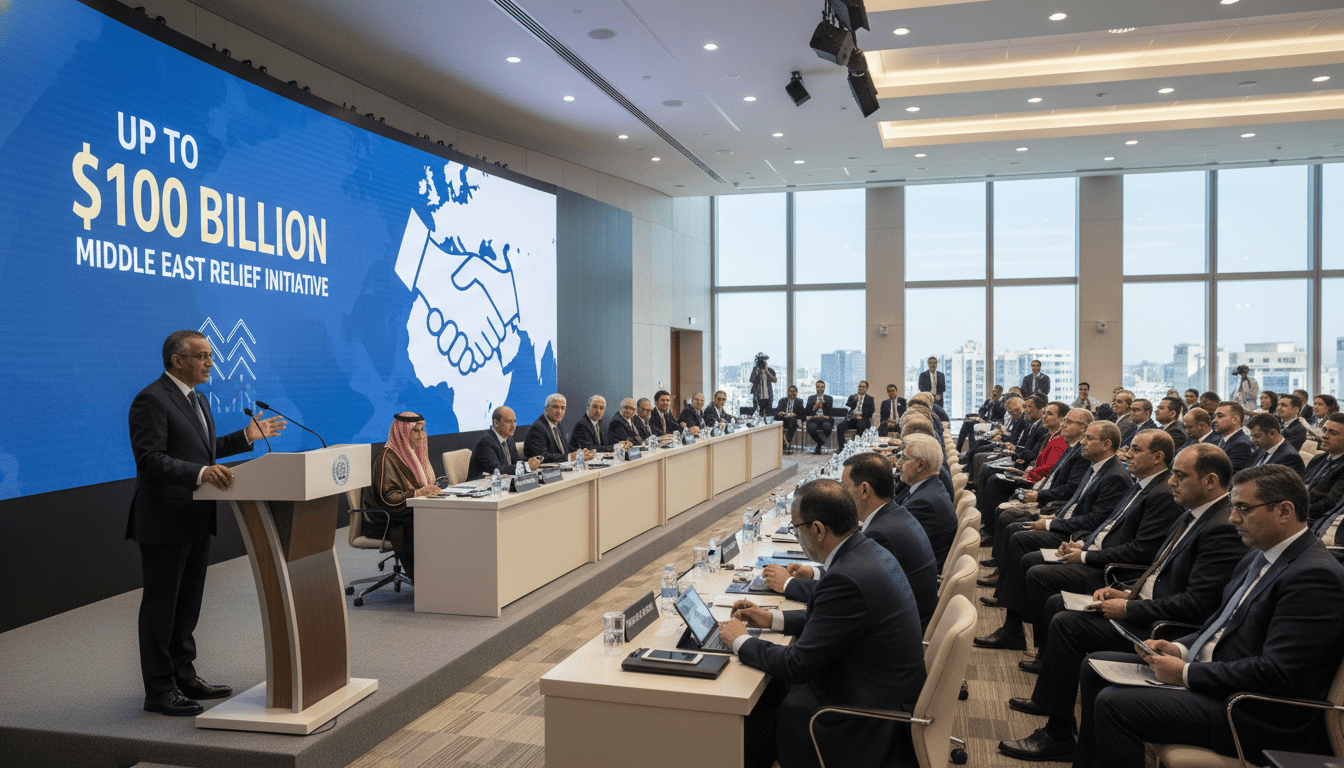
World Bank Mobilizes Up to $100 Billion to Support Countries Hit by Middle East War
World Bank mobilizes up to $100 billion to support countries hit by the Middle East war, pledging $20–25bn immediately and warning of major job and food security risks.
The World Bank announced plans to mobilize between $80 billion and $100 billion over the next 15 months to help countries most affected by the war in the Middle East. World Bank President Ajay Banga made the pledge at the spring meetings of the World Bank and International Monetary Fund, saying the package is intended to blunt the conflict’s economic fallout. The announcement positions the coordinated relief effort as the largest crisis response by the institution since the COVID-19 period.
Scope and Size of the World Bank Package
The World Bank’s commitment would exceed the roughly $70 billion of support mobilized during the coronavirus pandemic, signaling a larger-scale fiscal intervention. Officials framed the package as a mix of new financing, front-loaded access to existing pledges and reallocation of current programs. Banga emphasized the need for rapid support to stabilize economies facing acute balance-of-payments and fiscal pressures.
Officials said the full envelope — $80–100 billion — would be made available over about 15 months, with some funds moving faster than others. The approach pairs immediate liquidity with medium-term adjustments to ongoing lending programs. Donors and client countries were described as key partners in implementing the plan quickly and effectively.
Immediate Disbursements and Access to Funds
World Bank leadership indicated that an initial tranche of $20–25 billion could be disbursed in the coming months to governments and fragile economies facing urgent needs. The institution also agreed to allow affected countries to draw up to 10 percent of previously committed assistance earlier than scheduled, improving near-term access to cash. In roughly six months, reallocation of existing programs could free another $30–40 billion, according to the bank’s outline.
Executives cautioned, however, that the remaining sums would take longer to mobilize, depending on budgetary adjustments and the availability of concessional resources. The staggered timetable reflects both the scale of the package and the complexities of converting pledges into on-the-ground support. World Bank staff were tasked with preparing operational plans to speed approvals and deployment.
Economic Risks Highlighted by IMF and Bank Directors
The International Monetary Fund has already revised global growth projections downward amid the regional conflict, reflecting higher energy costs and supply disruptions. IMF Managing Director Kristalina Georgieva warned that a short, contained conflict could leave room for a swift recovery, but a protracted war through the summer would deepen global economic stress. Both the IMF and World Bank argued that international coordination will be essential to contain spillovers into trade, finance and commodity markets.
World Bank Board Chair Paschal Donohoe and other directors underscored the potential for a broad economic shock that would hit emerging and low-income countries hardest. They pointed to pressure on fiscal accounts, rising import bills and increased cost-of-living pressures as channels through which the crisis could erode development gains. The bank urged policymakers to prioritize interventions that protect vulnerable populations while preserving macroeconomic stability.
Projected Job Losses and Rising Food Insecurity
The World Bank warned that millions of jobs are at risk as supply chains and commodity markets adjust to the conflict, with the board noting estimates of up to 15 million potential job losses in affected regions. Observers from the United Nations World Food Programme have also signaled a sharp rise in hunger, estimating that tens of millions more people could face food insecurity by mid-2026 if conditions worsen. Those assessments underline the humanitarian as well as economic stakes of the crisis.
Higher energy and fertilizer prices, disrupted shipping routes and weaker currencies in import-dependent countries were named as drivers of reduced food availability and affordability. Aid agencies and development banks are preparing to scale emergency food assistance alongside broader fiscal and social measures. Officials emphasized that without timely help, gains in poverty reduction could be reversed in several vulnerable countries.
Guidance on How Aid Should Be Delivered
World Bank and IMF leaders stressed that new assistance must be targeted, time-limited and designed to limit inflationary spillovers. Both Ajay Banga and Kristalina Georgieva warned against broad-based subsidies that, while politically attractive, could fuel inflation and erode fiscal capacity. The institutions recommended focused transfers to the poorest households, short-term livelihood support and temporary measures to stabilize essential markets.
The guidance also called for strengthening transparency and monitoring to ensure funds reach those in need and to preserve donor confidence. Conditionality and program design were framed as tools to balance urgent relief with longer-term fiscal sustainability. Officials said that tailored solutions would be required depending on country circumstances, including access to concessional finance where possible.
Comparison with Pandemic-Era Support and Next Steps
Officials compared the proposed response to the World Bank’s pandemic-era interventions, noting the new package would be larger and more complex in composition. During COVID-19, roughly $70 billion was mobilized, largely through emergency financing and debt relief instruments. The current plan intends to leverage a wider array of instruments and to accelerate access for the most exposed nations.
Over the coming weeks the World Bank will work with shareholders, the IMF and recipient governments to finalize operational details and financing sources. Donor contributions, reprogramming of existing funds and market-based mobilization are all expected to play roles in filling the envelope. The speed and effectiveness of that process will determine whether the promised support can blunt the most severe economic and humanitarian consequences.
The World Bank’s announcement marks a significant escalation in international financial support tied to the Middle East conflict, and policymakers will face pressure to convert pledges into timely relief while managing inflationary and fiscal risks.
