
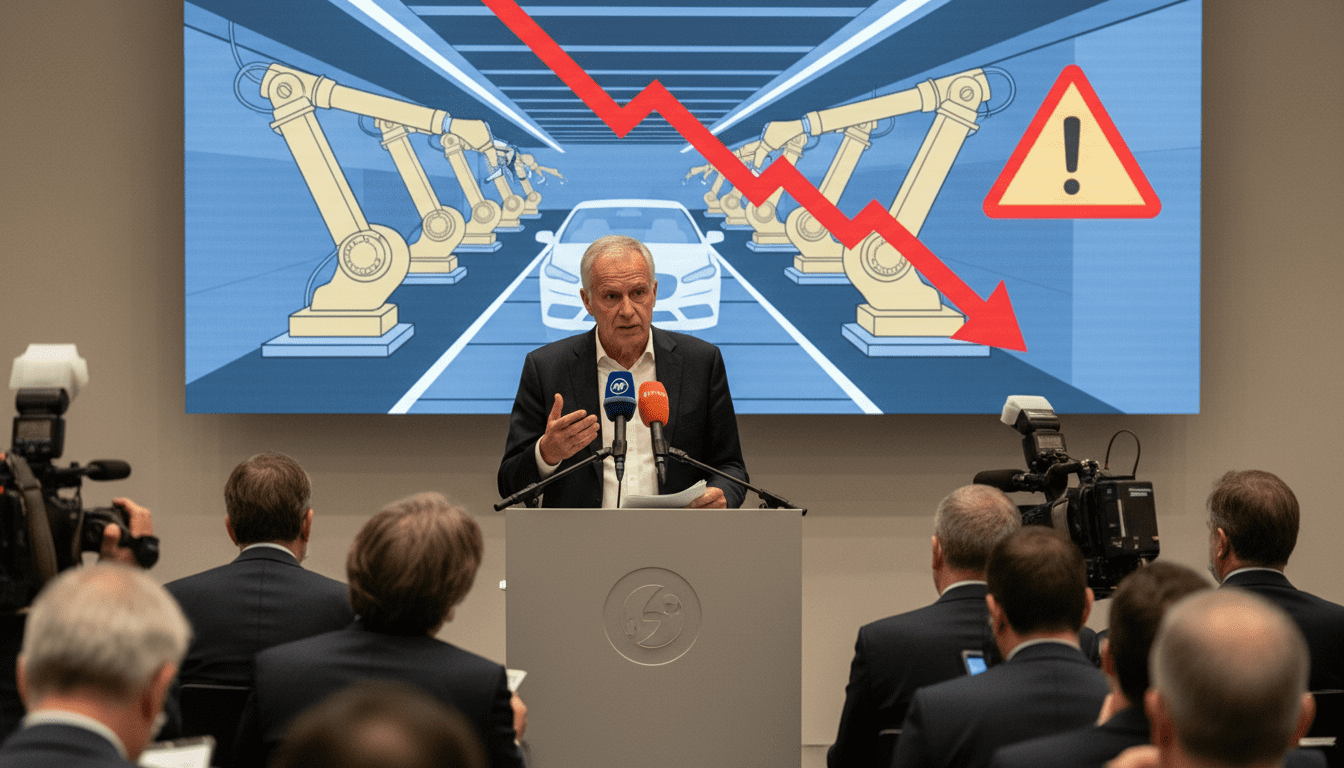
AI and automation are reshaping work, but jobs won’t disappear, sociologist says
Sociologist Florian Butollo warns that AI and automation are changing tasks and increasing workloads, yet they are not erasing demand for labor; effects will ripple across logistics and manufacturing.
The surge of AI and automation in advanced manufacturing and logistics is transforming how work is organized while leaving persistent demand for people in place. Experts say the auto sector has led the wave of mechanization, but warehouses and delivery networks are now seeing similar investments that change job content rather than eliminate all positions. Florian Butollo, a sociologist who studies labour and technology, argues that the net effect is a redistribution of work and responsibilities rather than wholesale unemployment.
Automation Highest in Auto Industry
In recent years the automotive sector has demonstrated the deepest integration of robotics, machine vision and process automation, concentrated in assembly lines and component production. Investment in automated systems has accelerated efficiency and precision, but it has also created new technical roles for maintenance, programming and quality assurance. Manufacturers say automation raises output per worker, yet factories still require sizable human crews to manage exceptions, logistics and downstream tasks.
Butollo: Workload Is Rising Not Disappearing
Butollo contends that AI and automation often increase the intensity and scope of remaining jobs, shifting human labor toward monitoring, exception handling and rapid problem-solving. Workers frequently face higher throughput expectations and tighter schedules because automated systems raise baseline capacity and create new coordination needs. The sociologist emphasizes that this dynamic explains why unemployment has not surged in many sectors even as technology adoption grows.
Employers Struggle to Fill Vacancies Despite Modernisation
Companies report widespread vacancies even as they deploy advanced machinery, pointing to a structural mismatch between available skills and employer requirements. Recruiters cite shortages of technicians fluent in industrial IT, robotics maintenance and data analytics alongside declining interest in physically demanding or poorly paid roles. Demographic trends and regional imbalances further compound the problem, leaving firms with automated capacity but insufficient staff to operate or scale it safely.
Logistics and Retail Face Delivery Slowdowns
Rising automation in warehouses and last-mile operations is altering logistics workflows, but experts warn consumers may still see slower or less predictable deliveries during the transition. As firms reconfigure processes and retrain employees, temporary bottlenecks can occur, and human labor remains essential for non-routine handling and customer-facing tasks. Observers note that popular online retailers may need to adjust lead times and stock strategies as both automation and labour shortages reshape fulfillment networks.
Industry Investment Is Creating New Occupations
Rather than canceling jobs outright, investment in AI and automation is spawning roles in systems integration, predictive maintenance and human-machine collaboration. Employers are increasingly hiring engineers, data specialists and technicians while upskilling existing staff to oversee intelligent equipment. Company statements and hiring data indicate that while some manual tasks contract, job opportunities concentrate in hybrid positions that combine technical expertise with domain knowledge.
Policy and Training Measures Urgent, Experts Advise
Policymakers and industry groups are being urged to accelerate vocational training, apprenticeships and on-the-job reskilling programs to align workforce capabilities with automated workplaces. Analysts recommend targeted subsidies for retraining, incentives for firms to invest in worker-centered automation, and stronger regional programs where labour shortages are most acute. Without coordinated action, the transition risks leaving firms with advanced infrastructure but too few qualified people to sustain operations at full capacity.
The outlook for workers and consumers will depend on how quickly companies, governments and training institutions adapt to the realities of AI and automation. If reskilling keeps pace and working conditions improve, automation can boost productivity without large-scale job losses, though job content and schedules will continue to evolve. Observers caution that the shift will be uneven across sectors and regions, and that short-term disruptions — including delivery delays and recruitment pressure — are likely to persist as the economy adjusts.
