
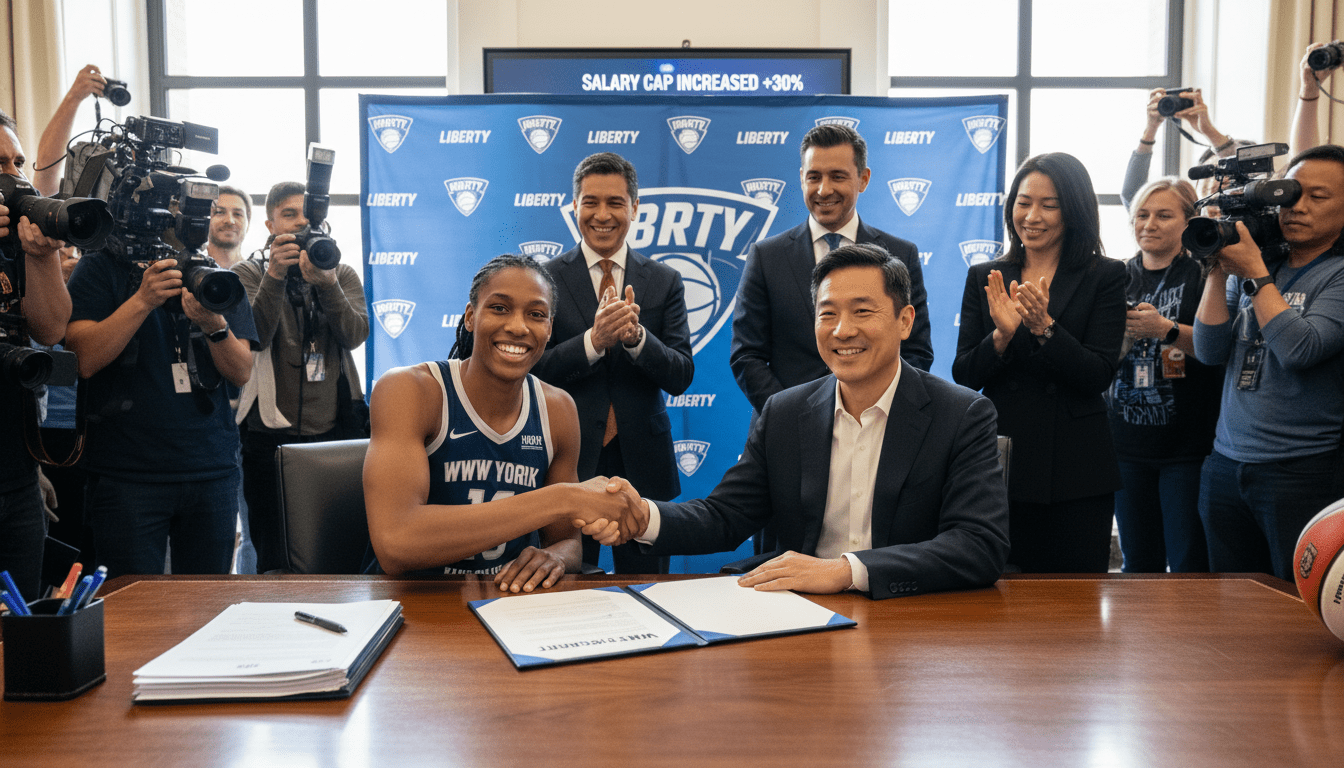
Satou Sabally Signs Multi-Year Deal with New York Liberty, Joining Star-Studded Roster
Satou Sabally signs a multi-year contract with the New York Liberty, returning to her birthplace and joining a championship-caliber roster as the WNBA undergoes major change.
Sabally’s move to Brooklyn finalized
Satou Sabally, 27, has agreed to a multi-year contract with the New York Liberty, her agent confirmed this weekend. The transfer completes a high-profile offseason acquisition for the franchise as it prepares for a title push. Sabally announced the move on social media, marking her return to the city where she was born and spotlighting her ambition to win a championship.
A roster built for contention
The Liberty now feature an unusually deep lineup, combining Sabally with established stars and rising talents. New York’s rotation will include All-Stars and national team players such as Breanna Stewart, Sabrina Ionescu and Jonquel Jones alongside German teammate Leonie Fiebich. Team executives say the additions are designed to create immediate playoff depth and multiple scoring options.
Impact on German players in the WNBA
The latest moves highlight a notable German presence across the league this season. Sabally will reunite with Leonie Fiebich, with whom she has long competed both in the WNBA and on the German national team. Meanwhile, Nyara Sabally, Satou’s younger sister, has been claimed by the new Toronto expansion club, and Luisa Geiselsöder has been acquired by the Portland Fire, underscoring increased international mobility.
National team dynamics ahead of summer tournaments
Sabally’s club decision carries implications for Germany’s national program as well as for roster chemistry. She has previously prioritized WNBA commitments over some national-team events, a point of public friction with teammates. Still, Sabally has expressed her intent to play for Germany at the upcoming home World Cup in Berlin, where expectations for medal contention and strong local support are high.
Labor agreement reshaping salaries and movement
Underlying the current roster turbulence is a landmark labor deal that fundamentally changes player compensation and revenue sharing. The WNBA and its players’ union negotiated an 11-year media rights arrangement valued at $2.2 billion that unlocks significant new income. The collective-bargaining agreement raises the minimum salary floor and introduces profit-sharing mechanisms that make high-profile signings and roster reshuffles more financially feasible.
Expansion teams and new opportunities
Expansion clubs are leveraging the reshaped market to assemble competitive squads quickly. Toronto’s new franchise used expansion draft mechanisms to select players including Nyara Sabally, and Portland’s recent moves brought in Luisa Geiselsöder along with the draft selection of Frieda Bühner. Those teams are seeking immediate credibility while offering playing time and spotlight to international players who might have been reserve options on older rosters.
Sabally’s ambitions and marketability
Beyond on-court fit, Sabally’s signing underlines the growing commercial profile of top WNBA players. She has cultivated a public presence that spans endorsements and personal branding, and the new collective-bargaining framework increases the value of those ventures. For Sabally, joining a marquee market like New York offers heightened visibility and amplified sponsorship potential, aligned with her stated goal of capturing a championship.
The move also carries narrative weight: Sabally was born in New York before growing up in Berlin, and the return to Brooklyn resonates with both her biographical ties and professional aspirations. Fans and analysts expect the Liberty to capitalize on that storyline as they market the team locally and internationally.
The immediate practical test will come when the regular season begins and coaches deploy the newly assembled rotations. New York’s front office will monitor injuries, chemistry and minutes distribution as it attempts to balance star power with roster depth. For Sabally, the arrival presents both an opportunity to pursue a title and a challenge to integrate into a team that already features multiple ball-dominant players.
Longer-term, the WNBA’s expanding financial foundation could accelerate further roster movement and international recruitment. With higher minimums and the prospect of seven-figure contracts for elite veterans, teams are increasingly aggressive in free agency and trades. That environment creates openings for established stars like Sabally to shape franchise trajectories and for younger internationals to find prominent roles.
Satou Sabally’s signing with the New York Liberty is thus both a personal milestone and a symptom of broader transformation across the WNBA. As the league grows economically and geographically, player choices and team strategies are shifting in ways that promise a more competitive and commercially visible future for women’s professional basketball.
