
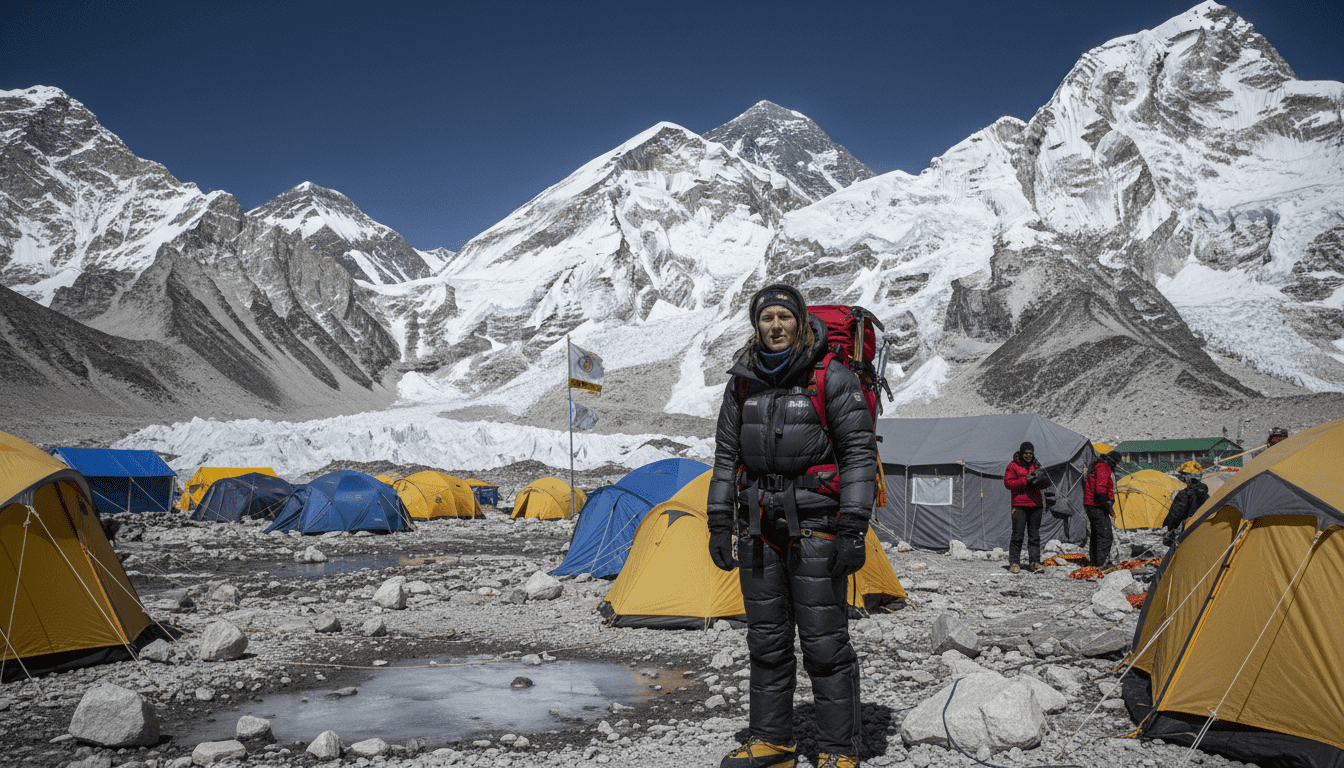
Anja Blacha Reaches Khumbu Base Camp, Readies for Lhotse Summit Push
Anja Blacha has arrived at Khumbu base camp and is acclimatizing for a Lhotse summit attempt, after a week-long trek from Lukla and meetings with fellow climbers in Namche.
Anja Blacha Reaches Khumbu Base Camp
Anja Blacha arrived on the Khumbu Glacier this week and has established her tent at the expedition base camp. The 35-year-old German mountaineer, who has already climbed twelve of the world’s fourteen 8,000-meter peaks without bottled oxygen, is now focusing on Lhotse. Her goal this season is a summit of Lhotse followed by an attempt on Shishapangma to complete the series of eight-thousanders.
Blacha’s presence at the base camp marks the end of a week-long approach that she prefers to undertake on foot rather than by helicopter. The trek allowed time for acclimatization and for encounters with the local communities who support climbing traffic on the route. Her dispatches from camp will be updated regularly as the expedition progresses.
Flight to Lukla Delayed by Weather
The expedition began with a weather-disrupted flight schedule to Lukla, the mountain gateway known for its challenging strip. After two days when small-prop aircraft struggled to reach the airstrip, Blacha’s flight was the first scheduled departure from Kathmandu to Lukla to fly that morning. Turbulence during the approach contributed to a tense atmosphere aboard, which she described as unexpectedly calming given the presence of devout Buddhists among the passengers.
Because the flight landed late, Blacha stayed overnight in Lukla before beginning the trek. The delayed start reduced the number of trekkers on the trail, a factor that made the climb through the high villages quieter than in peak seasons. The lighter foot traffic also allowed her to move at her own pace during the initial stages of the approach.
Porters and Trail Logistics Under Scrutiny
From Lukla, all expedition supplies must be transported the remainder of the way by people, animals, or helicopter, as there are no roads into the high valleys. Blacha noted that porters today commonly carry loads of about 30 kilograms, a marked change from historical loads that could be twice as heavy. She welcomed improvements in working conditions even as older carriers reminisce about more burdensome practices.
The use of helicopters for cargo and personnel has grown, prompting protests from yak and mule drivers and concerns raised by porter unions. Blacha’s choice to trek, she says, is both a personal expedition style and a nod to the layered logistics that sustain Himalayan climbing seasons. The system continues to evolve around safety, economics, and local livelihoods.
Familiar Faces in Namche Bazaar
On the way to base camp Blacha passed through Namche Bazaar, the Sherpa region’s principal town, and encountered climb partners and acquaintances. She met with young climbers who recently launched a new guiding agency after completing their own records on the world’s highest peaks. The group is now setting its sights on the Mount Everest season ahead.
Namche offered familiar panoramas and a chance to rest and prepare at altitude before the final approach. From the Everest View Hotel area, Blacha could see Ama Dablam and the summits of Everest and Lhotse, a panorama that brought home the scale of the challenge ahead. The view served as a reminder of both the rewards and risks of high-altitude objectives.
Approach Strategy and Acclimatization for Lhotse
As she edged closer to Lhotse, Blacha described the experience as increasingly surreal, a sensation she has felt in prior expeditions. The base camp sits at approximately 5,300 meters, and she has elected to pause for several days to rest and acclimatize before committing to a summit push. Such rest days are part of a deliberate plan to manage altitude stress and to build resilience for the high camps above.
Lhotse, at 8,516 meters, will be the immediate target, with an ascent of Shishapangma planned afterward to complete her campaign. Blacha’s record of high-altitude climbs without supplemental oxygen and her previous solo polar trek underscore a pattern of endurance and long-range expedition planning. Her team will monitor weather windows and acclimatization metrics closely before a final summit attempt.
Cultural and Technological Changes Along the Trail
Blacha observed notable cultural shifts on the trekking route during this season’s approach. Where Indian music once dominated tea houses, Nepali hip-hop and international pop now regularly filter through the valleys. The arrival of social media and smartphone tools has also changed expedition logistics, with climbers and porters coordinating meeting points via messaging apps and digital maps.
These changes have affected how teams organize, how supplies are tracked, and how local economies interact with the climbing industry. While traditional patterns endure, technology is smoothing communications and altering expectations for timetables and contact. Blacha’s use of messaging and mapping tools during the trek reflects a broader trend among contemporary high-altitude teams.
Anja Blacha remains at Khumbu base camp resting and refining plans ahead of the ascent, assessing weather and acclimatization before moving to higher camps for a scheduled summit bid. Updates on her progress will follow as the expedition advances.
