
Coalition at Impasse After Bundesrat Blocks 1000‑Euro Entlastungsprämie
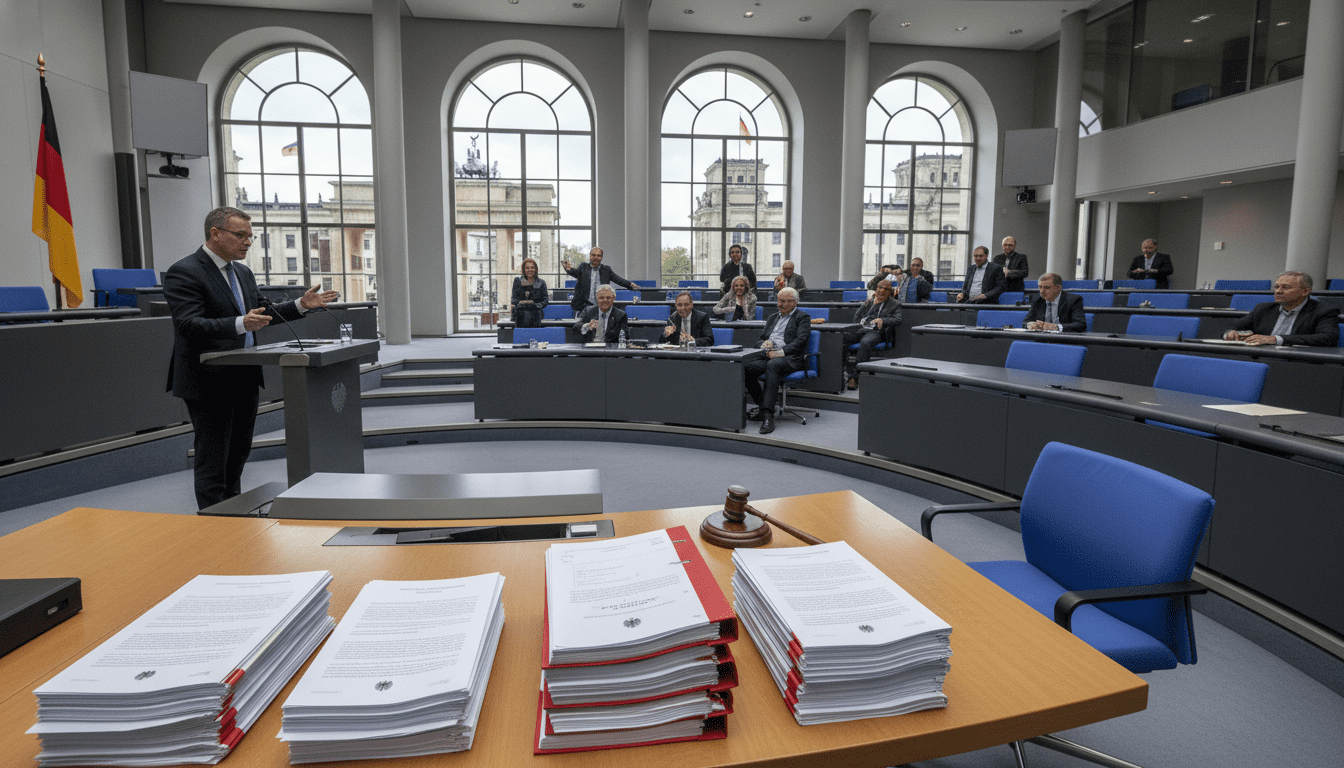
Germany’s coalition faces renewed strain as the Bundesrat on Friday blocked the proposed 1000‑euro Entlastungsprämie, forcing a rethink of relief measures and a planned tax reform.
The Bundestag’s coalition partners return to talks after the Bundesrat’s rejection of the tax‑ and social‑contribution‑free 1000‑euro Entlastungsprämie stalled the government’s immediate relief plan. Chancellor Friedrich Merz and Vice‑Chancellor Lars Klingbeil signalled talks would continue, but gave few details on alternative measures. A coalition meeting is scheduled for Tuesday to discuss both targeted relief and the broader architecture of a tax overhaul.
Bundesrat rejects 1000‑Euro Entlastungsprämie
The Bundesrat declined to approve the government’s proposed Entlastungsprämie, citing concerns about revenue losses for the Länder and the federal budget. Lawmakers from several states argued that the associated shortfall—estimated at around €1.1 billion by some CDU politicians—would be difficult to absorb without compensatory measures. That decision immediately removed the central plank of this month’s relief talk and exposed deeper disagreements inside the coalition.
Union figures framed the rejection as final: Sepp Müller described the bonus as a voluntary offer that the Bundesrat has effectively closed, while CDU finance spokesman Fritz Güntzler warned the setback would complicate any large‑scale tax reform. SPD leaders, including Klingbeil, said the coalition remains committed to shielding households but must now negotiate alternatives.
Coalition meeting in Villa Borsig set for Tuesday
Ministers and parliamentary leaders will reconvene in the next coalition committee meeting on Tuesday to pursue fresh proposals for easing household burdens. The agenda will include targeted payouts, mobility support and foundational questions about revenue for a potential tax reform. Officials said the goal is to present measures that both parties can agree upon and that Länder governments can accept.
Observers expect a short timeframe for the talks because political pressure is mounting from trade unions and municipal authorities alike. The meeting’s outcome will likely determine whether the government pursues smaller, focused measures or presses ahead with a comprehensive tax package.
Union proposes higher Pendlerpauschale and mobility payments
With the one‑off bonus off the table, Union politicians have urged a pivot toward targeted instruments such as direct payouts, a mobility premium, or an increased Pendlerpauschale for commuters. Sepp Müller and other CDU figures framed these tools as more precise ways to ease burdens on the middle class and small businesses. The proposals aim to shift relief toward those who face daily costs, particularly commuters and households with transport expenses.
Financially, targeted measures are seen as easier to calibrate to fiscal constraints, but they also risk leaving significant groups without relief. States remain cautious about measures that entail revenue shortfalls, insisting any solution must be fiscally responsible or accompanied by compensatory arrangements.
DGB congress highlights labour perspective and social protections
The German Trade Union Confederation opened its federal congress in Berlin over the weekend, and organisers used the platform to push back against narratives that cast the social state as the problem. DGB president Yasmin Fahimi criticised attacks on social protections and called for policies that protect workers from the rising cost of living. SPD speakers, including Lars Klingbeil and scheduled appearances by Labour Minister Bärbel Bas and Chancellor Merz, signalled the political salience of the congress for the coalition.
Labour leaders are pressing for measures that prioritise wage earners and social cohesion, arguing that relief must be meaningful and quickly delivered. The DGB’s presence increases scrutiny on the government to produce tangible outcomes from the upcoming talks.
Business groups and Länder warn about fiscal gaps
Large business associations welcomed the Bundesrat’s refusal to approve the full Entlastungsprämie, saying earlier the cost burden would have fallen heavily on employers. Industry representatives now watch with concern how alternative reliefs and any tax reform will be funded. At the same time, state governments underscored that they cannot absorb further revenue cuts without endangering local services and budgets.
Berlin’s ruling mayor, Kai Wegner, used the DGB platform to call for a VAT cut on essential food items, a measure that has won conditional support in political debate but lacks a clear funding plan. The debate highlights the tight fiscal room and the trade‑offs policymakers face between short‑term relief and long‑term fiscal sustainability.
Top tax bracket and six‑figure incomes reemerge in debate
As the coalition searches for offsets to fund relief, discussions have returned to adjusting the top marginal tax rate and asking high earners to contribute more. CSU leader Markus Söder and others floated targeting incomes above €300,000, while SPD figures framed the issue as part of a broader redistribution conversation. Critics, including craft industry representatives, warned that higher taxes on personal incomes could hit owner‑managed firms where personal and company incomes overlap.
Business leaders argue that raising rates on six‑figure incomes could undermine investment and burden entrepreneurs, while proponents say such measures are a politically feasible way to protect middle incomes. The clash over financing mechanisms underscores the complexity of combining immediate relief with a coherent long‑term tax reform.
The coalition enters the Tuesday talks under pressure to deliver something credible: a plan that eases costs for ordinary households, secures Länder budgets, and sets a realistic path for tax reform. With the Entlastungsprämie no longer an option, lawmakers must navigate competing priorities and tight fiscal limits to produce a package that sustains public support and preserves economic stability.
