
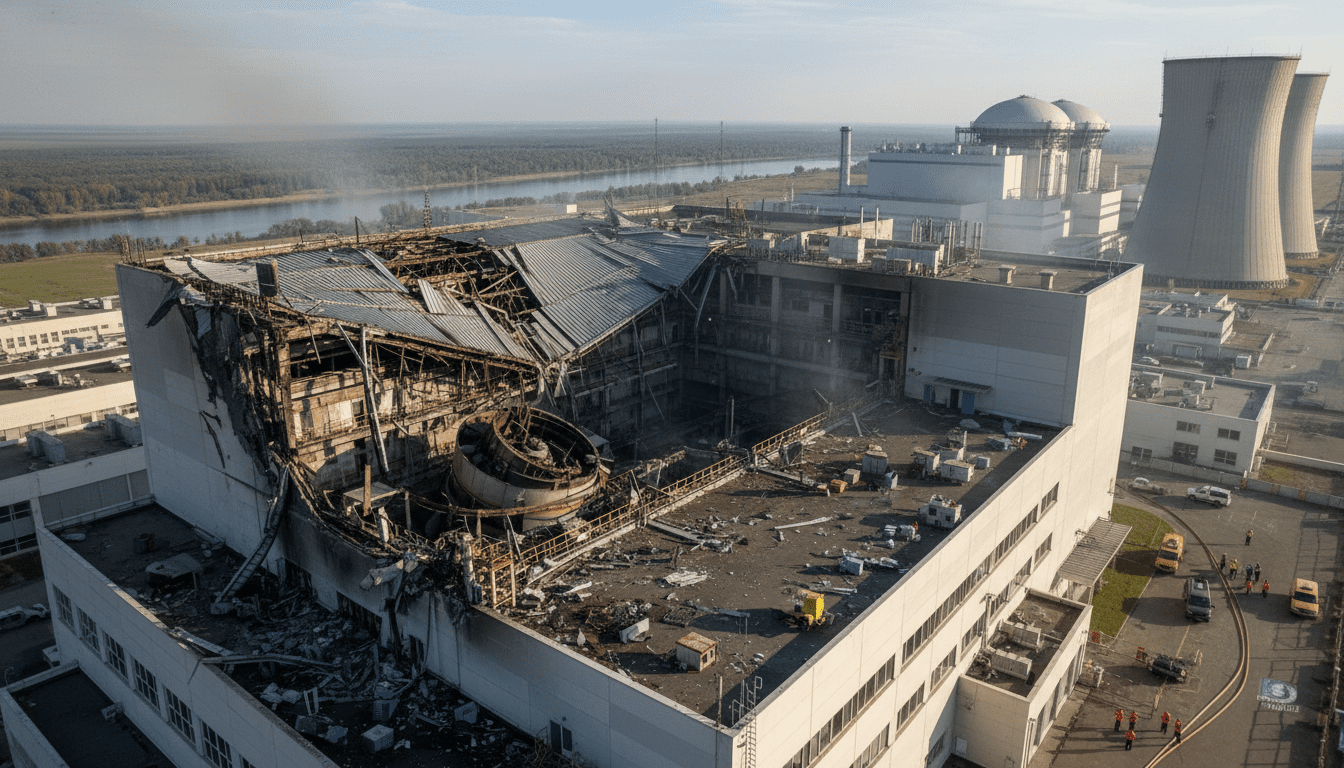
IAEA Says Drone Damaged Turbine Building at Zaporizhzhia Nuclear Power Plant
IAEA says a drone struck the turbine building at the Zaporizhzhia nuclear power plant; no increase in radiation was reported amid Russian and Ukrainian accusations.
The Vienna-based International Atomic Energy Agency reported that inspectors found damage to the wall of a turbine building at the Russian-controlled Zaporizhzhia nuclear power plant consistent with a drone strike, and that radiation levels remained normal following the incident. Inspectors temporarily sheltered after hearing drone noises and gunfire before assessing the affected structure, the IAEA said. The agency requested access to the damaged area and confirmed the visible harm matched a drone impact.
Inspector safety and on-site actions
IAEA inspectors on site heard both drone sounds and gunfire and moved to a secure location as a precaution, according to the agency’s account of the events. After conditions allowed, the team conducted an assessment of the turbine building and documented what it described as a hole in the wall consistent with a drone strike. The agency emphasized that, despite the structural damage, there was no detected increase in radiation levels at the plant.
Technical details and operator report
The plant operator informed IAEA staff that a drone had allegedly caused a breach in the turbine building’s wall, prompting the agency to demand access to the area for inspection and verification. The turbine hall is separate from the nuclear reactor containment and generator systems, and the IAEA’s preliminary observations indicate that core nuclear areas were not directly affected. Inspectors focused on confirming the nature of the damage and ensuring that systems monitoring radiological safety remained operational.
Russian response and accusations
Russia’s state nuclear corporation Rosatom said the incident did not damage nuclear parts of the facility and accused Ukrainian forces of deliberately targeting the plant, arguing the strike could not have been accidental. Rosatom asserted the drone was controlled via a fiber-optic cable, a claim it used to rule out unintended impact, and its leadership warned of broader dangers from attacks on nuclear infrastructure. Russian officials framed the event as a severe escalation with potential consequences beyond the immediate conflict zone.
IAEA cautions and international concern
The IAEA maintained a cautious tone, focusing on verification of facts and the condition of radiological controls rather than attributing responsibility. The agency’s presence at the plant is intended to provide independent monitoring and to reduce the risk of miscalculation or misinformation surrounding incidents at nuclear sites. International observers have repeatedly warned that any damage to nuclear facilities in conflict areas raises the risk of accidents that could have cross-border effects, a concern underscored by the IAEA’s rapid confirmation that no abnormal radiation levels were detected.
Operational risks in armed conflict zones
Experts caution that even strikes limited to non-nuclear buildings at a site like the Zaporizhzhia nuclear power plant can create operational disruptions, impede maintenance, and complicate emergency responses, increasing long-term safety risks. The turbine hall houses equipment critical to electricity generation and plant control systems, and damage there can indirectly affect plant stability if not promptly and thoroughly addressed. Continued inspections and secure access for technical teams remain essential to ensure systems that monitor and contain radiological hazards function without interruption.
The incident at the Zaporizhzhia nuclear power plant adds to broader international unease about the safety of nuclear sites in areas of active fighting, prompting calls for restraint and for guarantees that critical infrastructure will be protected. Independent verification by organizations such as the IAEA will remain central to assessing the immediate impacts and to preventing escalation that could endanger civilians and the environment beyond Ukraine’s borders.
