
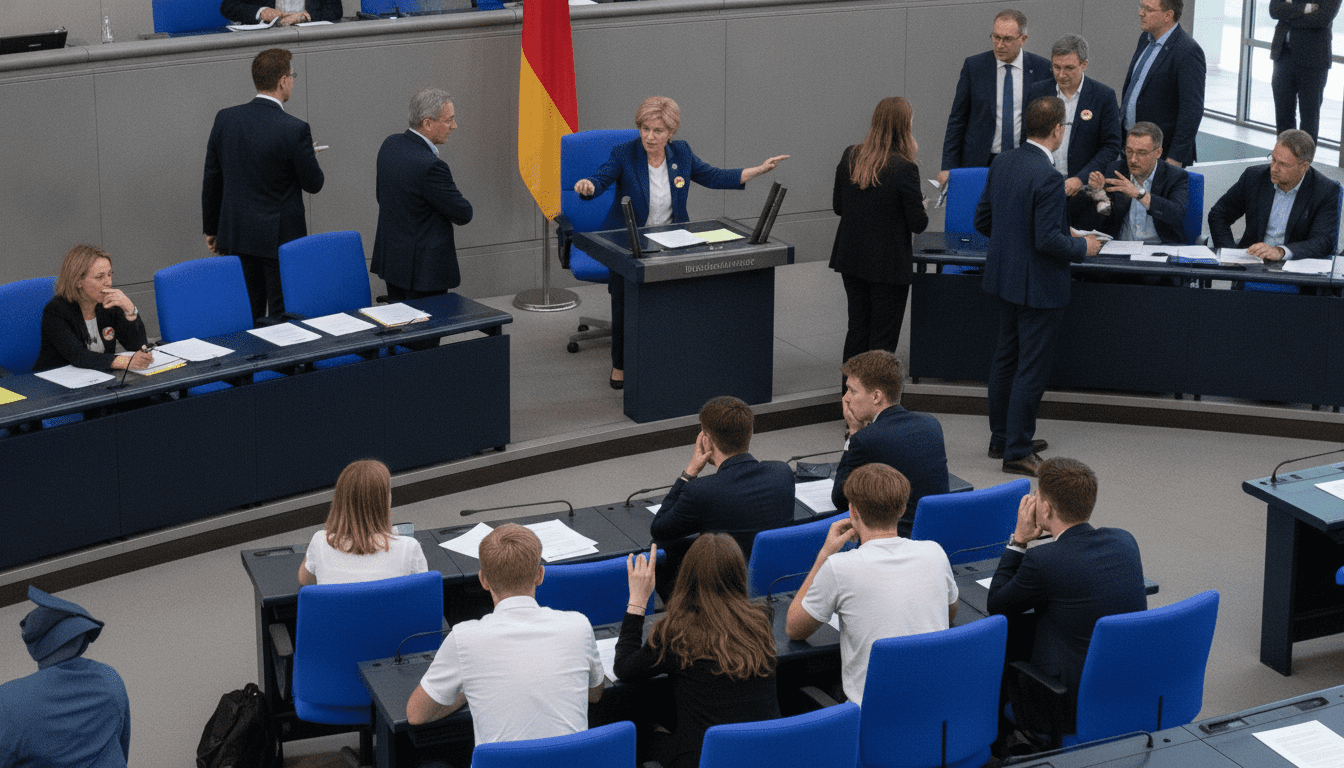
White-Power gesture at Bundestag youth simulation prompts formal review
A Bundestag youth simulation was marred by reports that a participant made a White-Power gesture, triggering the exclusion of the young person and calls for a formal review by parliamentary bodies. The incident occurred during the “Youth in Parliament” role-play, where more than 250 young people from across Germany acted as fictional lawmakers and debated mock bills. SPD and Green parliamentary managers described serious racist incidents involving nominees linked to the AfD, and the Bundestag administration says the matter will be examined by the Ältestenrat.
Allegations During ‘Youth in Parliament’ Simulation
The three-day simulation ran from Saturday to Tuesday and involved over 250 participants who assumed the roles of Bundestag deputies to learn parliamentary procedure. Organizers and party representatives reported a series of troubling incidents during the event, with several cases brought to the attention of the Bundestag administration for follow-up.
Party officials said some of the incidents were described to them as “massive” and included racially charged behavior by nominees associated with one party delegation. The reports prompted immediate administrative action and demands that senior parliamentary committees assess how the event was organized and supervised.
Participant Excluded Over Gesture
A spokesman for the Bundestag administration confirmed that a youth was excluded from the simulation after displaying a gesture identified with White-Power symbolism, which is widely understood to signify white supremacy. The exclusion was framed by officials as necessary to uphold the dignity of the parliamentary setting and to distance the event from extremist ideologies.
The administration added that all reported incidents are being investigated “to the extent they were specified,” and that the Bundestag police were involved where allegations potentially crossed into criminal conduct. Organizers said they acted on available information and would continue to coordinate with authorities as details emerge.
Political Figures Describe ‘Massive’ Incidents
SPD parliamentary manager Dirk Wiese and the Greens’ parliamentary manager Irene Mihalic told colleagues and the press that they had become aware of “very serious” and “racist” conduct among some nominees. Both officials urged that the incidents be taken up by the Bundestag’s governing committees to determine accountability and prevention measures for future events.
A spokesperson for the CDU/CSU parliamentary group characterized the exclusion of the participant as appropriate and said it sent a clear message about the need to respect the institution. Across party lines there was public agreement that symbols and gestures tied to extremist ideologies have no place in civic-education activities held under the Bundestag’s roof.
Investigation and Review by Bundestag Bodies
The Bundestag administration said the reported incidents will be evaluated within the usual forums, explicitly naming the Ältestenrat as a venue for further review. The Ältestenrat, which includes the Bundestag president, vice-presidents and senior deputies, supports the president and helps coordinate parliamentary business while handling disputes behind closed doors.
Officials advised that the review will not only document what occurred but also examine whether changes to supervision, nomination procedures, or participant vetting are necessary. Any recommendations arising from that process would be aimed at safeguarding the educational value of the simulation while preventing a recurrence of extremist behavior.
Organizers Consider Operational Changes
Organizers of “Youth in Parliament” emphasized the educational purpose of the simulation, which seeks to teach young people about democratic debate and legislative procedure. They acknowledged, however, that the recent incidents undermine that mission and said organizers will assess internal protocols, participant selection and on-site oversight.
Possible measures under consideration include tightened vetting of nominees submitted by parties, clearer codes of conduct for participants, and enhanced training for staff and volunteers to recognize and respond to extremist symbols or rhetoric. The Bundestag administration indicated it would support adjustments deemed necessary to protect the event’s integrity.
The events have reignited broader questions about political education and the presence of far-right symbols in civic spaces, prompting calls from several quarters for robust safeguards. Parliamentary leaders and educators have underscored that youth engagement remains vital, but must occur in environments that explicitly reject racism and extremism.
Parliamentary committees and the Ältestenrat are expected to discuss the matter in the coming days and determine whether formal disciplinary, procedural or legal steps are required. The Bundestag administration has committed to transparent reporting of outcomes to the extent permitted by privacy and procedural rules.
