
FIFA World Cup 2026: Full schedule, venues and Germany’s campaign in North America
Host nations, expanded format and key dates for the FIFA World Cup 2026 across the USA, Mexico and Canada; schedule, stadiums and TV details.
Hosts, dates and the expanded 48‑team format
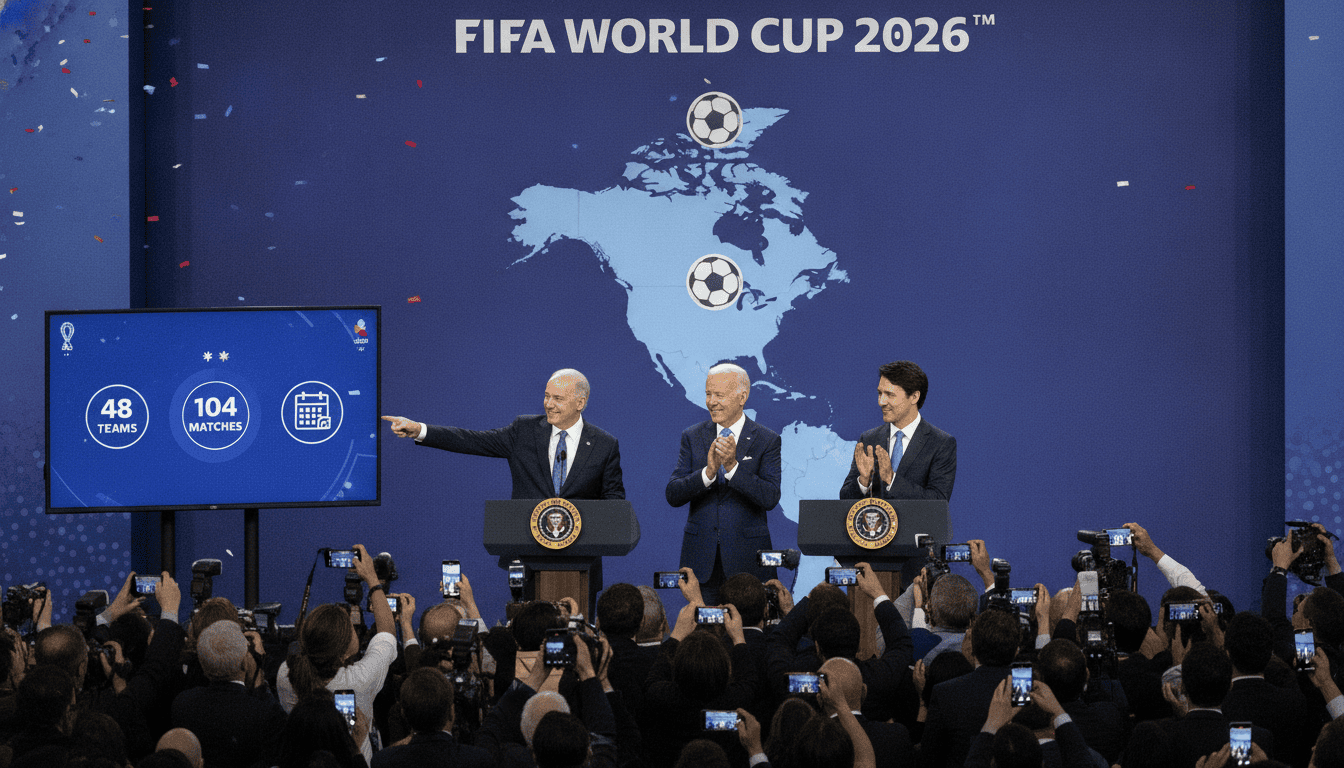
The FIFA World Cup 2026 runs from June 11 to July 19, 2026, staged across three countries: the United States, Mexico and Canada. This edition features an expanded field of 48 teams and a tournament record of 104 matches, including a new round of 16 introduced to integrate the best eight third‑placed teams. Organizers have scheduled fixtures to accommodate wide time‑zone differences, with kick‑off times adjusted for Central European Summer Time.
The tournament’s format increases the number of groups from eight to twelve and makes advancement routes more complex than in previous editions. Group winners and runners‑up qualify automatically, while the eight best third‑placed teams move into the Sechzehntelfinale (round of 16). That change has made late group‑stage matches and tiebreakers particularly consequential for teams and broadcasters.
Germany’s results and early exit
Germany were drawn into Group E alongside Curaçao, Ivory Coast and Ecuador, and the national team’s matches were played in Houston, Toronto and New York. The DFB side opened emphatically with a 7‑1 win over Curaçao in Houston on June 14, and followed with a 2‑1 victory against the Ivory Coast in Toronto on June 20. Germany’s group campaign ended in New York on June 25 with a 2‑1 defeat to Ecuador.
Despite advancing from the group, Germany were eliminated in the round of 16 when they drew 1‑1 with Paraguay and lost in the subsequent penalty shootout. The early knockout exit has prompted debate in Germany over selection and tactics, and attention is shifting to the national federation’s short‑term plans ahead of upcoming qualification cycles.
Knockout calendar and notable fixtures
The round of 16 took place between June 28 and July 2, with matches staged in cities including Los Angeles, Houston, Boston, Monterrey and San Francisco. Quarterfinals are scheduled for July 9–12, with Boston, Los Angeles, Miami and Kansas City among the host venues. Semifinals are set for July 14 and 15 in Dallas and Atlanta, and the final will be played on July 19 in New York.
Several high‑profile knockout fixtures drew global attention, including Brazil vs Japan in Houston and France vs Sweden in New York during the round of 16. The schedule deliberately spaces matches to provide prime‑time viewing for international audiences, a consideration that has shaped kick‑off times across the different time zones.
Stadiums and time‑zone logistics
Sixteen stadiums across three countries host the tournament’s 104 matches: eleven in the United States, three in Mexico and two in Canada. Capacities range from roughly 45,000 in Toronto to more than 90,000 in Dallas, and iconic venues such as Mexico City’s Estadio Azteca and the New York/New Jersey stadium in East Rutherford will stage marquee games. Organizers have factored in travel and recovery time for teams given the continental distances between venues.
For European viewers the time difference means kick‑offs appear six to nine hours later than local match times, so the tournament’s schedule is presented in Central European Summer Time to aid planning. That shift has affected domestic broadcast windows and prompted some broadcasters to stagger live coverage across public and pay channels.
Broadcast rights and how to watch in Europe
Public broadcasters ARD and ZDF carry a combined slate of 60 of the 104 FIFA World Cup 2026 matches in many European markets, providing free‑to‑air access to a majority of high‑profile fixtures. All matches are available via the paid MagentaTV service operated by Deutsche Telekom, which also offers live streaming of every game. ARD and ZDF supply additional live streams through their respective sports apps and online platforms.
International viewers should note that rights and channel line‑ups vary by territory, and scheduling announcements from rights holders determine which games air on free television. Media partners have coordinated to ensure that most knockout matches receive broad distribution, while select group matches appear exclusively on pay platforms.
Groups, advancement and tiebreakers
The tournament groups span twelve pools, with established football nations and emerging teams distributed across the draw. Group E included Germany, Curaçao, Ivory Coast and Ecuador; other notable groups featured traditional powers such as France, Portugal, Brazil and Argentina. The expanded format increases the strategic importance of goal difference and scoring totals for teams aiming to finish among the best third‑placed sides.
Tiebreakers follow a clear hierarchy: goal difference, goals scored, and then head‑to‑head results between tied teams. If those metrics remain level, fair‑play points — based on yellow and red cards — determine the order, underscoring the disciplinary component of tournament strategy.
The FIFA World Cup 2026 delivers the largest and most logistically ambitious edition in history, spreading competition across North America with a new 48‑team format, a packed 104‑match schedule and a knockout phase designed to include more nations in the final rounds. The expanded field and cross‑border hosting present fresh challenges for teams, broadcasters and fans, while the storylines — from Germany’s unexpected early exit to knockout showdowns in major stadiums — will unfold through to the final in New York on July 19, 2026.
