
World Cup 2026 schedule, venues and results — full match calendar, stadia and TV coverage
Find the complete World Cup 2026 match calendar, venues and key results, including Germany’s exit and broadcast details for viewers in Germany.
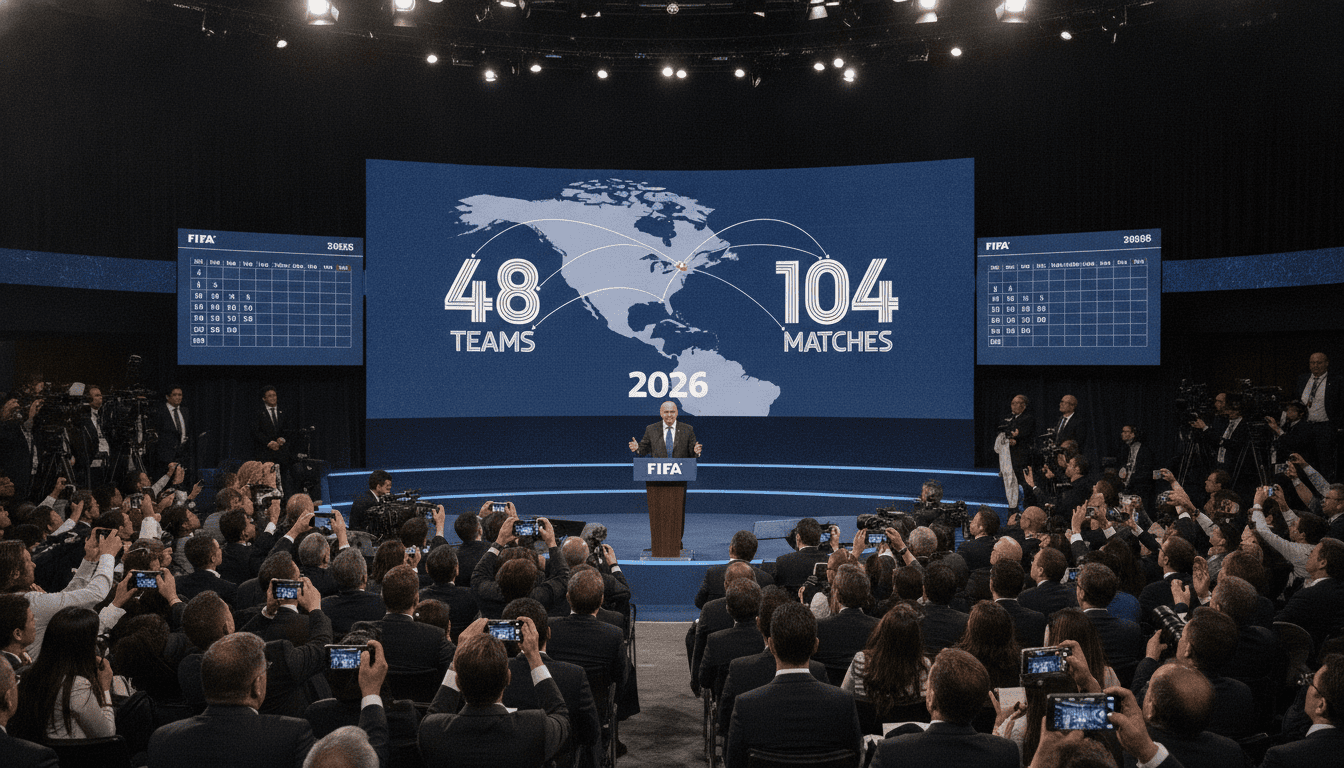
The World Cup 2026, staged across Mexico, Canada and the United States from June 11 to July 19, has produced unexpected results and a dense schedule of 104 matches. This expanded tournament of 48 teams is being played at 16 venues and features a new knockout round for the best third-placed sides. Fans in Europe are following kickoff times that fall six to nine hours behind local host cities.
Match calendar and time-zone conversions
Kickoff times for World Cup 2026 matches have been presented in Central European Summer Time to help European viewers follow the action. With host cities spread across multiple time zones, group-stage fixtures are scheduled across a wide daily window and will often air late in the evening or overnight in Germany. The tournament runs through July 19, when the final is set to be played in the New York area.
Organizers divided the competition into a lengthy group phase followed by an additional round for the best third-placed teams, producing a compact knockout sequence. That structure means teams advancing from third place face an extra fixture before the traditional round of 16, adding travel and recovery challenges as the tournament proceeds.
Groups and Germany’s campaign
The group draw placed Germany in Group E alongside Curaçao, the Ivory Coast and Ecuador, and the DFB team produced convincing and mixed results. Germany opened with a 7-1 win over Curaçao in Houston and then beat the Ivory Coast 2-1 in Toronto, but a late reversal against Ecuador in New York left the squad vulnerable ahead of the knockout phase. In their first post-group fixture, Germany were eliminated after a 1-1 draw that went to penalties and did not go their way in Boston on June 29.
Across the tournament, the expanded group format produced a broad mix of established powers and surprise performers, with smaller nations taking points and several traditional contenders required to navigate tense tiebreakers. The eight best third-placed teams can still progress under the new format, a rule that has kept many groups competitive until the final matchday.
Knockout path and key dates
The additional knockout round follows the group stage and precedes the round commonly known as the last 16, extending the tournament calendar and increasing the number of elimination games. The sequence of rounds runs from the new round of 32 through the round of 16, quarterfinals and semifinals, culminating in the final on July 19 in the New York region. Quarterfinals are scheduled in early to mid-July, with semifinals on July 14 and 15, and the third-place match on July 18.
Several high-profile knockout meetings are already set or have been played, including Canada’s meeting with Morocco and continental heavyweight clashes such as Portugal versus Spain and Brazil’s matches in the later rounds. The tightly packed schedule has required teams to manage recovery carefully and organisers to sequence travel between distant host cities to limit burn-out.
Stadiums and host cities
Sixteen stadiums across three countries are hosting World Cup 2026 games, with eleven venues in the United States, three in Mexico and two in Canada. Capacities range from the Toronto stadium at about 45,000 seats and Vancouver’s BC Place at roughly 54,000 to the largest sites such as the Dallas-area stadium with a capacity near 94,000 and Mexico City’s Azteca at more than 80,000. That spread of venues creates diverse atmospheres and varying logistical demands for teams and supporters.
The geographic footprint also introduces significant travel distances between match locations, and teams advancing deep into the competition can expect long transfers between cities. Time-zone differences—generally six to nine hours relative to Central Europe—affect scheduling for broadcasters and viewership patterns in Europe, with many matches scheduled for late evening local times.
Broadcast and streaming in Germany
In Germany, public broadcasters ARD and ZDF are carrying a substantial share of the World Cup 2026 coverage, together airing 60 of the 104 matches. Viewers seeking full access to every game can turn to the pay platform MagentaTV, which is distributing all fixtures via its streaming service. ARD and ZDF also provide live streams through their mediatheken and sports apps, while MagentaTV offers an integrated live-stream option for subscribers.
These rights arrangements mean that fans have a mix of free-to-air and subscription choices, and many will rely on late-night viewing or device streaming to catch matches in real time. Coverage packages combine live broadcasts, highlight shows and statistical centers so viewers can follow tables, live scores and in-depth analysis throughout the tournament.
Emerging storylines and tournament surprises
The expansion to 48 teams has amplified the tournament’s unpredictability, producing shock results, deep runs by underdog sides and intense group races. Several matches have produced unexpected outcomes, and the revised qualification of third-placed teams has kept more nations alive later into the group stage than in past editions. Administrative and disciplinary decisions have also grabbed headlines, including a notable case in which FIFA lifted a red-card suspension for a U.S. striker, clearing him to play in a key match against Belgium.
Political and logistical complications surfaced for some delegations, too, most visibly in travel arrangements for certain teams whose preparations required changes of base or lengthy transfers. Those non-sporting factors have influenced squad routines and media narratives as much as on-field form.
The World Cup 2026 has combined a record number of teams, a transnational host footprint and a packed match calendar to create one of the most logistically complex tournaments in modern football history. As the competition moves into its decisive knockout weeks, attention will turn to recovery management, tactical adjustments and which remaining squads can sustain form through the schedule.
Looking ahead, the final stages in mid-July will determine the champion and close a World Cup notable for its scale and surprises. Fans in Germany and across Europe will continue to track matches late into the night and use the available broadcast and streaming options to follow every key moment.
