
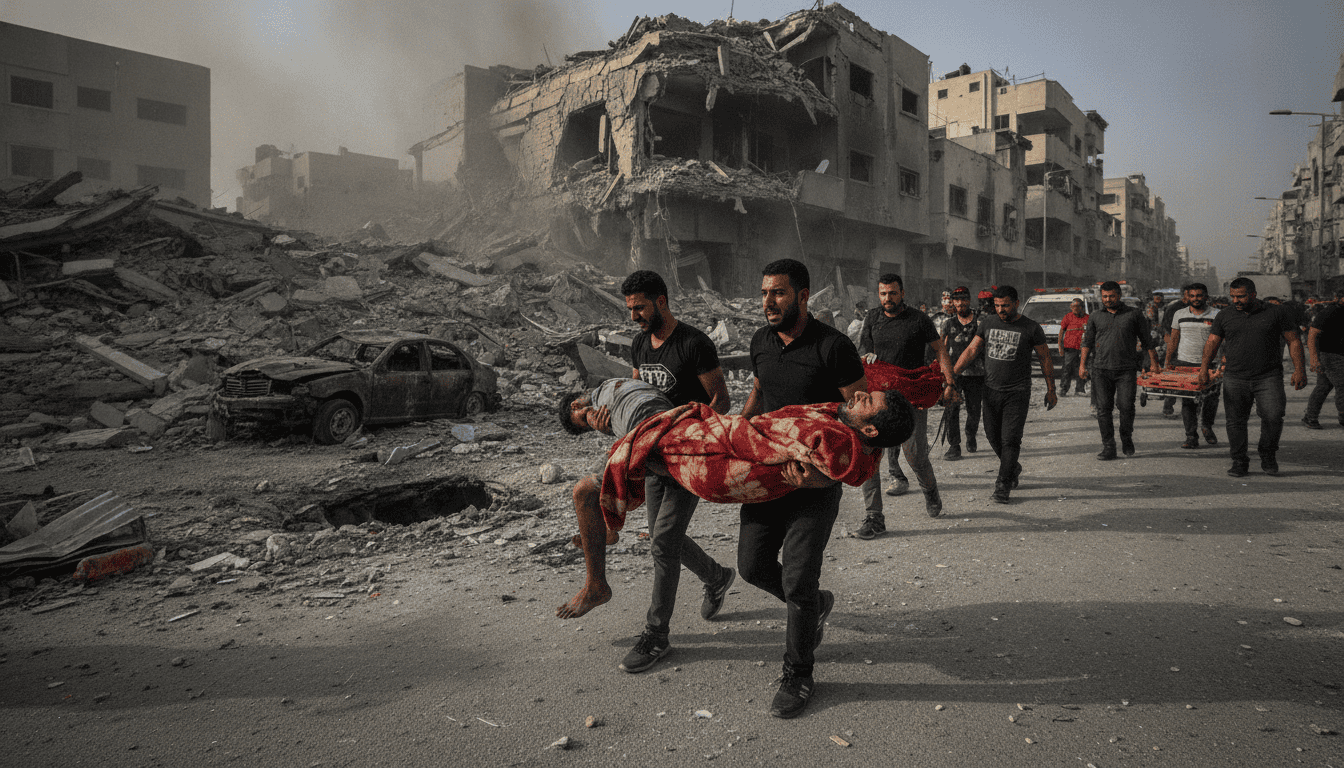
Israeli drone attack in Gaza City kills two in al‑Samar, ambulance service says
Israeli drone attack in Gaza City killed two Palestinians and wounded others in the al‑Samar area, Gaza’s ambulance service says as medical teams rushed to treat the injured. Now.
Strike in al‑Samar area
An Israeli drone attack in Gaza City struck the al‑Samar neighborhood east of the city, killing two Palestinians, Gaza’s ambulance and emergency services reported. The agency said the strike occurred in the area known locally as al‑Samar, where residents live in densely populated conditions.
Local emergency responders described debris and damage at the scene, and witnesses reported seeing ambulances and rescue teams arriving quickly after the explosion. Authorities did not immediately release the identities of the dead or provide a full breakdown of the number of injured.
Casualties and emergency response
Gaza’s ambulance and emergency services told international media that several others were wounded in the attack and that medical teams were transporting the injured to nearby hospitals. Paramedics worked at the site to stabilize victims before transfer, the agency added in its statement.
Hospitals in Gaza routinely operate under pressure, and staff faced the immediate challenge of triaging casualties amid limited resources. The ambulance service said its teams remained active across the area to assist those affected and to document casualties for health authorities.
Reporting and sources on the ground
A source within Gaza’s ambulance service relayed the casualty figures to Al Jazeera, and that account formed the basis for the initial reports. Independent verification from additional sources on the ground was not immediately available, and local communications often remain constrained following strikes.
Journalists in Gaza face restricted access to some neighborhoods during or after military operations, complicating efforts to confirm details quickly. Reports from first responders and local agencies, however, are typically relied upon by news organizations for initial casualty information.
Security context surrounding the strike
The strike in al‑Samar took place against a backdrop of recurring hostilities in and around Gaza, where air operations and ground confrontations have periodically escalated. Israeli strikes targeting militants, military infrastructure, or suspected weapons sites are often reported alongside exchanges that affect civilian areas.
Analysts note that urban strikes carry a heightened risk to civilians due to the compact nature of many Gaza neighborhoods. Local authorities and humanitarian agencies frequently warn of the civilian toll when operations occur within densely inhabited districts.
Humanitarian and medical implications
Any strike that causes deaths and multiple injuries increases pressure on Gaza’s constrained medical system, which faces shortages of supplies, equipment and capacity. Emergency departments must balance urgent trauma care with the continuing needs of patients with chronic conditions and routine care.
Humanitarian organizations have repeatedly highlighted how even small-scale escalations can overwhelm clinics and hospitals, disrupting services and complicating the delivery of aid. Access for additional medical personnel and critical supplies is often cited as a pressing need following such incidents.
Information gaps and verification needs
Initial accounts from ambulance services and local sources are an important early indicator of events, but they frequently leave questions unanswered about the circumstances of the strike. Precise targeting motives, the identity of those responsible and the sequence of events leading to civilian harm typically require further investigation.
Credible independent verification and statements from involved parties would help clarify the incident and provide a fuller picture of casualties and damage. Journalists and rights groups commonly call for transparent reporting and immediate access to affected areas to corroborate claims.
The strike in al‑Samar adds to the tally of lethal incidents reported in Gaza in recent months, underscoring the human cost of recurrent operations in populated areas. Medical teams and local authorities continue to attend to the injured while calls for independent verification and humanitarian access persist.
