
Washington D.C. 250th Anniversary: A Walking Tour from the Kenilworth Swamp to the National Mall
A walking tour traces Washington D.C.’s 250th anniversary, from the Kenilworth tidal marsh and Anacostans to the National Mall, museums and political clashes.
For the Washington D.C. 250th anniversary, a pedestrian route through the city reveals origins that begin in a tidal marsh and run through centuries of contested memory and power. The tour starts in the Kenilworth Park & Aquatic Gardens, moves past museums dedicated to Indigenous and African American histories, and culminates on the National Mall where monuments and political interventions meet. Along the way, the city’s founding compromises, Civil War scars and contemporary disputes over public space and commemoration are visible in brick, bronze and construction cranes.
Swamp at Kenilworth Anchors the Capital’s Beginnings
The Kenilworth tidal marsh, one of the District’s last remaining wetlands, stands at the literal beginning of Washington’s story. Long before plans laid out boulevards and domes, this black water and reed beds were a working landscape for Algonquian-speaking peoples and later a resource for colonists.
At the start of the walking tour, the marsh’s ecology still dictates the rhythm of the place: water lilies, birds and insect life form a visible food web that predates federal legislation. The setting reorients visitors to the fact that Washington was not an empty canvas when European planners decided to convert it into a capital.
Anacostans’ Presence and Displacement
The area around the Anacostia River was home to the Nacotchtank—now commonly referred to as Anacostans—and other Indigenous communities who fished and traded throughout the Chesapeake. Their presence and networks made the river corridor an established social and economic landscape long before colonial claims.
European arrival in the 17th century brought disease, land loss and a rapid demographic collapse for native communities. Over subsequent generations, official policies and forced removals erased much Indigenous visibility from the written founding narratives, a gap that local museums and scholars now seek to correct.
Residence Act, L’Enfant and the Founding Compromise
The decision to site the capital on the Potomac was formalized by the Residence Act of 1790, part of a political bargain that balanced northern and southern interests. The compromise tied federal assumption of war debt to the establishment of a federal district roughly between North and South and set the stage for a purpose-built capital.
George Washington’s selection of Pierre Charles L’Enfant to design the city produced the grand avenue and axial plan that still define the capital’s geometry. L’Enfant’s vision placed a domed Capitol on a hill and arranged radiating avenues and open space to make the city itself a symbol of republican government.
The National Mall as Civic Backbone
L’Enfant’s plan ultimately yielded the National Mall, a broad open spine now flanked by museums and memorials. The Mall functions as both parkland and civic stage, hosting ceremonies, protests and the rituals of national memory that mark presidential inaugurations and anniversaries.
Monuments arrayed along the Mall embody contested narratives: they commemorate military sacrifice, civic leadership and at times, incomplete promises. The physical axis from Capitol to Lincoln Memorial has been repeatedly the site where national identity is both performed and challenged.
Civil War, Lincoln and the Reconstruction Question
Washington’s proximity to Confederate Virginia made it a frontline city during the Civil War and a refuge for soldiers, officials and displaced civilians. The conflict reshaped the capital and elevated Abraham Lincoln as the symbol of national survival and emancipation.
Lincoln’s assassination in 1865 and the struggles of Reconstruction that followed underscored the limits of formal legal change without sustained political will. The city became a locus for debates about citizenship and whose rights the Constitution protected, debates that continued into the Jim Crow era and beyond.
Black Washington, Cultural Resilience and Ben’s Chili Bowl
In the decades after the Civil War, Washington developed vibrant Black neighborhoods such as the U Street corridor, home to jazz clubs, churches and enterprises that formed a distinctive cultural heart. That tradition endures in institutions that survived displacement and demographic change.
Ben’s Chili Bowl, founded in the mid-20th century and still run by the same family, is an emblem of continuity. The diner has hosted community members, civil rights leaders and presidents, and it now stands amid rising rents and new development as a reminder of long-standing Black economic and cultural life in the capital.
250th Celebrations, Construction and Political Contention
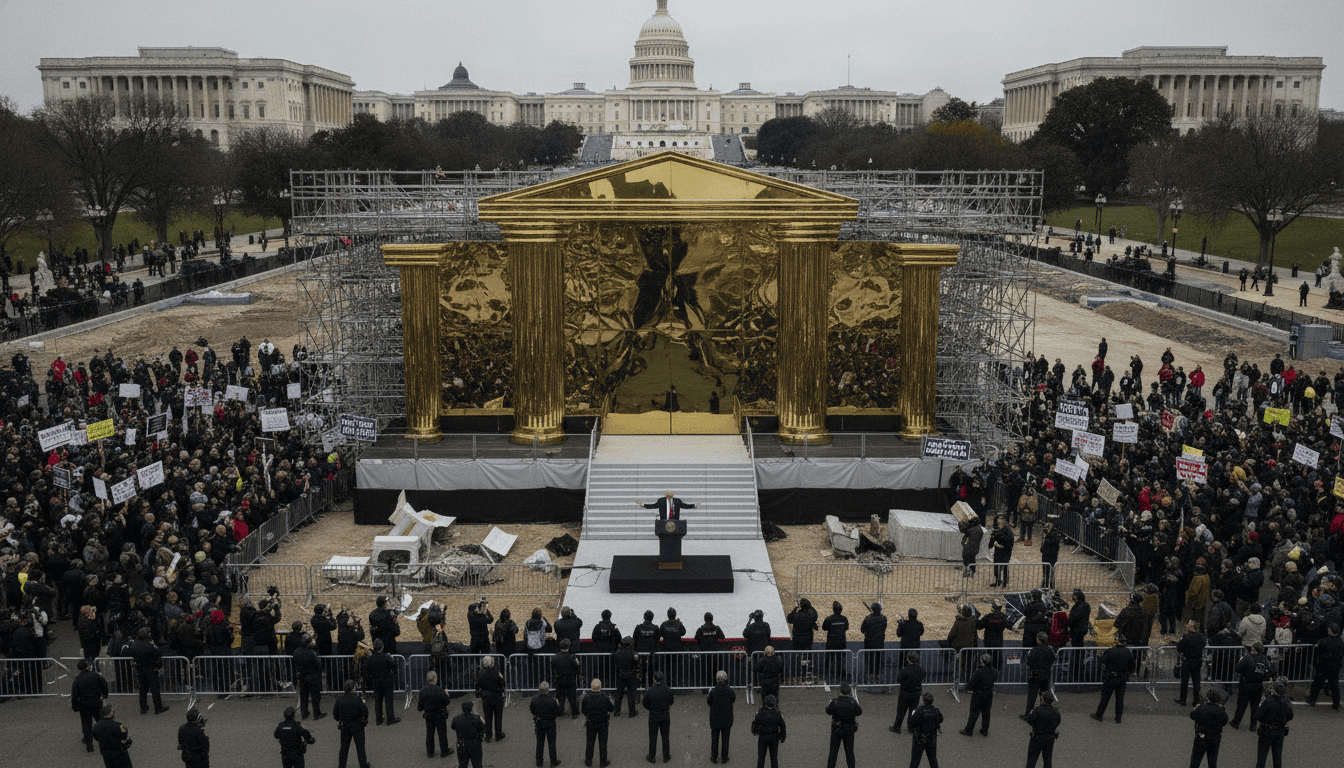
As the city marked the nation’s 250th anniversary, the Mall and federal properties became focal points for both celebration and dispute. Large-scale projects, from renovations to proposed new statuary and a presidential ballroom, have altered sightlines and provoked debate about who controls public memory. Security measures and construction have segmented familiar routes and limited access to some landmarks.
Plans for celebratory events and displays have prompted boycotts by some states and artists who view the programming as politically charged. At the same time, visitors and families touring monuments and museums for the anniversary reflect a range of responses—from patriotic affirmation to critical engagement with the past.
Washington’s landscape continues to reveal the tension between foundation myths and the realities of power. The city’s wetland origins, indigenous histories, contested commemorations and contemporary political interventions coexist within a compact geography that invites scrutiny. Walking from Kenilworth to the Mall on the 250th anniversary offers a chronological and spatial account of how the United States was built, who was built into its story, and who has been left at the margins.
