
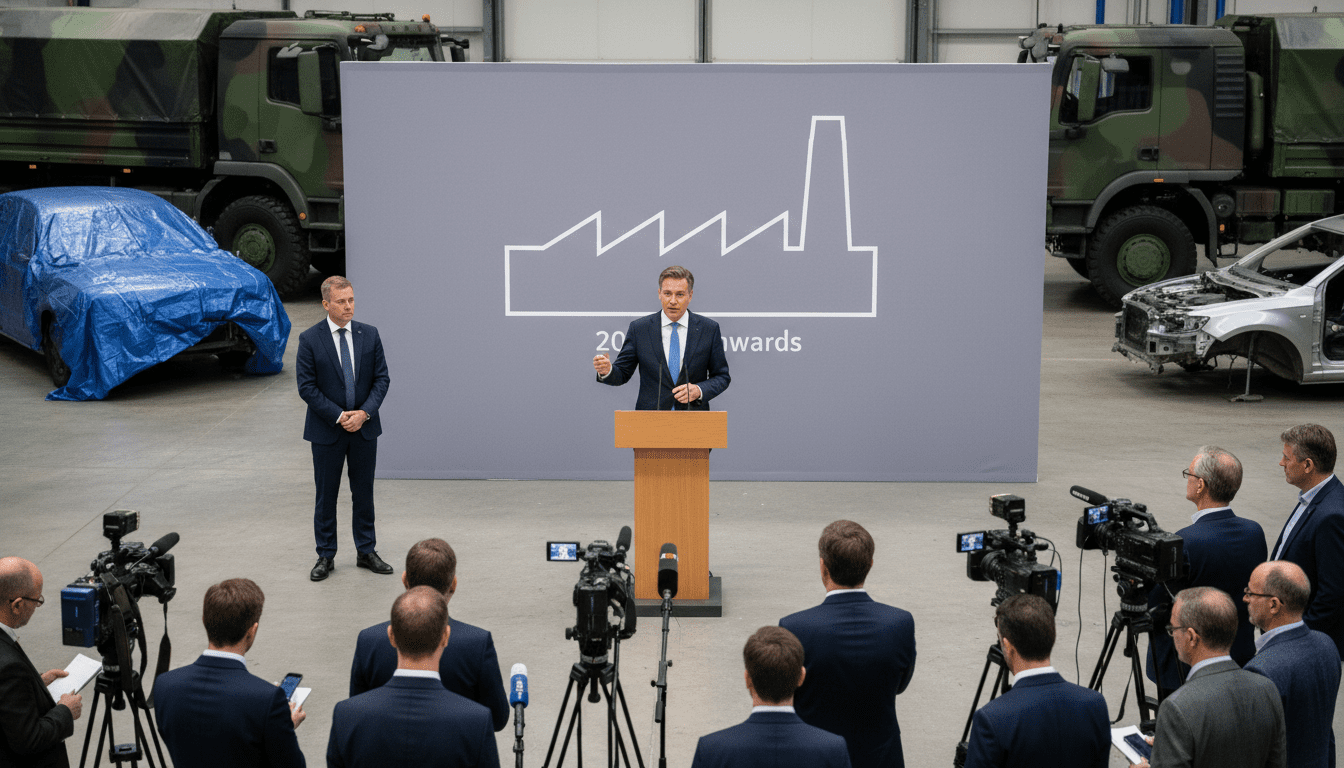
VW Osnabrück to End Volkswagen Group Production, CEO Signals Shift Toward Defence Work
Volkswagen will stop producing Group vehicles at the Osnabrück plant from 2027, CEO Oliver Blume says, as talks begin to make military transport components.
Volkswagen CEO Oliver Blume told media that the company expects to cease Volkswagen Group vehicle production at the VW Osnabrück plant starting in 2027, and that a final decision on the site’s future will be made this year. The announcement marks a major strategic redirection for the plant, which currently employs roughly 2,300 people, and signals Volkswagen’s openness to cooperating with firms in the defense sector. Blume stressed the company would not manufacture weapons but could contribute core automotive expertise to produce transport and support systems.
Blume sets 2027 deadline for VW Osnabrück production
Blume said Volkswagen will not build Volkswagen Group products in Osnabrück after 2026, with a production changeover planned from 2027 onward. He told reporters he was optimistic that the company and potential partners would reach a decision within the current year. The CEO framed the shift as a response to strategic and political imperatives rather than a simple capacity adjustment.
Negotiations with defense suppliers underway
Volkswagen has entered intensive discussions with companies in the defense industry about repurposing capacity at the Osnabrück plant, according to Blume. He emphasized the intent to apply Volkswagen’s manufacturing know-how where it is strongest, naming military transport vehicles and related support hardware as possible directions. The CEO was explicit that Volkswagen would not be in the business of producing armaments or direct weapons systems.
Reported talks involve Rafael and air defence components
Media reports in March indicated that negotiations were underway with Rafael Advanced Defense Systems, the Israeli state-linked defense company, to produce parts for the Iron Dome air defence system at Osnabrück. Those reports say potential outputs could include heavy trucks for moving interceptor rounds, launch platforms, and electrical generators, while the munitions themselves would not be manufactured at the site. Volkswagen has discussed technical partnering rather than taking on sensitive weapons assembly.
Employment and local economic implications for 2,300 workers
The Osnabrück facility presently supports around 2,300 jobs, and any production shift will have immediate consequences for employees and the regional supply chain. Company and local officials will need to negotiate transition plans, retraining programs, and potential new hiring if the plant adopts defence-related manufacturing. Unions and municipal leaders are likely to press for guarantees on workforce protection and investment promises before agreements are finalized.
CEO cites government defence mandate as context
Blume linked the company’s discussions to a broader governmental aim to strengthen Germany’s defensive capabilities, saying the country has a clear mandate to become more defensible. He framed Volkswagen’s potential contribution as aligning industrial capacity with national security requirements, rather than a voluntary pivot into military markets. That positioning signals both corporate caution and responsiveness to public policy priorities.
Next steps and timeline toward a final decision
Volkswagen has said it expects to reach a conclusive position on Osnabrück’s future within this calendar year, with operational changes slated to begin in 2027 if a new direction is confirmed. The path ahead will likely include detailed technical feasibility studies, negotiations with potential defense partners, regulatory reviews, and consultations with employees and works councils. Any formal contracts would also be subject to export control rules and government scrutiny given the sensitive nature of defence-related work.
The announcement marks a significant moment for Volkswagen’s site strategy and for the Osnabrück community, as industrial realignment and national security concerns converge in a decision that could reshape the plant’s output, workforce, and supplier relationships.
