
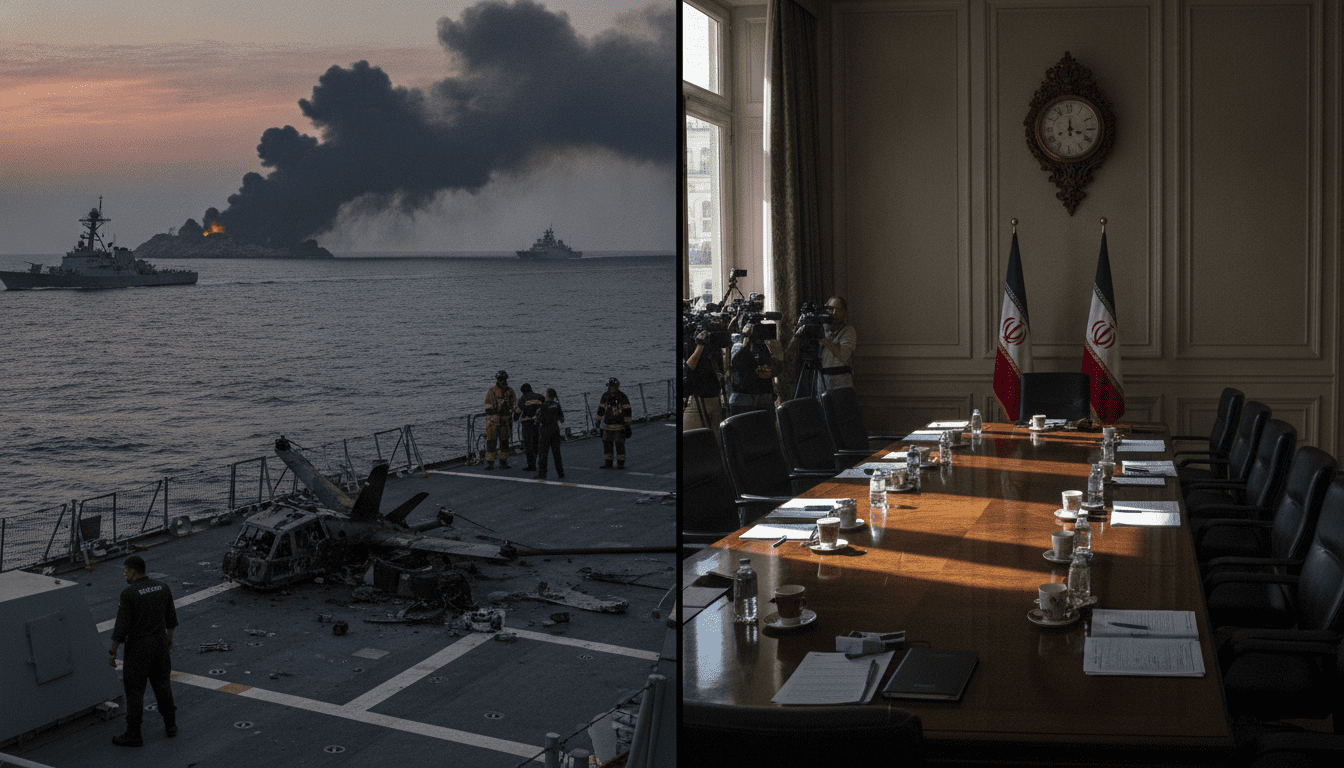
US Strikes Iran After Drone Attack Damages Cargo Ship in Strait of Hormuz
US strikes Iran after drone attack damaged a cargo ship in the Strait of Hormuz; CENTCOM says missile and drone stores and coastal radar were targeted.
The US military said it carried out strikes against Iranian military sites after a drone attack damaged a commercial vessel transiting the Strait of Hormuz, and CENTCOM described the operation as a measured response. US strikes, the command said, targeted missile and drone storage areas and coastal radar installations along Iran’s southern shore. The action follows an incident in which a drone struck a freighter, prompting Washington to accuse Tehran of violating a recently negotiated ceasefire agreement.
US military says strikes hit Iranian missile and drone facilities
CENTCOM publicly identified the targets as storage facilities for missiles and unmanned aircraft, along with radar sites used to monitor maritime approaches, and said the strikes were limited in scope. The command framed the operation as a “forceful response” to the previous day’s attack on a commercial ship that had been navigating the Strait of Hormuz. US officials emphasized they sought to degrade Tehran’s capacity to carry out similar maritime strikes while avoiding broader escalation.
The military also said strikes were planned to minimize civilian harm and to focus on military infrastructure that directly supported maritime attacks. No immediate independent confirmation of damage to the listed Iranian sites was available, and Tehran’s official reporting offered a different account of events in the hours after the strikes.
Washington says strikes were retaliation for drone attack in Strait of Hormuz
US leaders linked the strikes directly to an earlier drone strike that hit a Singapore-flagged freighter as it traversed the Strait of Hormuz, a vital energy and shipping choke point. The US and maritime authorities reported that one of several drones struck the vessel’s main deck, although the ship reportedly remained underway after the hit. Washington said multiple drones had been launched and that US forces intercepted several of them.
The White House and military spokespeople described the operation as necessary to uphold security for commercial shipping and to enforce terms of the recent ceasefire framework. Officials declined to detail the full targeting calculus but portrayed the action as proportionate and aimed at preventing future attacks on international shipping.
Iran reports explosions near Sirik; IRGC vows response
Iranian state and local reports described explosions near the southern port city of Sirik, on the Persian Gulf, in the hours following the US strikes. The Islamic Revolutionary Guard Corps (IRGC) acknowledged that Sirik had been targeted but said those attacks were repelled, and the force warned of a rapid and decisive reply to any further US actions. Sirik has strategic importance given its proximity to the Strait of Hormuz, and it has been the focus of earlier clashes in the region.
Iranian official commentary emphasized national sovereignty and framed the US strikes as a breach of trust after the two sides had signed a framework agreement intended to steer negotiations. Tehran’s response underscored the risk that kinetic exchanges could quickly jeopardize nascent diplomatic channels.
President Trump accuses Tehran of breaking the ceasefire agreement
President Donald Trump publicly accused Iran of violating the ceasefire arrangement after the freighter was struck, saying Tehran had launched multiple drone attacks against ships in the Strait of Hormuz. On his social media platform, he described the incident as a “stupid violation” of the agreement and noted that most of the drones had been intercepted. The president presented the strikes as a necessary enforcement action to hold Iran accountable.
US officials have portrayed the removal of direct threats to commercial traffic as integral to preserving the conditions that produced the recent agreement. The administration also reiterated that it prefers a diplomatic path forward but will use force when it judges that attacks on shipping or personnel demand a military response.
Diplomatic talks in Switzerland face immediate strain
The timing of the strikes raises questions about the fragile diplomatic process under way between the US and Iran, which last week produced a framework intended to open the door to broader negotiations. A first negotiating round convened in Switzerland over the weekend, with US Vice President JD Vance attending from Washington, and officials from both sides had been cautiously optimistic about progress. Iranian parliamentary security figures criticized the US action and suggested it undermined confidence in the negotiating partner’s commitment to the ceasefire.
Diplomats involved in the talks warned that renewed military exchanges could derail the momentum built by the framework agreement and complicate efforts to achieve a durable cessation of hostilities. Negotiators now face the dual challenge of containing tactical military fallout while keeping diplomatic lines open.
Shipping companies and insurers warn of rising risk in the Gulf
Maritime industry sources and insurers have long regarded the Strait of Hormuz as a zone of elevated risk given its narrow channels and strategic importance, and the latest exchanges are likely to increase premiums and rerouting considerations. The International Maritime Organization reported the initial attack on the freighter and continues to monitor the situation, urging operators to exercise heightened caution. Shipping firms may now reassess transit plans, and some commercial operators could elect to alter routes or impose added security measures.
Regional states and international maritime authorities will be watching to see whether the strikes reduce the immediate threat to vessels or instead provoke further tit-for-tat actions that imperil commercial traffic and energy shipments alike.
The coming days will determine whether the diplomatic track can withstand this escalation or whether the cycle of military responses will intensify, with consequences for regional stability and global trade.
