
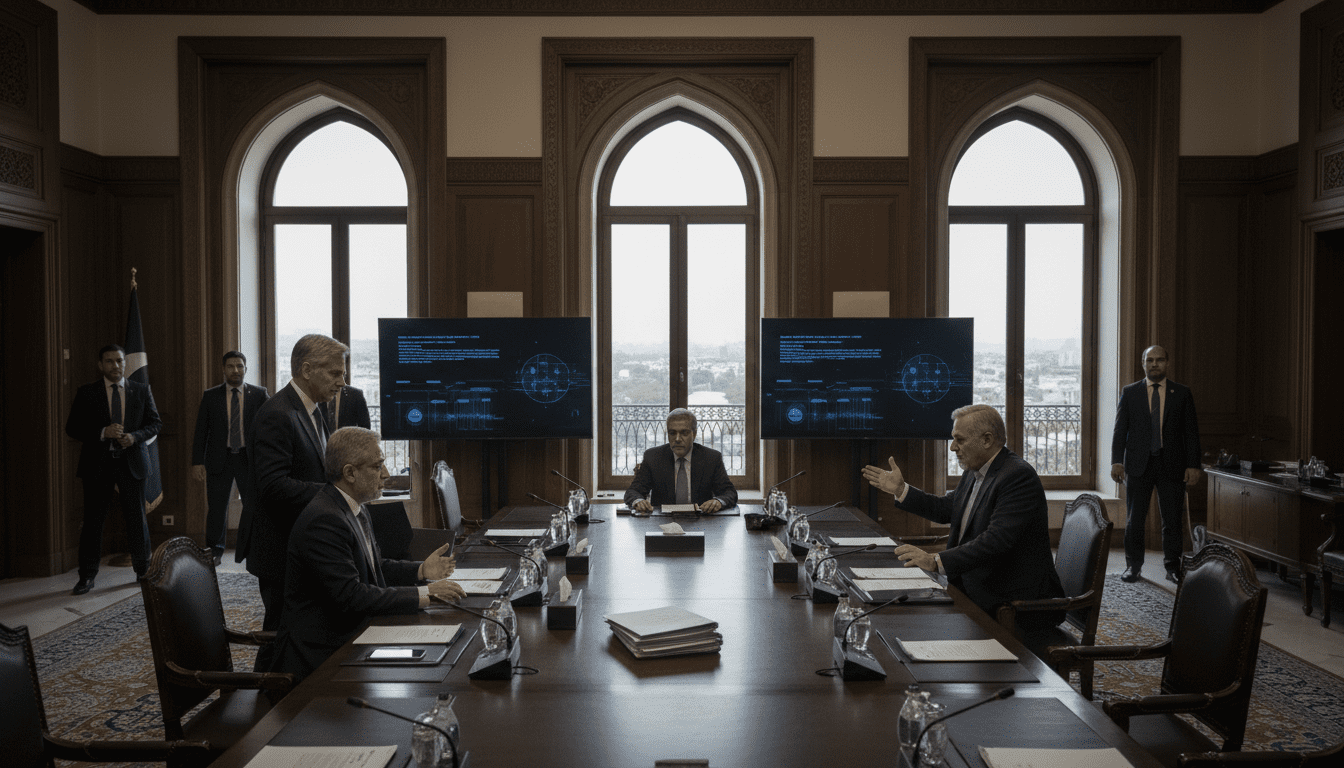
US-Iran talks in Islamabad collapse after marathon session, leaving fragile ceasefire in doubt
US-Iran talks in Islamabad collapsed on April 12, 2026 after a marathon negotiating session; both sides fault each other and a fragile two-week ceasefire is at risk.
Both delegations left Pakistan on April 12, 2026 without a deal to end the six-week war that began after US and Israeli strikes on Iran, and officials from Washington and Tehran traded blame for the failure. The talks, the first direct high-level meeting between the two countries in more than a decade, failed mainly over demands tied to Iran’s nuclear program and control of the Strait of Hormuz. Pakistan, which hosted the session, called for preservation of the ceasefire while diplomats and analysts warned the truce remains precarious.
Talks Collapse After Marathon Session
A long day of negotiations in Islamabad ended without an agreement, officials said, as each side maintained firm red lines. US representatives said Tehran would not offer binding guarantees to forswear a nuclear weapon or the rapid capability to build one. Iranian delegates countered that American demands were excessive and that Washington must show it is worthy of Tehran’s trust before concessions can be made.
The meeting followed a fragile ceasefire declared days earlier and represented the highest-level direct contact between Washington and Tehran in decades. Pakistani Foreign Minister Ishaq Dar urged both sides to protect the truce and keep diplomatic channels open even as the Islamabad talks broke down.
Sticking Points: Nuclear Commitments and the Strait
Negotiators diverged sharply on sequencing: Washington sought concrete limits up front on Iran’s nuclear activities and assurances for secure navigation in the Strait of Hormuz. Tehran prioritized sanctions relief, international recognition, and security guarantees, framing its demands as broader status and protection rather than limited technical adjustments.
Those fundamental asymmetries made compromise difficult, diplomats and regional experts said, with the nuclear question and control of Hormuz repeatedly cited as the principal obstacles. President Donald Trump subsequently announced that the US Navy would impose a blockade on the strait, a move officials described as intended to secure maritime traffic but one that heightens tensions in the Gulf.
Mutual Accusations and Official Statements
US Vice President JD Vance told reporters in Islamabad that the United States needed a clear, affirmative pledge that Iran would not pursue a nuclear weapon or the tools to build one quickly. Iranian parliamentary speaker Mohammad Bagher Qalibaf said responsibility for the impasse rested with Washington and demanded that the United States demonstrate it could be trusted.
Iranian state media charactered American demands as excessive, while some Iranian outlets suggested there had been agreement on a number of points even as core disputes remained unresolved. Washington said the lack of an explicit nuclear commitment from Tehran made further progress impossible in the single-session format.
Analysts Point to Structural, Not Tactical, Divides
Experts tracking the negotiations said the breakdown reflected deeper strategic differences rather than negotiable tactical items. Fatemeh Aman of the Atlantic Council argued that the conflict is structural: the US wants limits and regional de‑escalation, while Iran seeks sanctions relief and formal recognition that alters its security and status calculations.
Farwa Aamer of the Asia Society Policy Institute said the talks opened a channel but that reaching substantive agreement will require time and possibly narrower, incremental steps. Analysts suggested future rounds are more likely to begin with technical confidence-building measures than with negotiations over the most sensitive political issues.
Ceasefire Fragility and Near-Term Risks
Diplomats and analysts described the two-week ceasefire as fragile and contingent on continued restraint and backchannel diplomacy, not on a comprehensive political settlement. Observers warned that local incidents, miscalculations, or actions by proxies could quickly erode the pause and prompt a return to hostilities.
While some expressed cautious optimism that the truce might hold in the immediate term, they emphasized its instability without a follow-up process. US officials did not clarify whether the ceasefire would be extended beyond two weeks, a silence that leaves the durability of the pause in doubt.
Paths Forward and Likely Next Steps
Both sides retain incentives to continue diplomatic engagement despite the setback, but immediate talks are unlikely as each party reassesses strategy and domestic political constraints. Observers expect a period of quiet diplomacy and mediation as intermediaries seek to preserve the ceasefire and lay groundwork for technical, lower‑risk agreements.
Future negotiations, if they resume, are likely to avoid the most contentious items at first and instead focus on measures that reduce immediate dangers, such as maritime safety and mutual transparency steps. Any return to direct, high-level meetings will depend on confidence-building moves and changes in leverage that ease the current impasse.
The Islamabad session demonstrated that direct US-Iran dialogue is possible but also exposed the deep gulf between what each side demands as a precondition for meaningful concessions, leaving the two-week ceasefire and broader peace prospects uncertain.
