
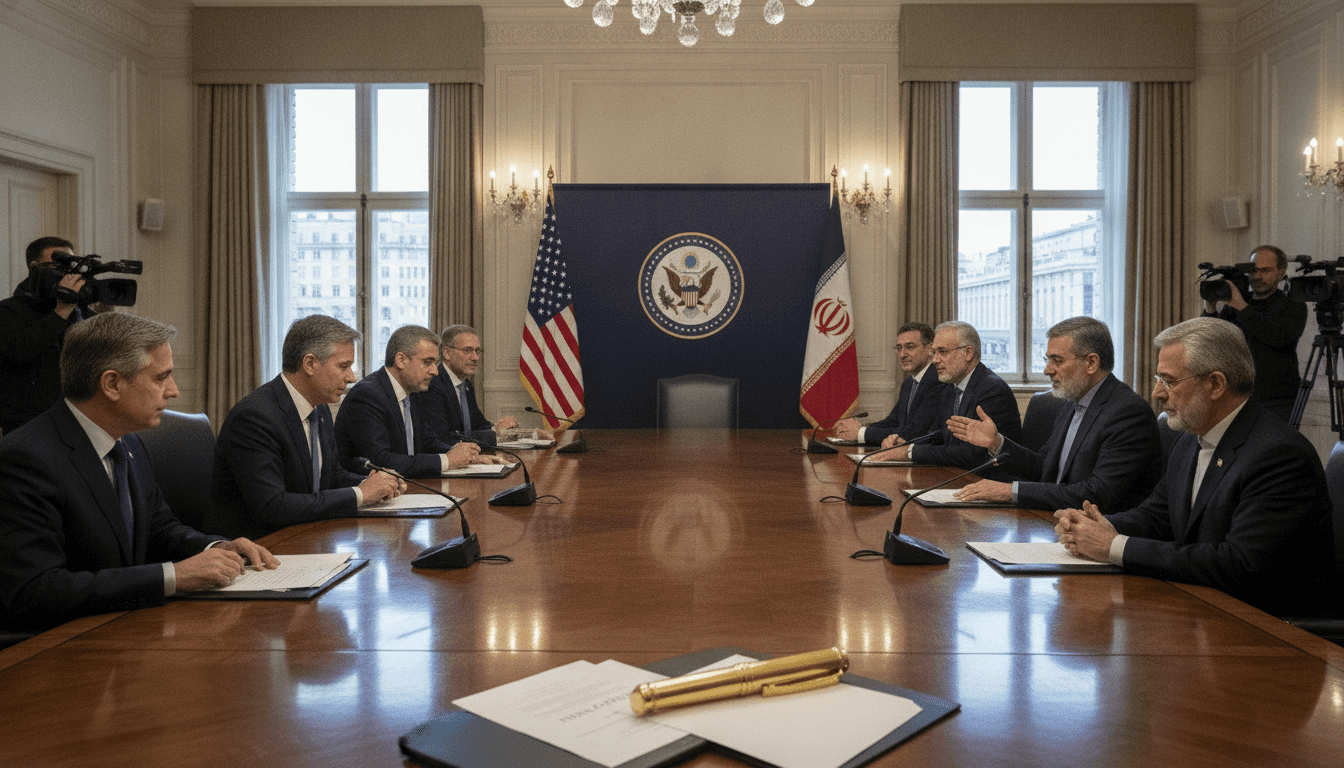
Islamabad Memorandum of Understanding talks postponed as US Vice‑President JD Vance cancels Switzerland visit
US‑Iran peace talks delayed after VP JD Vance cancels travel; Islamabad Memorandum of Understanding signed June 17 begins 60‑day negotiating window with key issues deferred.
The Islamabad Memorandum of Understanding, signed by US President Donald Trump and Iranian President Masoud Pezeshkian on June 17, 2026, was intended to halt open hostilities across multiple fronts but talks on a final settlement have been postponed. Washington announced late on June 18 that Vice‑President JD Vance would not travel to Switzerland for scheduled negotiations, citing unpredictable logistics, and both sides agreed to defer the most contentious issues to a 60‑day window. The document’s immediate provisions have already produced concrete changes, but the delay leaves nuclear, financial and security questions unresolved.
Deal signed and negotiation timetable
The MoU establishes a 60‑day period for negotiators to complete a final agreement, a term that can be extended by mutual consent, and sets out immediate steps for de‑escalation. Presidents Trump and Pezeshkian endorsed the 14‑point Islamabad Memorandum of Understanding on June 17, creating a framework meant to restart trade and end combat operations that began in late February. Despite the signature, the two sides planned follow‑up talks in Switzerland which were interrupted when the US vice‑presidential delegation pulled back on June 18.
Officials presented the MoU as both a ceasefire mechanism and a negotiating roadmap, but the text explicitly postpones resolution of the most politically sensitive items — notably Iran’s enriched uranium stockpiles and broader nuclear arrangements — until the forthcoming bargaining period. The delay to face‑to‑face negotiations raises immediate questions about timelines and enforcement.
Strait of Hormuz: temporary reopening and ambiguity
Under the MoU, Iran agreed to permit toll‑free safe passage of commercial vessels through the Strait of Hormuz for 60 days, a move that allowed maritime traffic to resume within hours of the signing. The strait, a critical chokepoint for global oil shipments, had effectively been blockaded since the war started and the temporary reopening quickly saw Saudi‑flagged supertankers transit on June 18.
The agreement leaves long‑term administration and fees for the waterway unresolved, directing Iran to enter talks with Oman and other littoral states under international law. Tehran has signalled it may introduce fees after the 60‑day period, while the US publicly characterized the reopening as a step toward a permanent toll‑free passage.
Sanctions suspension, frozen assets and reconstruction funds
The Islamabad MoU commits the United States to dismantle its naval blockade immediately and to end the blockade within 30 days, and it calls for the termination of a broad range of sanctions in an agreed schedule as part of the final deal. The text also envisages release of frozen Iranian assets and the creation of a reconstruction and development package reportedly set at no less than USD 300 billion, to be finalised during negotiations.
White House statements have been mixed on whether the United States itself will fund reconstruction, with senior officials suggesting other countries would be invited to invest, while the MoU obliges the US to grant licenses and waivers needed for financial transactions pending the final agreement.
Ceasefire in Lebanon and limits of the agreement
Paragraph one of the MoU declares an “immediate and permanent termination of military operations on all fronts, including in Lebanon,” and commits the US and Iran to safeguard Lebanon’s territorial integrity. That clause contrasts with continued heavy fighting and targeted strikes in parts of southern Lebanon and Syria, where Israeli officials have not accepted that they are bound by the Islamabad accord.
Israeli ministers publicly cast doubt on withdrawal and compliance, saying the deal does not address their security concerns, notably the disarmament of Hezbollah. The MoU therefore reduces some immediate risks of regional escalation but does not secure universal acceptance or implementation by all parties engaged in the conflict.
Nuclear stockpiles deferred to final deal
The MoU explicitly postpones substantive negotiations over Iran’s enriched uranium stockpiles and enrichment activities, agreeing only that disposition and a “satisfactory framework” will be resolved in the final deal. Iran reaffirmed in the text that it will not procure or develop nuclear weapons, while the United States and Iran agreed to a mutually agreed mechanism — including downblending on site under IAEA supervision — to address existing material.
Current estimates described in the MoU place some Iranian stockpiles at levels higher than civilian thresholds but below weapons‑grade, and the next 60 days are expected to focus on technical arrangements and verification measures that have been central to earlier diplomatic disputes.
Ballistic missiles and regime change absent from text
The Islamabad Memorandum of Understanding contains no provisions limiting Iran’s ballistic missile arsenal, an item previously cited by Washington and its allies as a war objective. The omission leaves a major US demand off the immediate negotiating table and signals a narrowing of focus toward de‑escalation and economic measures.
Equally notable is the lack of any language endorsing regime change; the MoU commits both sides to respect each other’s sovereignty and to refrain from interference in domestic affairs. That stance represents a substantive shift from early wartime rhetoric and reshapes the political parameters of the negotiations.
The postponement of Switzerland talks after the vice‑presidential cancellation delays the most consequential bargaining session in the Islamabad MoU process, but the signed text already enacts tangible steps toward ending open hostilities and reopening trade routes. With a 60‑day clock now running from the June 17 signings, the success of the agreement will hinge on whether negotiators can bridge gaps on nuclear verification, financial mechanisms and regional security before the temporary measures expire.
