
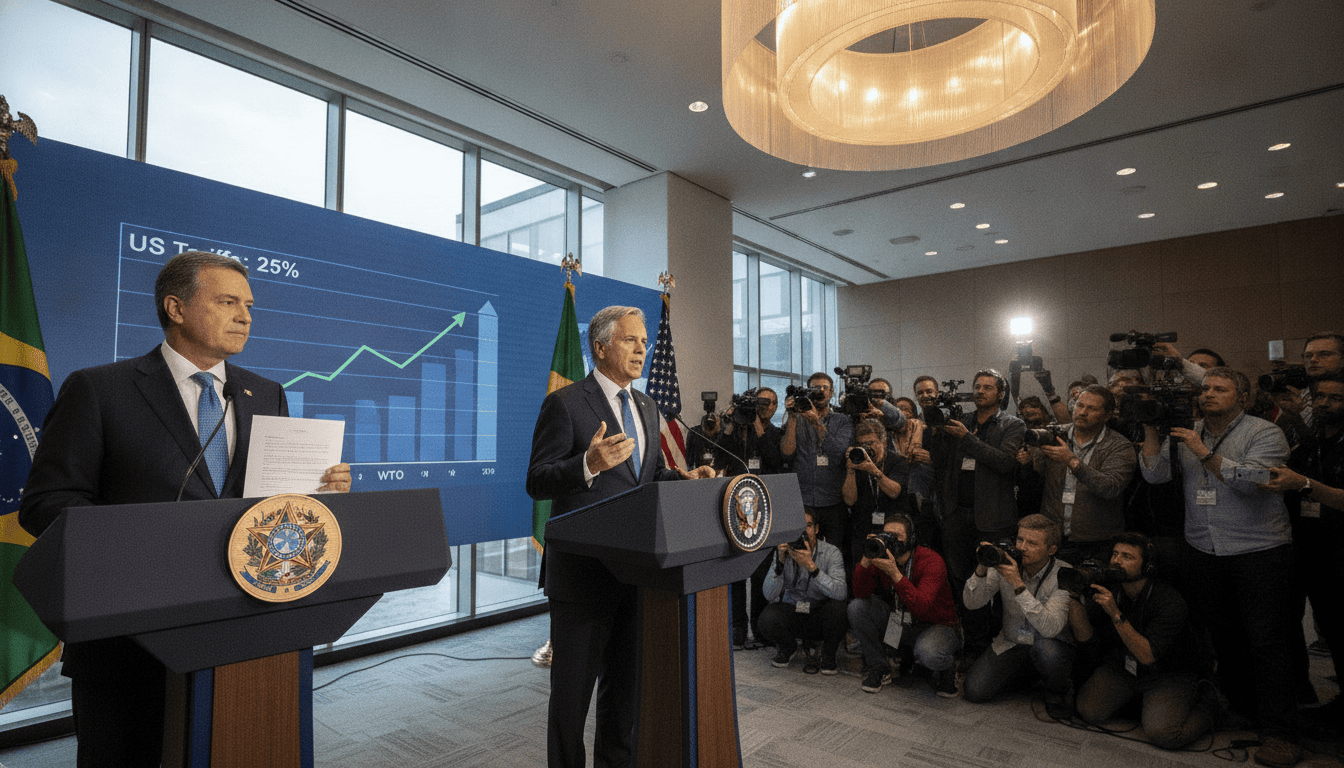
US announces 25% tariffs on Brazil, prompting immediate WTO challenge
US unveils 25% tariffs on most Brazilian imports, citing unfair trade practices and Amazon deforestation. Brazil vows reciprocal measures and a WTO challenge.
US decision and scope of the tariffs
The US government said it will impose a 25 percent tariff on a broad range of imports from Brazil, with specific exceptions for items deemed essential or part of sensitive supply chains. According to a US official, petroleum and natural gas, beef, coffee and certain aircraft parts were listed among the exemptions. The measure was described as targeted at goods that the administration believes benefit from unfair practices or distort global competition. Officials said the duties would be implemented beginning Wednesday, July 22, 2026.
Administration rationale and investigative findings
A formal probe conducted by US trade authorities, the official said, uncovered multiple practices that the administration characterized as unfair to American firms and industries. Investigators pointed to regulatory barriers affecting US technology companies and financial services providers operating in Brazil. The administration also cited trade advantages enjoyed by third countries that, in its view, undermined US producers. US officials linked the findings to a need for corrective tariffs to rebalance trade flows and protect domestic sectors.
Environmental grounds and the timber industry claim
The administration tied part of its justification to ongoing illegal deforestation in the Amazon, arguing that it gives Brazilian timber and related products an artificial cost advantage on world markets. US officials asserted that continued forest loss harms the competitiveness of US wood producers and contributes to unsustainable supply chains. The White House framed the tariff as conditional, stating duties would be lifted should Brazil demonstrably end the practices cited in the investigation. Environmental groups and industry associations are likely to scrutinize both the empirical basis and the enforcement mechanisms for any such condition.
Brazil’s immediate rejection and WTO referral
Brazil’s presidential office strongly rejected the unilateral tariffs and announced plans to challenge the measure at the World Trade Organization. Government spokespeople argued there is no legal basis for the US action and emphasized that, over the past 15 years, the United States has run a goods and services surplus of approximately $424.5 billion in bilateral trade. Brasília further warned it would consider reciprocal measures under its reciprocity law if the tariffs were implemented. The Brazilian government said it would pursue all available remedies at the WTO to contest the legality of the US duties.
Historical context and legal precedents
This move follows earlier episodes in which the US imposed or threatened tariffs on Brazil, including measures enacted last year that targeted actions related to the handling of former president Jair Bolsonaro and his allies. In February, the U.S. Supreme Court found limits on the president’s unilateral authority to impose sweeping tariffs, prompting the administration to open new investigations that officials say provide alternative legal bases for duties. In recent months, the US also signaled potential tariffs for dozens of countries over alleged forced labor concerns, underscoring a broader shift toward enforcement via trade measures.
Potential economic and diplomatic fallout
Trade analysts warn that the 25 percent tariffs could disrupt supply chains and raise costs for US businesses that rely on Brazilian inputs, even with the stated exemptions. Whole sectors — from agriculture to manufactured goods — may face higher import prices that ripple through wholesale and retail channels. Diplomats from allied countries are likely to watch the dispute closely, as the US has previously threatened or implemented tariffs affecting other trading partners, prompting debates on multilateral responses. A WTO dispute could take months or years to resolve, leaving uncertainty for exporters, importers and investors.
The announcement represents a major escalation in bilateral trade tensions and sets the stage for a contentious legal fight at the WTO, with political and economic reverberations likely to influence broader US-Latin America relations in the months ahead.
