
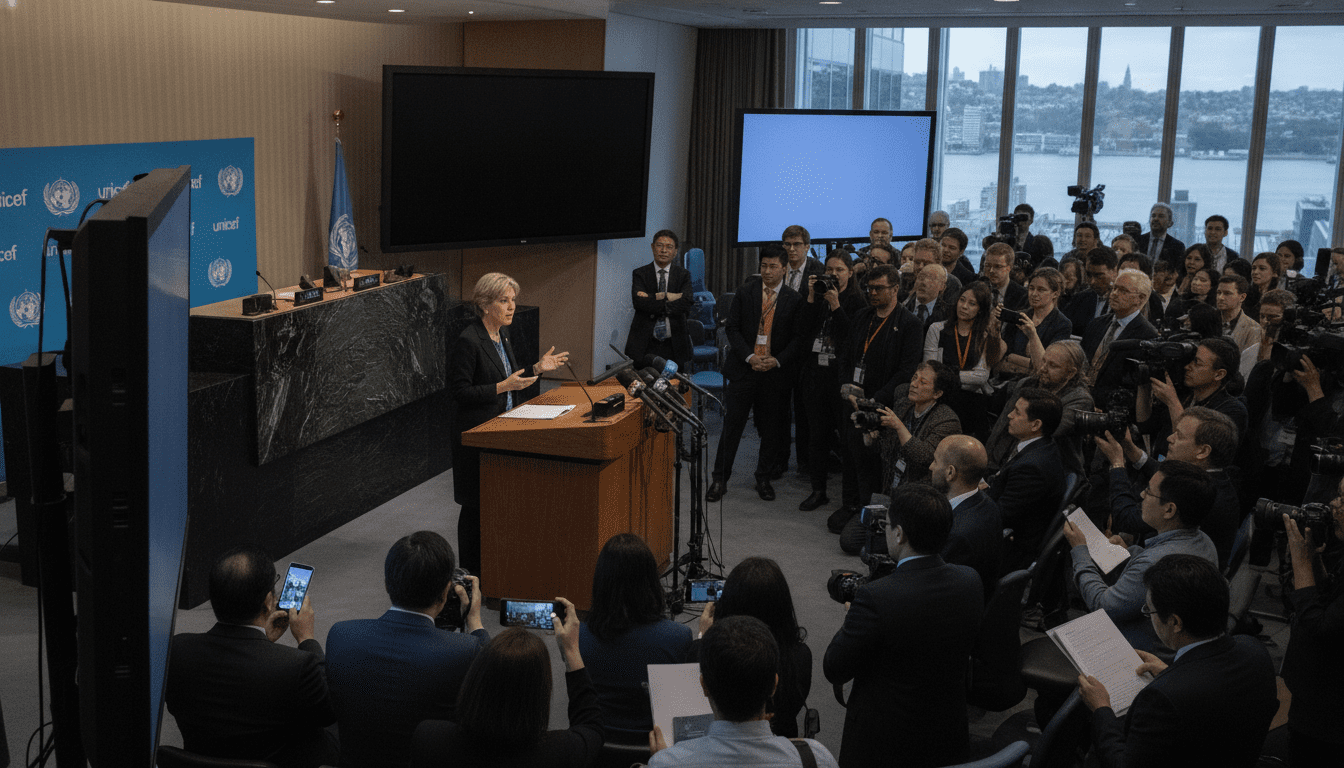
Children climate risks: UNICEF finds 1.1 billion children face multiple climate hazards
UNICEF’s 2026 report warns children climate risks are rising: 1.1 billion children face three or more hazards worldwide, driven by droughts and extreme heat.
A major UNICEF study and accompanying climate-risk atlas released in 2026 finds that nearly half of the world’s children are exposed to multiple climate threats, underscoring a global public-health and humanitarian emergency. The report says about 1.1 billion children are currently exposed to at least three climate hazards simultaneously, with droughts, extreme temperatures above 35°C and heatwaves the most frequent combination. UNICEF officials contend the new high-resolution data should guide governments and aid agencies as they prioritize adaptation and protection for the youngest populations.
Most affected children and the scale of exposure
The UNICEF analysis maps eight distinct climate hazards and quantifies where they overlap for children globally. Nearly every child in the world is exposed to at least one climate hazard, and the atlas identifies hotspots where risks pile up, increasing the likelihood of cascading impacts. The report highlights that roughly 300 million children live where droughts, extreme heat and heatwaves coincide, while more than 115 million face the trio of drought, extreme heat and tropical storms.
The study underlines that overlapping hazards are especially dangerous because they can erode coping capacity and overwhelm local services. In locations where floods follow drought or heatwaves coincide with storms, health, water and food systems can degrade quickly, magnifying risks to children’s survival and development.
Physiological and social reasons children are more vulnerable
UNICEF emphasizes that children are not small adults when it comes to climate risk; their bodies and social circumstances make them more susceptible to harm. Physiologically, children heat up faster, sweat less efficiently and breathe at higher rates, which increases ingestion of airborne pollutants and pathogens. They also require more food and water per unit of body weight, making nutrition and hydration shortfalls more acute during climate shocks.
Socially, children depend on caregivers and institutions for protection and access to services. When health systems, schools or water supplies are disrupted by extreme weather, children’s access to essential care, nutrition and education can decline rapidly, with long-term consequences for growth and cognitive development.
Regional hotspots where multiple hazards overlap
The atlas points to distinct regional clusters of compounded risk. The Sahel in Africa emerges as one of the most affected zones, where millions of children face an overlap of heatwaves, extreme temperatures and sand or dust storms. South and Southeast Asia — including Bangladesh, Myanmar and Pakistan — are also singled out for frequent combinations of heat, drought and cyclonic storms.
These regional patterns reflect the interaction of local climate dynamics with poverty, population density and fragile infrastructure. In low-resource settings, repeated shocks can deplete household savings and community coping mechanisms, leaving children with fewer safety nets as events intensify.
How the climate-risk atlas is intended to inform policy
UNICEF says the high-resolution atlas was designed to give policymakers actionable intelligence about where to direct adaptation investments and strengthen services. By identifying the precise locations where child exposure and vulnerability intersect, the tool aims to help governments plan targeted interventions such as early warning systems, resilient water and health infrastructure, and school-based heat protections.
UNICEF’s executive leadership has urged governments to integrate the atlas into national planning and budget processes so that resources go to places where they will reduce the highest child-level risks. The report frames the atlas as a practical bridge between climate science and child-focused public policy.
Exposure in wealthier countries and the case of Germany
The report also examines exposure in higher-income settings and finds that formal service coverage does not remove climate exposure entirely. In Germany, for example, most children benefit from robust health systems and social protection, but UNICEF’s analysis indicates that 97.5 percent of children experience at least one climate impact and 66.5 percent encounter two or more simultaneously. An estimated 8.3 million children in Germany face the combined effects of droughts and heatwaves.
UNICEF Germany’s leadership stressed that affluent countries must both reduce emissions and support adaptation abroad, since the impacts are global and often disproportionate. The agency called for domestic preparedness measures alongside international cooperation to shield children in the hardest-hit regions.
Recommendations and practical measures urged by UNICEF
The report sets out a range of adaptation and protection measures tailored to child vulnerability. Key actions include expanding early warning systems tuned to child-sensitive thresholds, strengthening health and nutrition services, improving water security, and investing in climate-resilient schools. Social protection programs that reach children and families during and after shocks are highlighted as cost-effective ways to protect development outcomes.
UNICEF also reiterates the need for faster global progress on emissions reductions, arguing that mitigation and adaptation must proceed in parallel to prevent further escalation of climate-driven harm to children. International finance, technology transfer and capacity-building are presented as necessary complements to national planning.
UNICEF’s 2026 findings and the accompanying atlas make clear that children climate risks are not hypothetical or distant; they are measurable, widespread and increasingly complex. The report offers a roadmap for prioritizing resources to reduce immediate harm and preserve children’s long-term health and prospects, while pressing governments and donors to act with urgency.
