
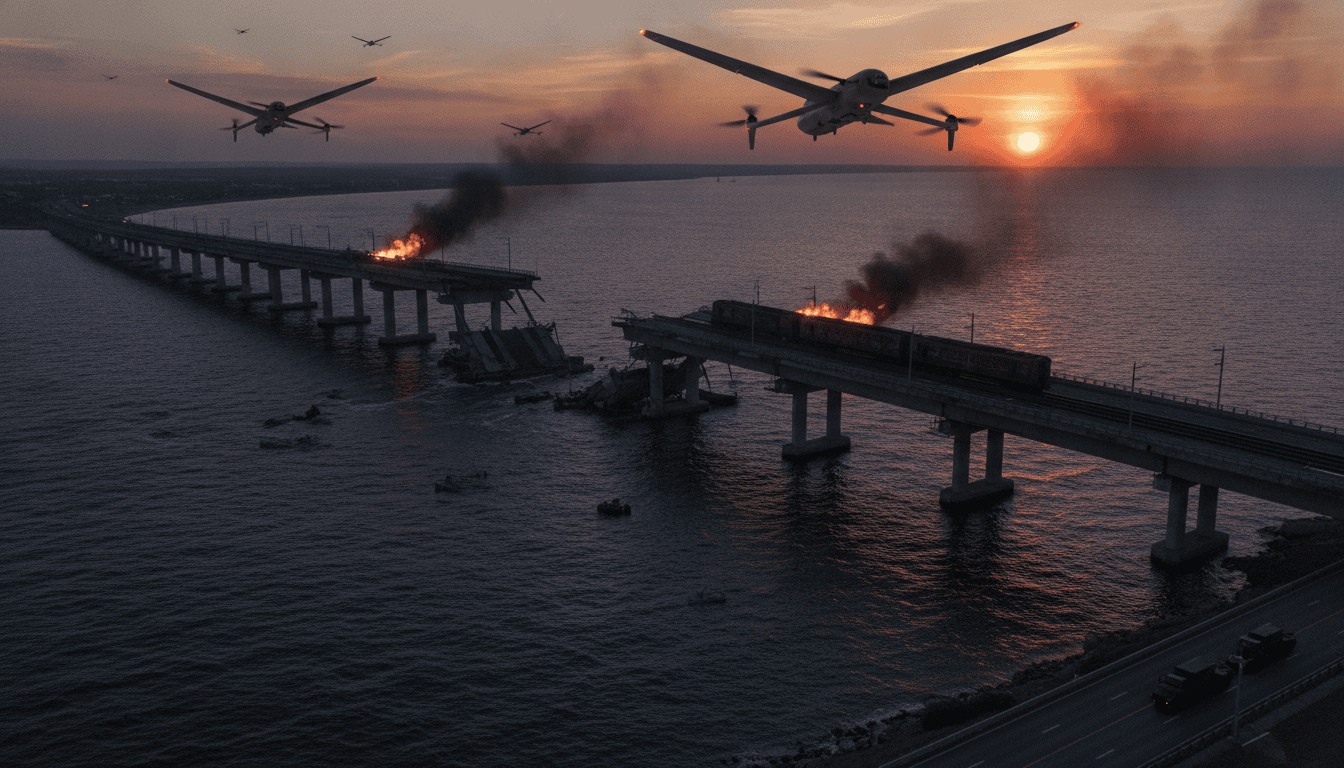
Ukraine drone campaign cripples Crimea supply lines, turning R-280 into a “Highway of Death”
Ukrainian drone campaign targeting Russian supply routes to Crimea has intensified since May, striking dozens of fuel trucks and military vehicles along the R-280 corridor and prompting emergency measures.
The Ukraine drone campaign that began in earnest this spring has rapidly degraded Moscow’s logistical lifelines to the annexed peninsula, according to battlefield footage and statements from officials on both sides. Images and videos circulated this month show columns of burning trucks and damaged military hardware along the R-280 highway, the main arterial route linking Rostov-on-Don through occupied southern Ukraine to Crimea. Kyiv’s stated aim is clear: sever the flow of fuel, ammunition and supplies to Russian forces on the peninsula and create sustained shortages that undermine both military operations and civilian life.
Drone strikes disable critical R-280 route
Drones have repeatedly struck long-distance convoys on the R-280, a road Moscow once treated as a secure rear-area supply line for forces operating in southern Ukraine. Ukrainian operators have adopted a concentrated campaign against that corridor, now described in some military circles as the “Highway of Death” because of the scale of damage to logistics traffic. The strikes have not been limited to single, isolated incidents but appear coordinated to inflict maximum attrition on fuel and transport capacity.
Extent of damage and transport collapse
Ukrainian strikes have reportedly destroyed hundreds of tankers and support vehicles, contributing to an estimated sharp decline in authorized Russian traffic through affected sectors in June. Moscow sources and local administrators have acknowledged severe disruptions to commercial and military transport, with officials in occupied territories declaring emergency measures as fuel stocks and food supplies dwindle. Attacks have targeted not only road convoys but also rail links, bridges and fuel depots to amplify the logistical strain.
Mid-range strikes and upgraded drone technology
The centerpiece of the campaign is a suite of so-called mid-range strikes, using drones with operational ranges commonly cited between 20 and 200 kilometres. Kyiv has prioritized procurement and local development of such systems, allocating significant funds to expand capacity and improve endurance, navigation and accuracy. Operators deploy a mix of modified foreign designs and domestically produced models, some equipped with satellite connectivity and autonomy tools that guide the final approach to targets.
Russian electronic warfare struggling to blunt attacks
Efforts by Russian forces to suppress the campaign with electronic warfare have so far not produced decisive results, according to open battlefield reporting and the pattern of continued strikes. Kyiv’s forces have sought to neutralize air-defense assets on Crimea and maintain communications resilience through satellite links, complicating Moscow’s ability to jam or reroute incoming drones. The apparent inability to fully sever those networks has heightened alarm among Russian military commentators and local administrators who warned that previously safe rear areas were no longer immune to attack.
Operational effects on the southern front
The campaign has immediate tactical consequences for front-line fighting in the south: compromised supply lines reduce the sustainment of forward formations and limit offensive options. Ukrainian commanders have argued that targeted interdiction of logistics can force Russian units to withdraw from exposed positions or curtail offensive thrusts due to shortages of fuel and ammunition. Recent reports of local Russian withdrawals in certain coastal sectors have been linked by Ukrainian sources to prior interdiction operations that disrupted resupply.
Western support and the production gap
Ukrainian officials and analysts say the current window of advantage depends on continued material and financial backing from Western partners to scale domestic production of drones and munitions. Kyiv has moved to increase domestic manufacturing and adapt commercial technologies for military use, but officials argue that additional funding would allow for faster production and procurement of more advanced systems. NATO governments, led in recent discussions by Germany and other allies, have signalled intentions to channel additional resources toward closing that capacity gap.
For now, the Ukraine drone campaign has created a constriction in Moscow’s southern logistics that was not present a year ago, imposing both immediate shortages on the peninsula and longer-term questions about Russia’s ability to adapt. Commanders on both sides face a period of rapid adjustment: Kyiv must sustain supply and attrition pressure without overextending its own resources, while Moscow will likely intensify efforts to restore secure logistical corridors through technical fixes and operational shifts. The next weeks will be critical in determining whether the interdiction can be turned into a lasting strategic advantage or whether countermeasures will blunt its effects.
