
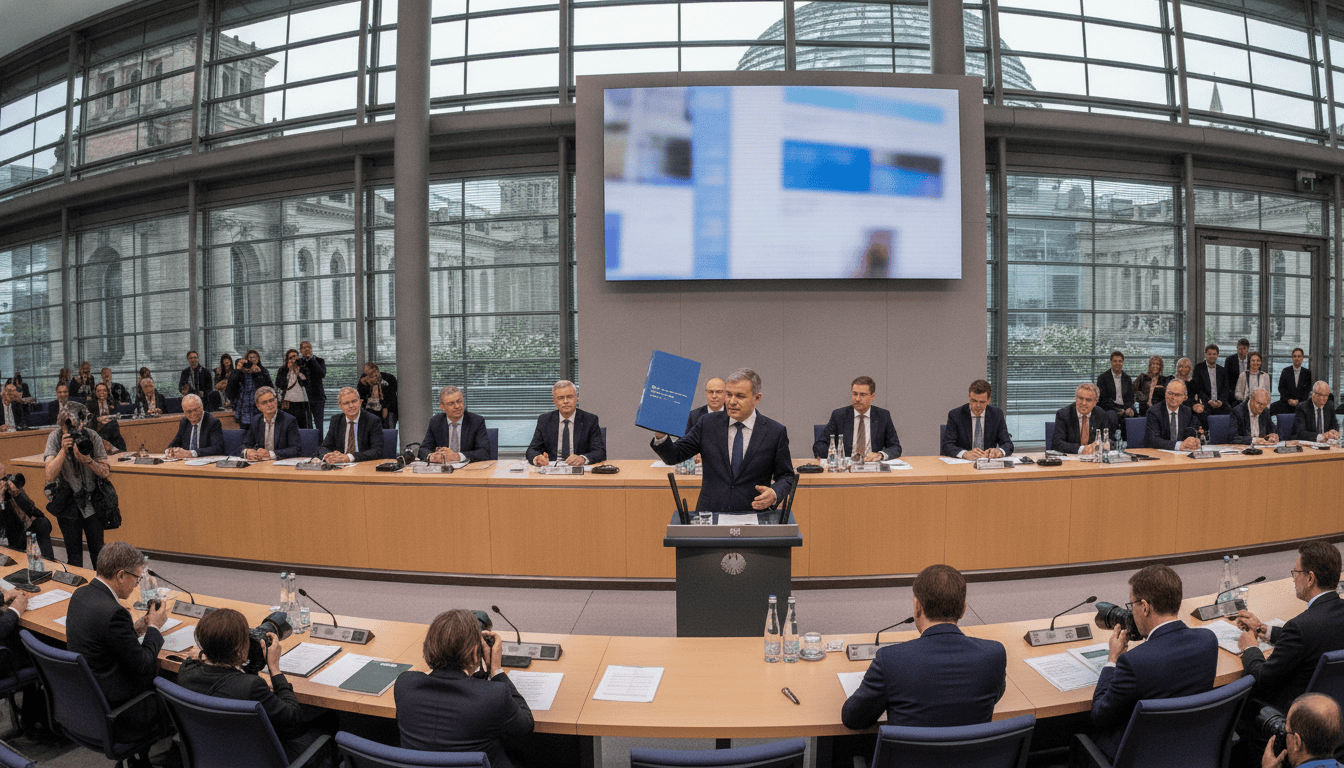
German reform package reshapes federal budget and asks citizens to shoulder short-term costs for longer-term gains
German reform package reshapes the 2027 federal budget, imposing short-term costs for citizens while promising long-term gains, government officials say.
Germany’s new reform package, presented alongside the 2027 federal budget, marks one of the most comprehensive policy shifts in years and puts the “German reform package” at the center of political debate. Finance Minister Lars Klingbeil and his team defended measures that, they say, are necessary to address demographic change, global economic competition and new security demands. Critics warn that the reforms are not an immediate relief program but a set of structural adjustments that will raise burdens for households and businesses in the near term.
Government unveils largest measures in decades
The coalition argued the scale of the reforms reflects an urgent need to modernize public finances and strengthen long-term competitiveness. Officials pointed to investments in infrastructure, defence and labour-market incentives bundled with changes to taxation and spending rules.
Finance Ministry briefings emphasized that the 2027 federal budget accommodates both new spending priorities and fiscal consolidation steps intended to stabilize public debt over time. The package combines immediate outlays with reforms that the government says will unlock future savings and growth.
Pattern of political stasis followed by concentrated reform
Analysts noted the policy shift fits a recurring pattern in postwar German politics: prolonged periods of incremental governance followed by comparatively short bursts of intensive reform. Commentators trace the dynamic from the long administrations of Helmut Kohl and Angela Merkel to the reformary phases under Gerhard Schröder and now the current leadership.
That historical framing is being used by proponents to justify the political risk of imposing present costs for future gains. The government argues that delayed action on structural challenges would compound problems later and make adjustment more painful.
Demography, China and security driving choices
Officials described three structural pressures behind the package: an aging population that strains health and pension systems, intensified global competition especially from China, and a tougher international security environment requiring sustained defence spending. These factors, ministers contend, limit the effectiveness of short-term relief and shift priority toward durable reforms.
Policymakers are prioritizing measures that aim to shore up the labour force, accelerate digitalisation and maintain NATO commitments. The reforms are designed to alter incentives and resource allocation rather than deliver immediate consumption support.
Citizens face short-term burdens, officials promise long-term benefits
Government spokespeople acknowledged that many parts of the reform package will impose costs on households today, whether through tax adjustments, restructured subsidies or tighter benefit formulas. The official line is that these steps are necessary to avoid steeper costs in the future and to ensure intergenerational fairness.
Opponents counter that the timing and composition of the measures risk amplifying social strain, particularly for lower-income families and pensioners. Economic forecasters will be watching near-term consumption and inflation dynamics as the reforms take effect.
Budgetary trade-offs and fiscal mechanics
The 2027 federal budget presents a blend of increased investment envelopes and measures intended to reduce recurrent expenditures over time. Officials point to reallocated funds for infrastructure and technology alongside efficiency drives in certain public programmes.
Fiscal planners have framed the package as a pragmatic compromise: fund immediate strategic needs while introducing structural changes that lower baseline spending growth. The approach accepts short-term deficits or targeted levies in exchange for projected medium-term fiscal gains.
Political calculus: leaders defend a difficult course
Chancellor Olaf Scholz and leading conservative figures including Friedrich Merz have publicly backed the overall direction, framing the reforms as unavoidable responses to new realities. Their arguments emphasize long-term sovereignty, economic resilience and the necessity of adapting to demographic constraints.
Still, the package creates political hazards. Polls and party strategists suggest that measures perceived as burdensome could erode public support if the promised benefits do not materialize within a visible timeframe. Coalition cohesion will be tested as legislative deliberations proceed.
Opposition and public reaction shape the debate
Opposition parties and social groups have mobilized against specific elements of the plan, calling for targeted relief measures or alternate revenue sources to soften the impact on vulnerable populations. Trade unions and civic organisations have demanded clearer protections for low-income households and concrete safety nets.
Public opinion remains mixed: some accept the government’s argument about necessity, while others express frustration that reforms are framed as sacrifices without immediate compensations. How the narrative evolves will hinge on communication, implementation speed and short-term economic conditions.
The German reform package represents a deliberate shift from short-term alleviation toward structural adjustment, and officials have framed its adoption as inevitable given demographic and geopolitical pressures. Its ultimate political and economic effects will depend on implementation details, fiscal discipline and whether promised long-term gains can be demonstrated to voters in the years ahead.
