
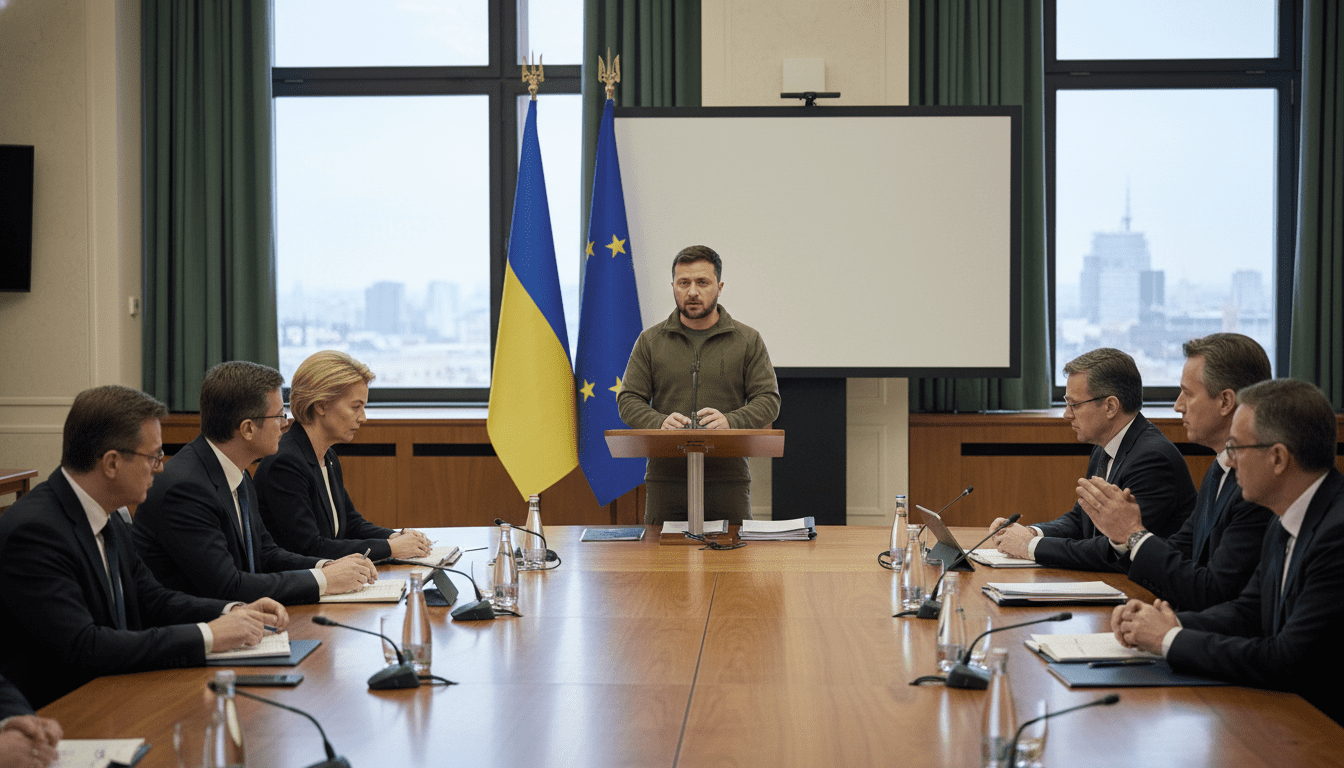
Ukraine arms industry outstrips available funding as Germany urges bilateral top-up
EU loan covers only part of Ukraine arms industry needs; German proposal seeks additional bilateral pledges to fill gap and boost production capacity.
Ukraine’s arms industry can produce far more weapons than the current funding allows, officials and leaders warned after a NATO foreign ministers’ meeting in Helsingborg. The issue centers on a two-year, €90 billion EU credit package that Kyiv says covers only a portion of what its defense sector can build, prompting German Foreign Minister Johann Wadephul to propose bilateral top-ups to unlock further procurement. President Volodymyr Zelensky and Ukraine’s Defense Ministry point to rapidly expanded domestic output and argue additional financing is needed to translate industrial capacity into weapons on the battlefield.
Production growth far exceeds procurement funding
According to the Ukrainian Defense Ministry, national defense production has expanded roughly fiftyfold since the Russian invasion began. The ministry reported that Ukrainian-sourced weapons, equipment and ammunition accounted for 82 percent of procurement in 2025, up from 46 percent the previous year. Officials say more than 40 percent of weapons used at the front are now developed domestically, signaling growing industrial independence.
Yet those production gains are constrained by available purchasing power. Zelensky told Reuters the EU credit enables Kyiv to order only about 60 percent of the hardware its industry could supply, highlighting a large, unresolved funding shortfall that risks leaving factories underutilized.
Details of the EU loan and the financing shortfall
The EU facility earmarks €90 billion over two years for Ukraine, an allocation that is often cited as a decisive support package. In annual terms, that breaks down to €45 billion per year, of which Brussels has allocated roughly €30 billion for military procurement this year. European and German officials, however, estimate Kyiv’s actual defense needs could reach as much as €70 billion in the current period, creating a funding gap that the EU loan alone does not close.
Ukrainian leaders plan to channel the first tranche of EU funds, expected in mid-June, into the domestic arms sector to sustain and expand production. Kyiv argues that without additional external financing, some factories will be limited by budgets rather than by industrial capability.
Wadephul’s push for bilateral contributions at NATO meeting
At the Helsingborg meeting, German Foreign Minister Johann Wadephul urged allied capitals to add bilateral funding on top of the EU credit. Wadephul proposed that countries commit “at least the same sum” as the EU loan through bilateral channels, a suggestion intended to mobilize an extra €30–€40 billion for Kyiv’s defense procurements. He said many states signaled support for the idea at the meeting, though some pledged only general backing while evaluating how to provide funds.
The German proposal reflects growing concern in Berlin and Brussels about uneven burden-sharing within allied procurement mechanisms, and it aims to broaden participation in financing Ukraine’s growing demand for domestically produced systems.
Procurement rules, U.S. shortages and financing mechanisms
Brussels’ loan contains a “Buy European” preference that prioritizes production within the EU, the European Free Trade Association and Ukraine, though exceptions can be made through case-by-case justification. That requirement supports the Ukrainian industrial base but complicates access to certain U.S. systems that remain critical, particularly for high-end air and missile defense.
Allied purchases of American systems for Ukraine are often conducted through NATO’s pooled procurement route known as PURL, which allows partners to buy U.S. equipment on Kyiv’s behalf. However, the global inventory of Patriot systems and interceptors is tight, and officials have warned that supplies have been strained by conflicts such as the war involving Iran and its proxies. Kyiv has said the U.S. continues to provide a “small number” of interceptors under PURL but that those flows remain vulnerable.
Export liberalization and commercial opportunities for partners
Berlin is seeking to turn the financing conversation into a partnership, offering to deepen industrial cooperation with Kyiv. One inducement on the table is broader access to Ukrainian-made systems: Kyiv has signaled it will relax strict export controls on domestically produced weapons once its own needs are assured. President Zelensky said at the end of April that export rules would be eased, red tape reduced, and mechanisms put in place to help Ukrainian firms enter partner markets.
Ukraine plans to open ten “weapons export centers” across Europe by year’s end, including a hub in Berlin, intended to streamline trade in systems deemed surplus to Kyiv’s frontline requirements. Officials stress that the military retains priority access and only equipment beyond domestic needs will be eligible for export.
Unequal burden-sharing within allied support programs
German officials and others note that a small number of countries currently shoulder a disproportionate share of bilateral financing through programs like PURL. Germany is the largest bilateral funder to Kyiv, and Berlin’s rhetoric reflects frustration that not all pledges have translated into concrete deliveries. Wadephul’s initiative appears designed to encourage a broader set of partners to convert declarations of support into binding financial commitments.
By linking additional contributions to industrial cooperation and potential commercial gains, proponents hope to create a more sustainable financing model that benefits both Ukraine’s defense needs and allied defense industries.
The coming weeks will test whether Wadephul’s proposal secures concrete pledges and whether additional capital can be mobilized quickly enough to match Ukraine’s expanding production capacity and battlefield requirements.
