
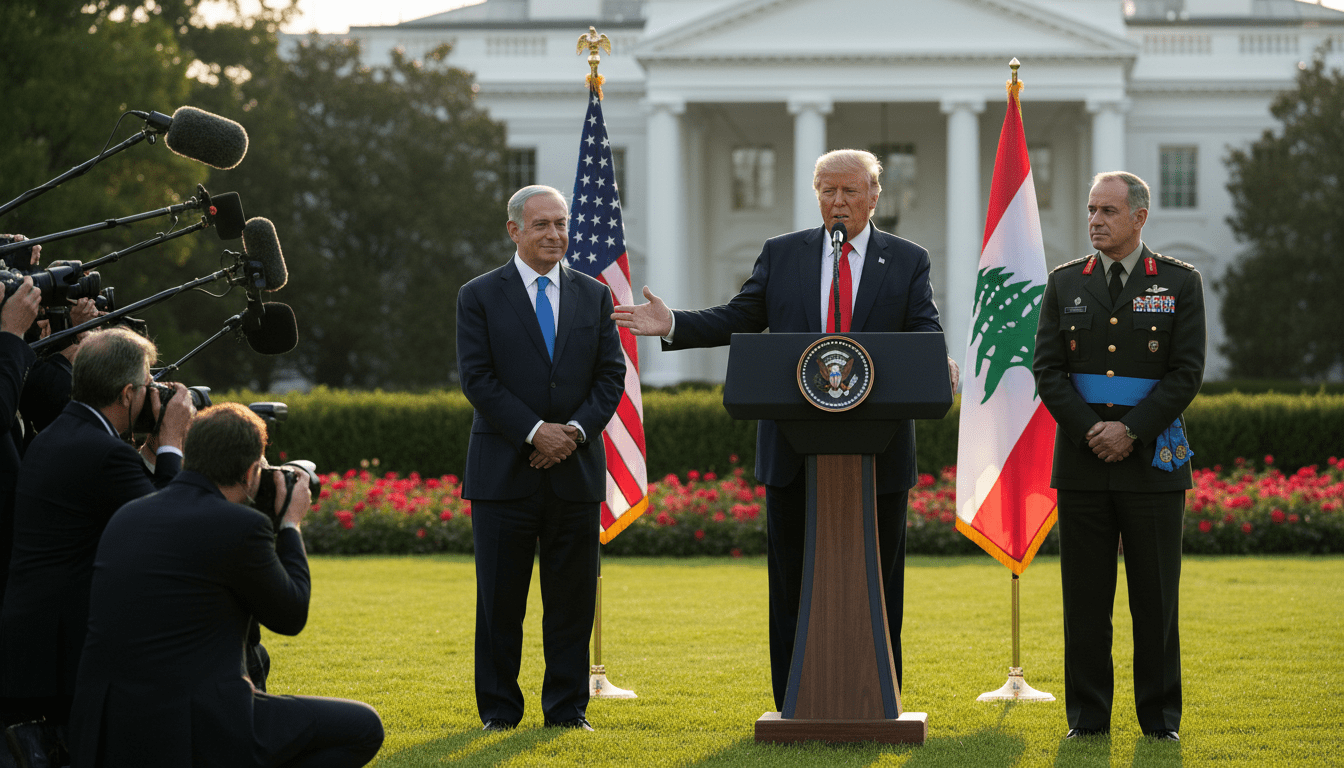
Trump Announces Israel-Lebanon Ceasefire and Invites Netanyahu, President Joseph Aoun to White House
U.S. President Donald Trump announced that Israel and Lebanon have agreed to a ceasefire and said he expected Prime Minister Benjamin Netanyahu and Lebanese President Joseph Aoun to visit the White House in the coming days to press forward on talks. The Israel-Lebanon ceasefire, Trump said in remarks to reporters, would begin immediately and could mark a window for broader negotiations after a week of intensive diplomacy. (apnews.com)
Trump’s Declaration and White House Invitation
Trump told reporters that the pause in fighting followed detailed conversations with leaders from both countries and that he anticipated hosting Netanyahu and Aoun “over the next four or five days” to continue diplomacy. His comments framed the White House as a focal point for follow-up talks aimed at translating the temporary halt in hostilities into a longer-term agreement. (apnews.com)
The president described the ceasefire as a step that could help extend a separate U.S.-brokered truce with Iran, but he cautioned that further negotiations would be needed to resolve the remaining security and political issues between Israel and Lebanon. Trump’s remarks came amid an active diplomatic effort by multiple intermediaries to consolidate fragile pauses into more durable arrangements. (apnews.com)
Washington Hosted Rare Direct Talks This Week
Diplomats said the announcement followed rare, direct meetings in Washington this week between Israeli and Lebanese representatives, convened under U.S. auspices and described by the State Department as “productive.” The sessions were the first direct exchanges between the two sides in decades and were positioned as a preliminary step toward formal negotiations on security arrangements and militant disarmament. (apnews.com)
U.S. officials publicly framed the Washington meetings as an opening phase rather than a final settlement, with further sessions and higher-level contacts expected if the ceasefire holds. The State Department said the objective is to move from tactical pauses in fighting to talks about disarmament, border security and mechanisms for enforcement. (apnews.com)
Netanyahu’s Agreement and Limitations
Israeli Prime Minister Benjamin Netanyahu issued a statement saying he had agreed to a limited, time-bound halt in fighting in Lebanon intended to advance talks, but he emphasized that Israel’s security concerns would remain central to any deal. Netanyahu and his ministers have repeatedly stressed that disarming Hezbollah and eliminating cross-border threats would be prerequisites for a durable peace. (apnews.com)
Israeli officials have also signaled reservations about blanket pauses that do not address Hezbollah’s capabilities, underscoring a split between tactical ceasefires and the strategic goal of neutralizing armed groups operating inside Lebanon. Those caveats are likely to shape the agenda for any high-level meetings in Washington. (apnews.com)
Human Cost and Urgency in Lebanon
The diplomatic momentum comes after some of the deadliest strikes to hit Lebanon during the recent escalation, which left hundreds dead and thousands injured in populated areas earlier this month. Humanitarian agencies and Lebanese authorities have said that urgent aid, reconstruction and civilian protection will be priorities should the ceasefire hold. (apnews.com)
Aid groups warned that even a temporary pause will require robust access for medical teams, repairs to critical infrastructure and clear guarantees for the safety of relief convoys. Officials in Beirut have pressed international partners for swift assistance to address the scale of displacement and damage resulting from recent operations. (apnews.com)
Diplomatic Obstacles and Enforcement Questions
Analysts cautioned that translating a short, negotiated halt into a lasting settlement will require mechanisms to monitor violations and to ensure compliance by armed factions not fully under central government control. Lebanon’s internal political divisions and Hezbollah’s independent military capacity complicate any agreement that does not include verifiable disarmament measures. (apnews.com)
International mediators are understood to be exploring verification teams, phased disengagement plans and guarantees from external partners, but diplomats say such technical work takes time and is vulnerable to quick setbacks on the ground. The credibility of any enforcement architecture will be key to persuading skeptical audiences on both sides of the border. (apnews.com)
Next Steps and Stakes for Regional Stability
If Netanyahu and President Aoun travel to Washington as Trump suggested, their meetings would aim to convert a fragile cessation of hostilities into concrete steps on border security, prisoner exchanges and pathways to political dialogue. The talks would also test U.S. capacity to broker multilateral follow-through between Israel, Lebanon and regional actors engaged in parallel Iran-related negotiations. (apnews.com)
Observers say the immediate stakes are humanitarian and tactical: preserving the pause in bloodshed, enabling aid deliveries and preventing a rapid resumption of wide-scale strikes. The broader strategic stakes include whether the temporary arrangements can be extended to support a sustainable reduction of tensions across the wider regional conflict. (apnews.com)
The coming days will show whether the White House can host the diplomatic follow-through President Trump described and, crucially, whether the temporary Israel-Lebanon ceasefire withstands pressures on the ground long enough for negotiators to build trust and practical enforcement measures. (apnews.com)
