
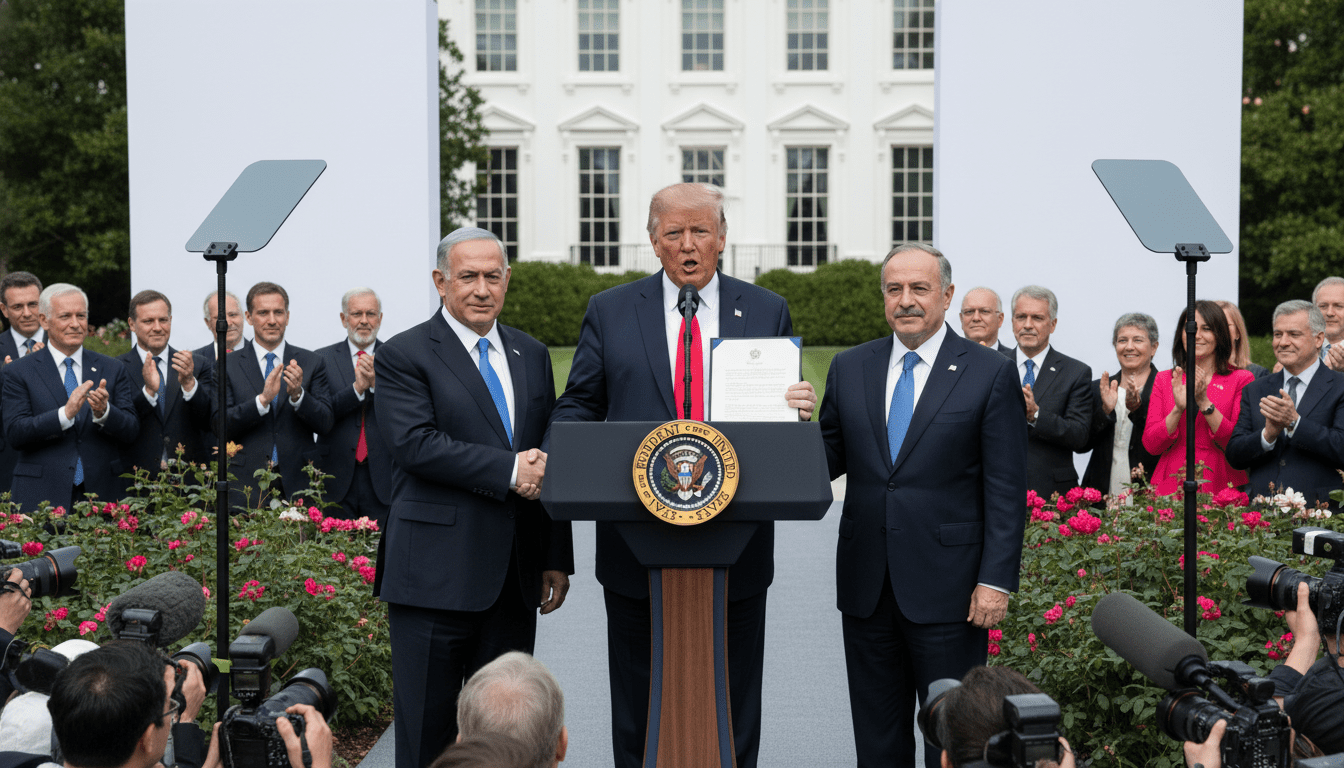
Trump announces three-week extension of Lebanon ceasefire after White House talks
President Trump announced a three-week extension of the Lebanon ceasefire after hosting Israeli and Lebanese delegations at the White House, saying Washington will help protect Lebanon from Hezbollah.
The United States will keep working with Lebanon while urging action against Iranian financing of Hezbollah, the president added. The current Lebanon ceasefire would have expired late Sunday without the extension and the White House called the earlier meeting “historic.”
White House meeting convenes Israeli and Lebanese delegations
Senior representatives from Israel and Lebanon met at the White House this week in talks brokered by the U.S. administration. President Trump said the discussions produced an agreement to extend the Lebanon ceasefire for an additional three weeks to prevent a return to open hostilities.
Trump described the prior session as historic and used a post on his social platform to announce the decision publicly. Officials in both delegations were said to have exchanged views on operational steps, though formal statements from the Lebanese side were limited immediately after the meeting.
U.S. frames extension as protection for Lebanon
In public remarks, the president framed the extension as part of a broader U.S. effort to bolster Lebanon’s security against what he called Hezbollah threats. He said the United States will “work with Lebanon” to strengthen defenses and help prevent the militia from exploiting any security vacuum.
The administration positioned the Lebanon ceasefire extension as temporary but consequential, aiming to provide breathing room for diplomacy and logistics on the ground. Washington’s stated priority is to reduce civilian harm while deterring renewed cross-border strikes between Hezbollah and Israeli forces.
Iran’s financing of Hezbollah cited as central issue
Trump repeatedly linked the militia’s capabilities to continued financial and materiel support from Iran, saying any durable resolution would require curbing Tehran’s backing. He told reporters that, so long as Iran finances Hezbollah, a lasting agreement tied to the broader Iran conflict would be out of reach.
The president also suggested Iran might have used the earlier lull to replenish some stockpiles, but said U.S. capabilities could neutralize those gains swiftly if required. His comments framed the Lebanon ceasefire as contingent not only on local measures but on wider regional dynamics involving Tehran.
Planned meetings with Netanyahu and Lebanese President Aoun
Trump said he plans to receive both Israeli Prime Minister Benjamin Netanyahu and Lebanese President Joseph Aoun in Washington during the extended ceasefire window. He indicated he wants the trilateral exchanges to occur while hostilities remain paused, aiming to lock in further understandings and reduce the risk of renewed conflict.
Those planned meetings suggest the administration is pursuing parallel diplomatic tracks with Israel and Lebanon to synchronize security and political steps. Officials did not provide a public timetable for the visits beyond the president’s comment that they are expected during the extension period.
Hezbollah’s public response remains muted
As of the announcement, Hezbollah had not issued an immediate reaction to the extension of the Lebanon ceasefire, leaving questions about the militia’s next moves. Analysts noted that public silence does not necessarily reflect operational restraint, and that monitoring on both sides of the border will continue.
Local sources described a cautious calm in some frontline areas but warned that any tactical shifts could rapidly change the security picture. Humanitarian actors and international monitors stressed that the extended pause provides critical time to address civilian needs and de-escalation measures.
Conflict origins and shifting timelines since February
The current confrontation followed a series of strikes in late February that escalated tensions across the region and drew the United States and Israel into direct action against Iranian targets, according to official accounts. Trump initially set expectations that the broader conflict could be brief, saying earlier that it might last “four weeks or less,” remarks that underscored the uncertainty surrounding timelines.
The extension of the Lebanon ceasefire reflects a recalibration of that timeline, at least at the tactical level, as U.S. officials pursue simultaneous pressure on Iran and measures to limit cross-border escalation. Observers said the coming weeks will be a test of whether diplomatic engagements can convert a temporary pause into more stable conditions.
The Lebanon ceasefire extension announced by the White House offers a temporary reduction in violence and a narrow diplomatic window, but officials on all sides acknowledge that deeper regional issues—most notably Tehran’s relationship with Hezbollah—will determine whether the reprieve holds.
