
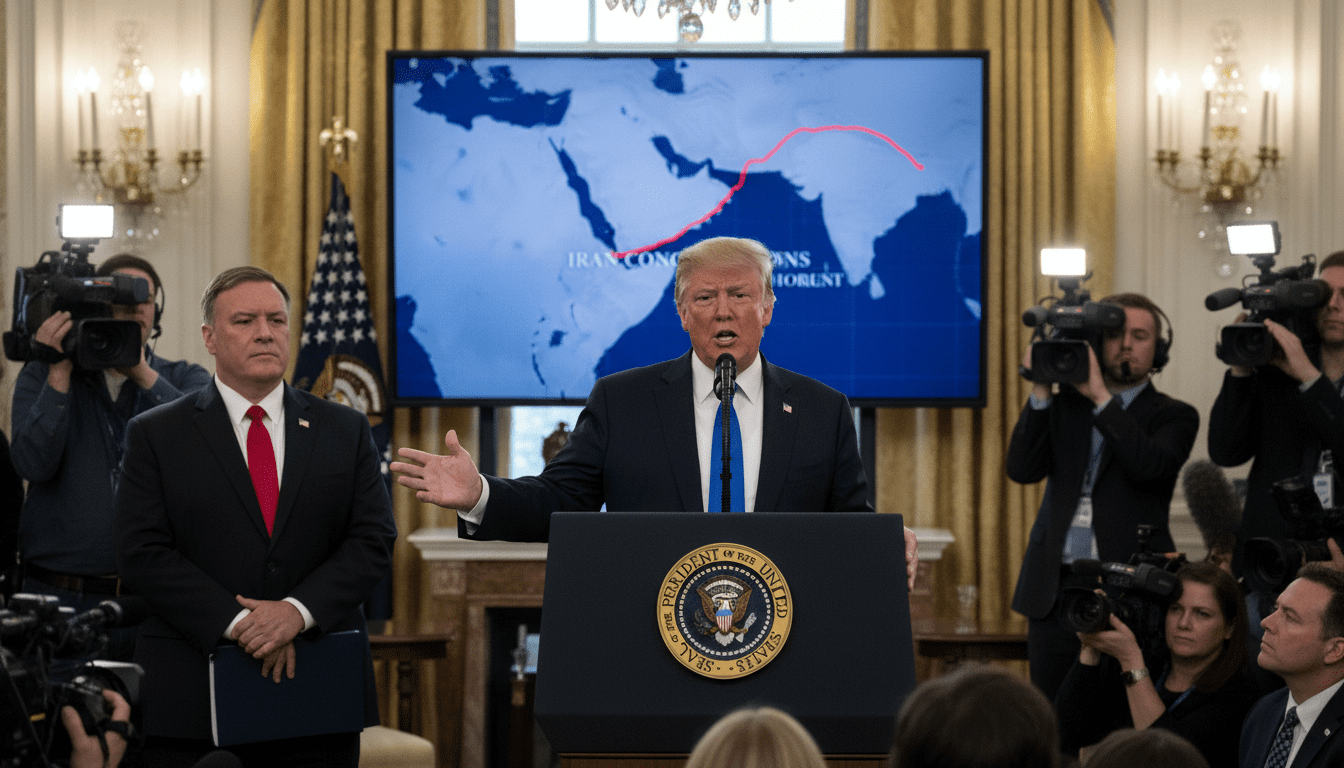
Trump claims concessions from Iran trigger denials and unrest in Tehran
Trump claims concessions from Iran prompt official denials, IRGC control of Hormuz, hardline backlash and market volatility as Pakistan mediates.
President Donald Trump’s assertions that Tehran agreed to hand over enriched uranium and cease enrichment have been forcefully rejected by Iranian authorities and hardline backers, sparking confusion and street mobilization in the capital. The president’s statements — which included claims that the Strait of Hormuz had been reopened and that frozen Iranian assets would remain under US sanctions — drew swift rebuttals from parliamentarians, the Islamic Revolutionary Guard Corps and state-aligned media. The disputed claims came amid a fragile two-week ceasefire reached on April 8 and ongoing mediation efforts in Pakistan.
Details of the president’s public claims
President Trump said that enriched uranium recovered from bombed Iranian nuclear sites would be dug up and transferred to the United States, and that Iran had agreed to stop enriching uranium on its soil. He additionally asserted that mines and other obstacles in the Strait of Hormuz had been cleared, that US restrictions on Iranian frozen assets would continue, and that unrelated ceasefires in the region did not involve Tehran.
Those announcements were made in a rapid series of public remarks and social media posts that left senior Iranian officials scrambling to issue clarifications and denials. The overlapping claims touched on sensitive security and sovereignty issues that Iranian leaders have long presented as non-negotiable.
Parliament and senior officials publicly reject the claims
Mohammad Bagher Ghalibaf, speaker of Iran’s parliament and leader of Iran’s delegation to recent talks in Islamabad, posted a blunt rejection on X, denouncing the statements as false and dismissing the idea that battlefield outcomes had been ceded in negotiations. Other prominent figures including former state television chief Ezzatollah Zarghami and Tehran mayor Alireza Zakani publicly criticized the notion of major concessions.
State-linked outlets and several current and former officials framed the claims as attempts to sow confusion and said they undermined negotiating positions. Calls for authoritative confirmation from Supreme Leader Mojtaba Khamenei were voiced by hardline circles, even though Khamenei’s publicly released messages did not directly address the dispute.
IRGC statement says Hormuz under tight management
The IRGC’s Khatam al-Anbiya Central Headquarters issued a formal statement asserting the Strait of Hormuz was once again under “strict management” by Iran’s armed forces and described US naval actions as “acts of piracy and maritime theft.” The statement followed the president’s declaration that the strait had been reopened and that a naval blockade was being lifted.
The IRGC announcement emphasized continuing restrictions on transit and signaled that Tehran viewed control of the strait as a core security prerogative. The move added a military dimension to the political dispute, raising concerns about further escalation and signaling Tehran’s unwillingness to accept unilateral assertions about its maritime sovereignty.
State media and hardline commentators lambast foreign ministry
State television hosts and analysts, particularly those aligned with the IRGC, launched pointed attacks at Foreign Minister Abbas Araghchi after he published a post saying the Strait of Hormuz had been declared open for the remaining ceasefire period. Broadcasters accused the foreign ministry of communicating in English to audiences without access to social platforms and demanded immediate clarifications.
Hardline news agencies Fars and Tasnim published scathing commentary, with some columnists warning that the public had been “plunged into a haze of confusion.” A parliamentarian suggested that Araghchi might have faced impeachment if not for ongoing wartime conditions, illustrating how the episode intensified internal political pressures on Tehran’s diplomatic apparatus.
Public backlash and visible street mobilization
Responses on domestic messaging apps and state-run comment sections ranged from anger to accusations of betrayal, with many users calling for accountability and rejecting any perceived surrender of strategic assets. Critical posts cited years of hardship under sanctions and warned that any concession would be intolerable to families of those killed in the conflict.
State media broadcast footage of armed convoys and rallies in Tehran featuring flags of allied militias, including Lebanon’s Hezbollah and Iraq’s Hashd al-Shaabi, and images of armed pick-up trucks parading through city streets. The displays underscored Tehran’s efforts to mobilize loyalist forces and project internal unity in the face of contested external narratives.
Markets fluctuate and mediation continues in Pakistan
International oil prices dipped on the day of the announcements before Western markets closed, reflecting investor uncertainty over the authenticity of the reported concessions. Iran’s currency also swung sharply; trading patterns showed the rial weakening then tightening after the IRGC’s declaration regarding the Strait of Hormuz.
Diplomatic channels in Pakistan remain active as mediators try to consolidate any progress and prevent a return to open hostilities following the ceasefire agreed on April 8. Officials in Islamabad have been engaged in shuttle diplomacy, but Tehran’s public denials and the IRGC’s security posture complicate prospects for a clear, verifiable settlement.
The episode has highlighted deep fractures within Iran’s political and security establishment over how to handle negotiations with Washington and external mediators. As officials trade denials and assert control of strategic waterways, uncertainty persists over whether diplomacy can outpace domestic backlash and palpable tensions at sea.
