
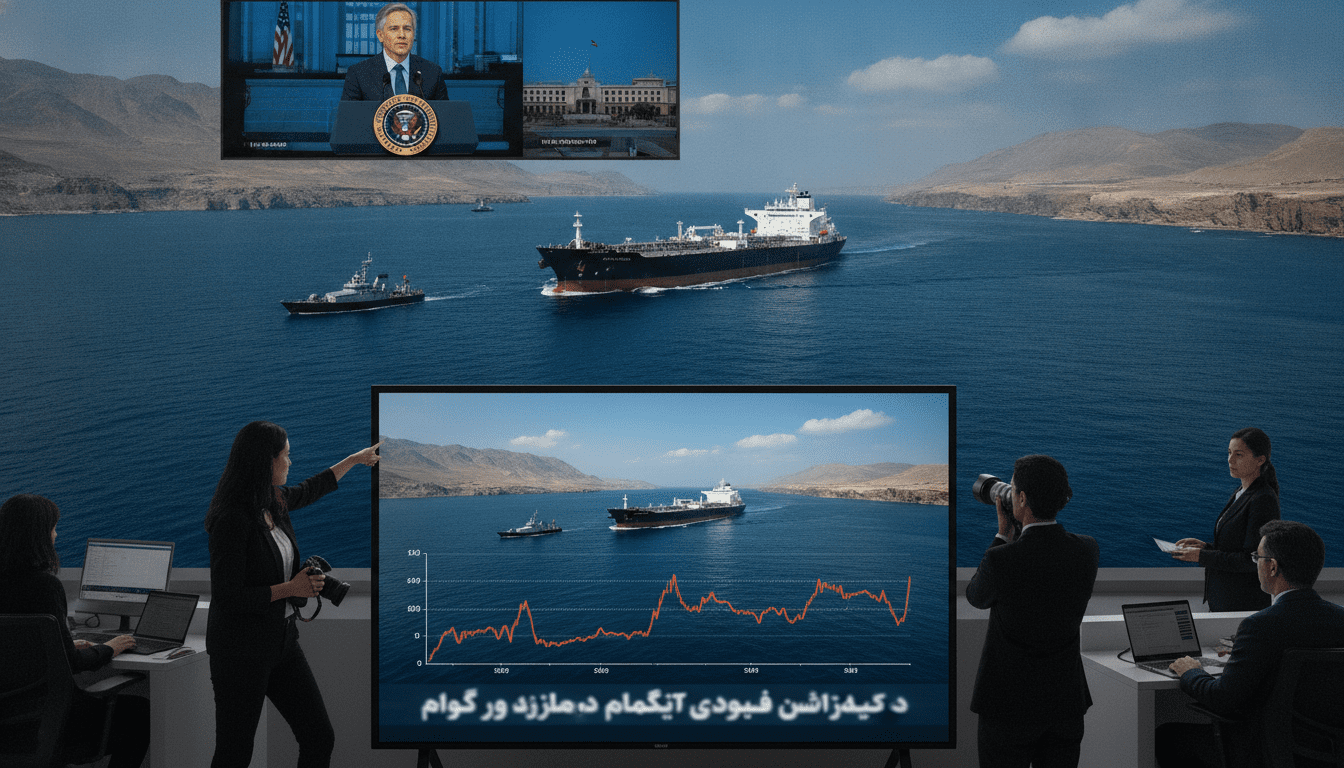
Strait of Hormuz Remains Open, US Denies Iran’s Closure Claim as Tensions Rise
US Central Command says the Strait of Hormuz remains open after Iran’s IRGC warned of a closure, with shipping monitored and ceasefire talks clouded by tensions.
US Central Command Rejects Closure Claim
US Central Command on Saturday denied Iran’s declaration that the Strait of Hormuz had been closed, saying the vital waterway remained open and that U.S. forces were actively monitoring traffic. Navy Captain Tim Hawkins, a CENTCOM spokesperson, told Reuters that “Iran does not control the Strait of Hormuz” and that commercial vessels continued to transit the route. The statement sought to reassure maritime operators and allied governments amid heightened rhetoric from Tehran.
CENTCOM framed its response as both a factual update and a deterrent, signaling U.S. naval presence in the region. Officials emphasized surveillance and escort capabilities intended to keep shipping lanes safe while diplomatic talks continue to be negotiated.
IRGC Declares Closure, Issues Warnings to Ships
Iran’s Islamic Revolutionary Guard Corps announced earlier on Saturday that the Strait of Hormuz was closed and warned vessels to stay away from the waterway. The IRGC’s declaration followed a period of escalating exchanges and came as a stark challenge to international freedom of navigation in one of the world’s most strategically sensitive chokepoints. Tehran’s public warning did not specify the operational measures it intended to enforce or how long the purported closure would remain in effect.
Analysts say such declarations are sometimes used as political signaling rather than an immediate operational blockade, but the IRGC’s language elevated uncertainty for ship operators and regional states. The announcement also raised questions about how Tehran’s posture might affect its commitments under a separate ceasefire arrangement being brokered with the United States.
Shipping Traffic Continues, Ports Show Normal Activity
Despite the IRGC’s statement, ship movements through the Strait of Hormuz and adjacent Gulf of Oman appeared to continue, according to CENTCOM and commercial tracking data cited by officials. Container vessels and other merchant ships were observed docked and operating at nearby ports, including visible activity at the Khor Fakkan terminal on June 19, 2026. Maritime industry sources reported that captains remained cautious but were not universally diverting from established routes.
Shipping companies and insurers have been monitoring advisories and rerouting options, while naval assets in the region increased patrols to reassure commercial traffic. Port authorities and logistics operators underscored the economic importance of uninterrupted transit through the strait for global energy and trade flows.
Ceasefire Agreement and Peace Talks Now in Doubt
The IRGC announcement injected fresh uncertainty into a fragile ceasefire understanding intended to open the door to broader U.S.-Iran negotiations. Officials involved in the ceasefire framework had described the pause in hostilities as a precondition for deeper diplomatic engagement, and Tehran’s closure claim risks undermining mutual confidence. U.S. statements rejecting the closure suggest Washington views the move as inconsistent with the terms that enabled talks to proceed.
Diplomats caution that a breakdown in the ceasefire could produce a rapid escalation of maritime incidents and complicate efforts to resume formal negotiations. International partners pushing for de-escalation urged restraint and called for immediate verification of on-the-ground conditions in and around the strait.
Regional Economic and Security Stakes
The Strait of Hormuz is a critical artery for global energy markets, and any sustained disruption could reverberate through oil and shipping prices. Even short-lived threats to transit can force tankers to reroute, increase insurance costs, and slow global supply chains that rely on timely maritime delivery. Regional economies dependent on shipping and transshipment hubs would feel the impact quickly if movements were curtailed.
Security experts warn that military posturing near the strait raises the risk of miscalculation, especially when multiple navies operate in proximity to one another. The presence of coalition vessels, commercial traffic, and Iranian patrols creates conditions where a single incident could have outsized consequences for regional stability.
Diplomatic Options and Next Steps
Diplomats and security officials say immediate priorities include verifying the operational reality in the strait, de-escalating public rhetoric, and using existing channels to confirm the status of the ceasefire. Multilateral monitoring arrangements and third-party observers were suggested as tools to reduce ambiguity and reassure commercial shippers. Washington and its partners have indicated a preference for combining diplomatic engagement with visible deterrence at sea.
For now, the situation remains fluid, with U.S. military assurances intended to keep transit open and Iran’s IRGC statements complicating the diplomatic picture. International actors are expected to press for clarity from Tehran and to maintain contingency planning should tensions intensify.
The coming days will be critical in determining whether the Strait of Hormuz remains a reliably open route for global commerce or becomes the focus of wider confrontation that could imperil the pause in hostilities and the limited framework for talks.
