
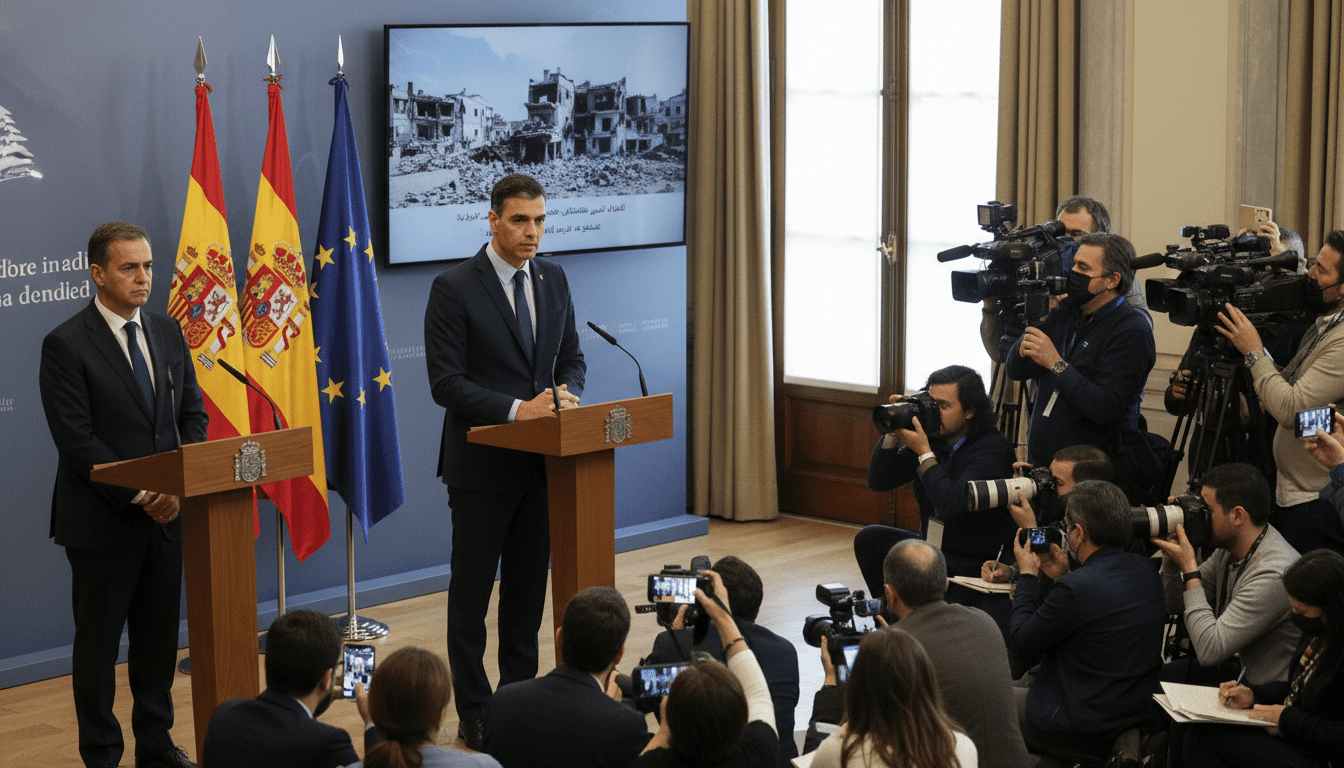
Spain denounces Israel’s intensified bombardment of Lebanon as “contrary to international law”
Spain condemns Israel bombardment of Lebanon and calls forced displacement unacceptable, urging respect for the rights of Lebanese and Palestinian civilians amid rising regional tensions.
Spain’s foreign ministry publicly denounced the recent Israel bombardment of Lebanon, calling the intensified strikes and the resulting displacement of residents “completely unacceptable” and “contrary to international law.” Spanish Foreign Minister José Manuel Albares delivered the remarks ahead of an EU foreign ministers meeting in Cyprus, stressing equal rights for neighbouring peoples. The statement signals Madrid’s growing concern over civilian harm and the broader implications for stability in the eastern Mediterranean.
Spain Condemns Intensified Bombardment
Spain’s statement framed the escalation as a breach of humanitarian norms and a catalyst for large-scale civilian movement across affected areas. Madrid described the recent strikes as intensifying a humanitarian emergency that demands urgent attention from European and international bodies. Officials emphasized that condemnation was driven by observations of displacement and damage to civilian infrastructure.
Albares linked Spain’s reaction to broader principles of state conduct in conflict, arguing for restraint and compliance with obligations under international humanitarian law. He stressed that military actions that disproportionately harm civilians or force population movements cannot be justified by security objectives alone. The ministry’s language marked a firm diplomatic stance intended to influence EU deliberations.
Albares’ Remarks at EU Foreign Ministers Meeting
Speaking to reporters before the EU foreign ministers convened in Cyprus, Albares positioned Spain’s response within a collective European debate on the Middle East. He reiterated that Spain would press fellow ministers to consider the humanitarian consequences of cross-border military operations. The meeting was described as an opportunity to coordinate a regional response that balances security concerns with protection of civilians.
Albares underscored Spain’s intent to keep the issue on the EU agenda and urged partners to weigh the legal and political ramifications of continued strikes. His comments suggested Madrid may advocate for stronger diplomatic pressure to reduce hostilities and prevent further displacement. The remarks were presented as part of routine diplomatic engagement, but they also signaled possible policy friction within the bloc.
Displacement of Civilians Decried as Unlawful
Spain’s foreign ministry explicitly characterized the displacement of residents resulting from the bombardment as unlawful and unacceptable, invoking international law principles. The statement highlighted that mass movement of civilians, especially when induced by military action, raises questions about proportionality and precaution. Madrid warned that prolonged displacement would worsen the humanitarian burden in Lebanon and beyond.
The ministry called for immediate measures to protect non-combatants and to facilitate safe access for humanitarian aid. Spanish officials insisted that any military campaign must prioritize the distinction between fighters and civilians and avoid operations likely to cause widespread displacement. The legal framing aims to mobilize diplomatic and legal scrutiny at multilateral venues.
Equal Rights for Lebanese and Palestinian Peoples Stressed
In his remarks, Albares affirmed that the right to statehood and security is universal, stating that both the Palestinian and Lebanese peoples deserve peace and recognition equal to that of Israel. He said, “Israel must accept that other countries have exactly the same right as Israel to have their own state and to have it in peace and security,” a formulation intended to emphasize reciprocity and dignity. The comparison sought to re-center humanitarian considerations within political discourse.
By linking humanitarian law to questions of rights and state security, Spain sought to broaden the conversation beyond immediate military tactics. The argument framed protection of civilians as integral to long-term political solutions for the region. Observers noted that such language could influence EU deliberations on diplomatic initiatives, humanitarian funding, and potential mediation efforts.
Potential Impact on EU Policy and Diplomatic Ties
Spain’s public rebuke may add pressure on the European Union to adopt a more explicit stance toward the Israel bombardment of Lebanon and to consider consequences for bilateral and multilateral relationships. Within the EU, member states hold divergent views on Middle East policy, and Madrid’s comments could prompt renewed debate over common statements or coordinated action. Spain’s approach suggests it may press for measures that prioritize civilian protection while seeking avenues for de-escalation.
Diplomatically, the statement could complicate relations between Spain and partners who prefer a more guarded public posture on the conflict. At the same time, it positions Madrid with countries calling for a stronger humanitarian response and for robust adherence to international law. How colleagues in the EU and regional actors respond will shape immediate policy outcomes and the bloc’s longer-term credibility on human rights issues.
Humanitarian Concerns and Regional Stability Risks
Spanish officials warned that continued bombardment and mass displacement heighten the risk of broader regional instability, including spillover effects that could exacerbate already fragile conditions in neighbouring states. Madrid emphasized the need for humanitarian corridors, protection of civilian infrastructure, and sustained international assistance to alleviate suffering. The ministry urged all parties to take steps that reduce civilian harm and allow aid organizations to operate safely.
Spain’s intervention underscores growing European unease about the humanitarian toll of cross-border hostilities and suggests that Madrid will seek allies to press for restraint and accountability. The focus on legal and rights-based arguments aims to mobilize both political pressure and practical measures to protect civilians and stabilize the situation.
Spain called for immediate de-escalation and reiterated that respect for international humanitarian law must guide any state’s conduct in conflict. The country urged coordinated diplomatic efforts within the EU to address the unfolding humanitarian crisis and to pursue pathways that prevent further displacement and suffering.
