
Chicken War on Berlin’s Sonnenallee: Rival Shops Divide Street After Owner’s Arrest
Rival chicken shops on Berlin’s Sonnenallee have turned a neighborhood into a focal point of a chicken war after one owner was arrested on violent charges.
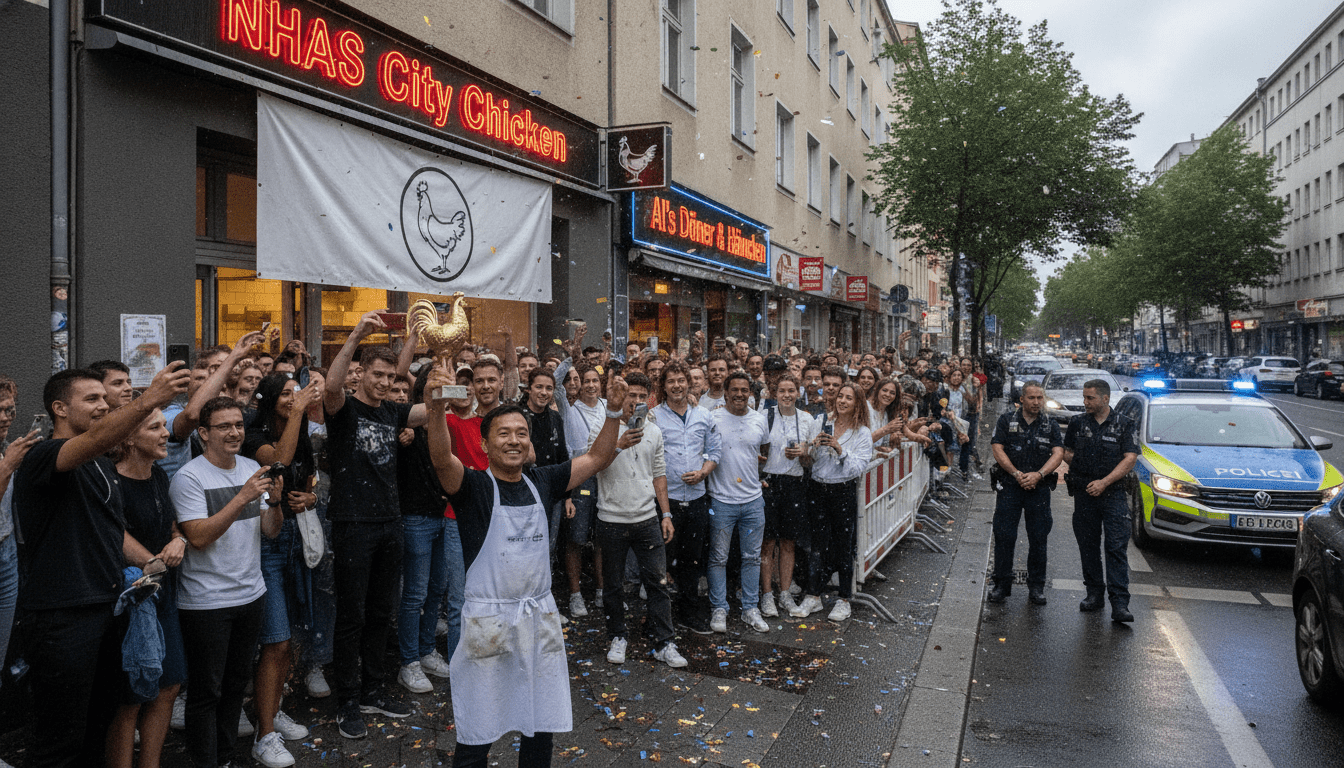
For weeks a pair of corner fast-food outlets, separated by a few buildings on the long avenue, have drawn attention beyond their menus. At Sonnenallee 59 a neon sign proclaims “City Chicken” and “the original since 1996,” while at 73 a neighboring shop advertises “Nhas City Chicken, est. 1993,” underscoring the two businesses’ long presence. The contrast between ordinary storefronts and extraordinary allegations has focused scrutiny on local small-business rivalries and community safety.
Two Shops Face Each Other on Sonnenallee
The two establishments sit barely yards apart on a busy stretch of the Neukölln thoroughfare, a district known for its immigrant-run eateries and multicultural street life. Both outlets appear modest from the outside: counters, menu boards and a handful of waiting customers on any given day. Yet their proximity has created a daily comparison in taste, reputation and clientele that locals describe as a neighborhood spectacle.
Owner Held Over Allegations of Hammer Assault
Authorities say the long-standing proprietor of one shop is in custody, accused of torturing a business partner with a hammer, an allegation that has stunned neighbors and patrons. Prosecutors have not released a full case file publicly, and local police spokespeople emphasize that the suspect is presumed innocent until a court decides otherwise. The arrest nonetheless removed a prominent figure from the corner and left unanswered questions about how disputes within small enterprises escalate to violence.
Rival Emerges as Local “Chicken Champion”
Across the street, the other shop has neither the trappings of a franchise nor the drama of criminal charges, but residents say it has risen in local esteem. Renovations inside the store at Sonnenallee 73 and persistent service have helped create the image of a newcomer-turned-favorite. Customers and passersby cite consistency, taste and word-of-mouth as reasons the rival briefly claimed bragging rights in the so-called chicken war.
Customers and Neighbors Voice Confusion and Concern
Regulars at both counters report mixed feelings: loyalty to long-serving staff and discomfort over the headlines that now drape the street. Some customers say they continue to eat at their preferred shop unchanged, while others have shifted patronage out of curiosity or caution. Neighbors describe the area as quieter since the arrest, but they also say the dispute has prompted conversation about safety, business ethics and the limits of local rivalry.
Legal and Business Consequences Unfold
The legal proceedings facing the detained shop owner could have wider implications for licensing and regulation of small food vendors if the investigation reveals misconduct tied to business operations. Municipal authorities have the power to review permits and sanitary compliance, and such inquiries often follow serious criminal accusations against proprietors. Meanwhile, insurers, suppliers and delivery networks are watching how the disruption affects credit, contracts and payroll for both outlets.
Sonnenallee’s Reputation and Small-Business Reality
Beyond the immediate neighborly drama, the episode underscores broader tensions in Berlin’s street-food economy: family-run stands, tight margins, and personality-driven competition. Small restaurants on urban corridors rely heavily on reputation, repeat customers and local networks, so a single scandal can ripple across a block. For a city that markets cultural diversity and culinary micro-economies, the incident raises questions about how disputes are managed and how communities can support safe conflict resolution.
The chicken war on Sonnenallee has become a local story with national resonance, illustrating how ordinary commercial rivalry can intersect with criminal allegations and community unease. As the legal process continues and both businesses navigate the aftermath, neighbors and customers will likely monitor whether the street returns to its familiar rhythms or if the dispute reshapes the corner’s commerce for years to come.
