
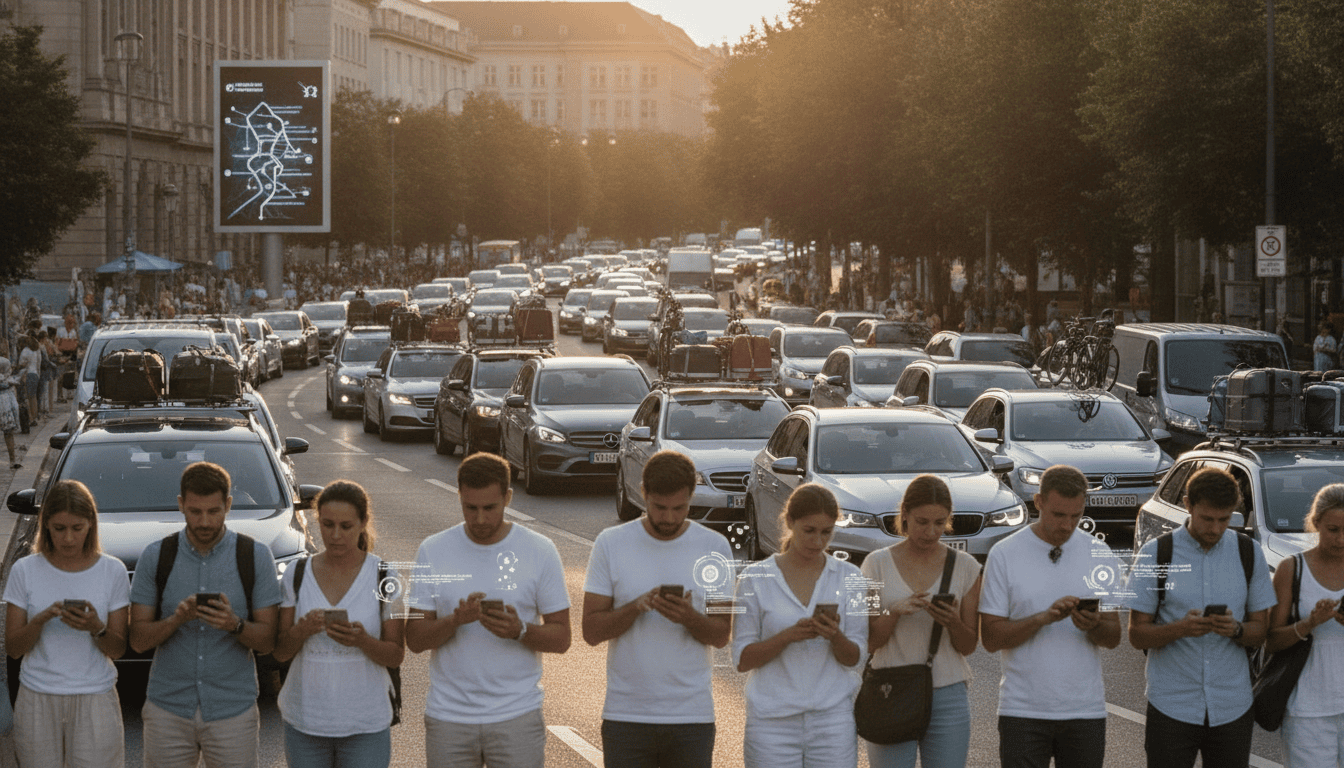
German summer 2026 travel: AI planning gains ground as cars and flights dominate
NIM study: AI travel tools reshape German summer 2026 travel—14.4% use chatbots, cars lead at 63.2%, 18.6% skip trips amid rising costs, plus inequality
The latest representative study by the Nuremberg Institute for Market Decisions (NIM), shared exclusively with ZEIT, finds that German summer 2026 travel habits are shifting: consumers increasingly use AI models to plan trips while conventional transport choices and economic divides continue to shape who goes on holiday. The report shows 14.4 percent of respondents now rely on tools such as ChatGPT, Gemini or Claude for destination ideas, budgeting and booking hints, placing those systems close to travel agencies in the planning process. At the same time, car travel remains the default mode and a significant share of households are forced to skip vacations because of costs.
AI planning reaches parity with travel agencies
AI models are no longer niche assistants but a mainstream step in travel preparation for many Germans, according to the NIM data. About one in seven people said they consult generative chat systems when choosing where to go and how much to spend, narrowing the gap with traditional travel agencies that historically controlled routes to bookings. The study suggests that algorithmic recommendations, price comparisons and conversational interfaces have become a common complement to human advice rather than a full replacement.
Final bookings still favor human intermediaries
Despite the rise of AI during the planning stages, respondents reported greater confidence in human-led services at the point of purchase. Travel agencies retain a key trust advantage when it comes to final booking and complex itineraries, especially for elder travelers and multi-leg journeys. NIM researchers note that while AI informs choices, many consumers continue to seek a human check before committing money to higher-value travel arrangements.
Who stays home: pandemic hangover and income divide
The study highlights a persistent social divide in holiday-taking: 18.6 percent of people traveled not at all, a figure that has risen since the pandemic years. Lower-income households are disproportionately represented among those who forego trips, with rising prices for hotels, flights, rail and car rental cited as decisive barriers. NIM concludes that cost pressures have turned long-standing desires for travel into an affordability problem for substantial segments of the population.
Transport patterns show convenience over climate pledges
Private cars dominate trip modes in summer 2026, used by roughly 63.2 percent of respondents, while 44.1 percent reported taking flights for at least one trip this season. The railways remain marginal for many holidaymakers, and the once-prominent no-fly rhetoric has largely receded into the background. Analysts reading the NIM data point to the primacy of convenience, price and time considerations that frequently outweigh climate-driven choices for large portions of the public.
Destinations: Germany leads, but long-haul demand endures
Domestic travel remains the most popular choice, with Germany topping destination preferences ahead of Italy, Spain and Austria, according to the survey findings. Nevertheless, demand for long-haul and overseas vacations persists, indicating that international travel remains desirable despite geopolitical and economic uncertainties. NIM researchers interpret this pattern as a sign that holidays have become a proxy for normalcy and emotional resilience in an era of repeated crises.
Industry implications and consumer behavior shifts
The convergence of AI-driven planning and continued reliance on cars and planes presents both risks and opportunities for the travel industry. Agencies and tour operators can leverage conversational models to expand early-stage engagement, while transport providers face pressure to reconcile convenience with sustainability goals. For consumers, the hybrid planning model — AI plus human validation — is likely to remain a dominant pattern through the rest of 2026, shaping offers, marketing and service design across the sector.
Overall, the NIM study paints a picture of German summer 2026 travel that is resilient but uneven: technology is reshaping how people plan, economics determine who travels, and traditional transport habits prevail despite environmental debates.
