
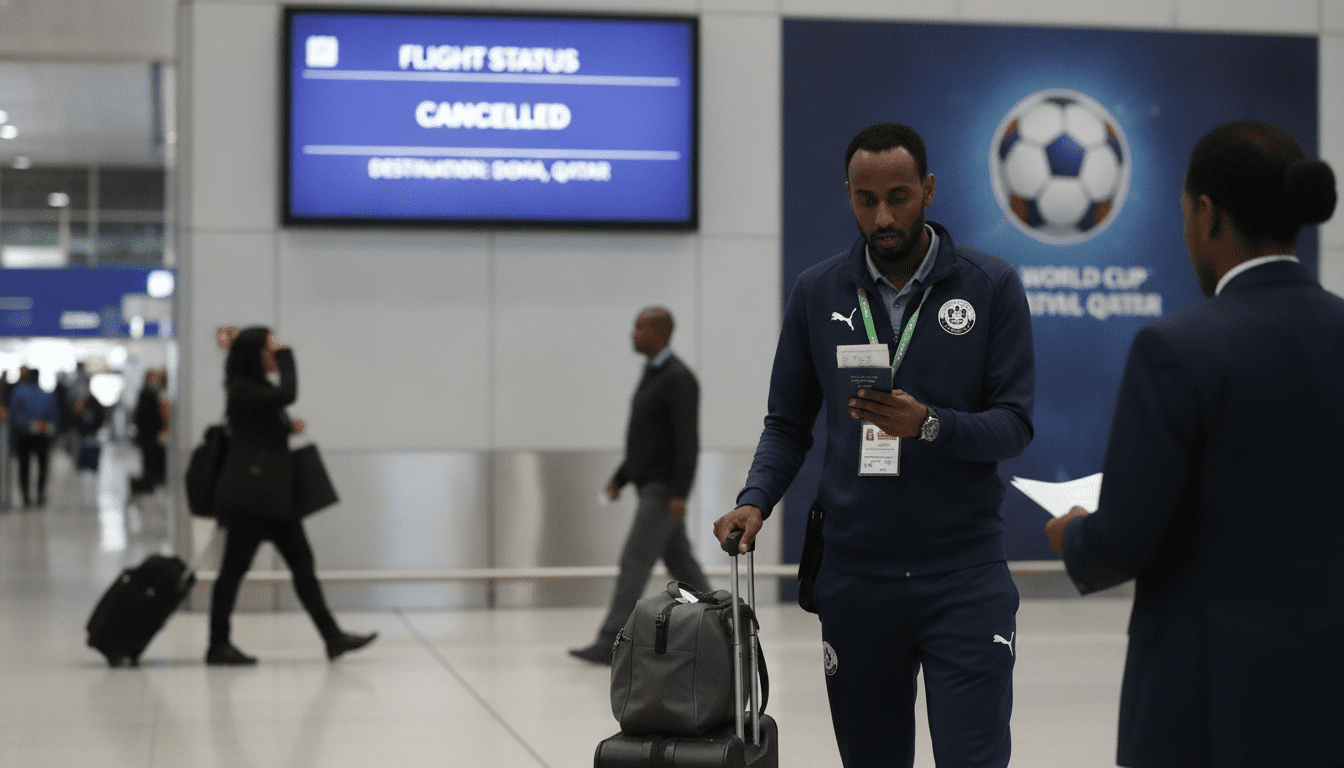
Omar Artan Denied Entry to US, Will Miss World Cup Matches as FIFA Confirms Absence
Somali referee Omar Artan was refused entry to the United States and will miss the upcoming World Cup, FIFA says; border officials cite security-screening concerns.
Omar Artan, the only World Cup referee from Somalia, was denied entry to the United States after arriving from Istanbul and will not take part in the tournament, FIFA confirmed to news agencies. U.S. Customs and Border Protection (CBP) told reporters that a traveler from Somalia, identified as a World Cup referee, was refused entry after triggering additional security screening. The development removes Artan from the referee pool while the tournament kicks off this week.
U.S. border agency cites security-screening decision
CBP issued a statement saying an individual traveling from Somalia, described as a World Cup referee, was not admitted to the United States due to concerns arising during a security review. The agency emphasized that entry decisions are made case by case and that officers are authorized to question and inspect travelers under U.S. law. CBP did not release the referee’s name in its release but confirmed the denial related to the security-screening process.
FIFA confirms Artan will not be present in Miami
FIFA told media that it had been informed by authorities that the referee’s status would not change, and therefore he would not be present at the joint training camp in Miami where match officials are preparing for the tournament. The global governing body reiterated that it is not involved in host-country immigration procedures, noting that visa and entry determinations rest with the host government. FIFA added that, as a consequence, Artan cannot be deployed in any of the tournament’s host nations.
Artan’s refereeing record and recent honors
Artan, 34, has been listed as a FIFA referee since 2018 and has built a record across youth and senior international competitions. He officiated at the under-20 World Cup and has presided over matches in World Cup qualification and the Africa Cup of Nations. The Confederation of African Football named him Referee of the Year in 2025, marking a notable rise in his profile within international refereeing circles.
Somali officials say visa was valid and decry impact
Ciise Aden Abshir, senior adviser to Somalia’s Ministry of Youth and Sport and a former national team captain, told reporters that Artan held a valid U.S. visa at the time of travel. Abshir criticized the denial as damaging both to Artan personally and to the broader principles of fairness and sporting merit, arguing that preventing him from officiating undermines the spirit of fair play. After being denied entry, Artan returned to Istanbul, according to Somali sources.
Host country retains ultimate authority over visas
FIFA reiterated that host nations have the final authority on visa issuance and border admissions, consistent with previous tournaments where hosts manage immigration and security clearances. Organizers typically coordinate travel and accreditation for players, officials and staff, but national sovereignty over entry decisions remains absolute. Tournament referees gather in host cities for joint training and assignments only after cleared entry into the country.
Immediate tournament and logistical consequences
Artan’s absence removes a referee candidate from the pool available for match assignments, prompting adjustments in scheduling and team allocations among the officiating group. With the refereeing contingent training together in Miami, a missing official affects coverage plans, substitution lists and potential match appointments. Tournament organizers will rely on the remaining officials to fill Artan’s anticipated roles and to maintain operational continuity.
FIFA and CBP statements, comments from Somali sports officials and Artan’s own public remarks in recent interviews frame a dispute that mixes immigration authority and international sport. The referee had spoken publicly of the honor of potentially becoming the first Somali to officiate at a World Cup, and his exclusion has drawn public attention from both sporting and national officials.
The incident underscores the complex intersection between international sporting events and sovereign border controls, and it will likely prompt discussions within football’s governing bodies about contingency planning for future tournaments.
