
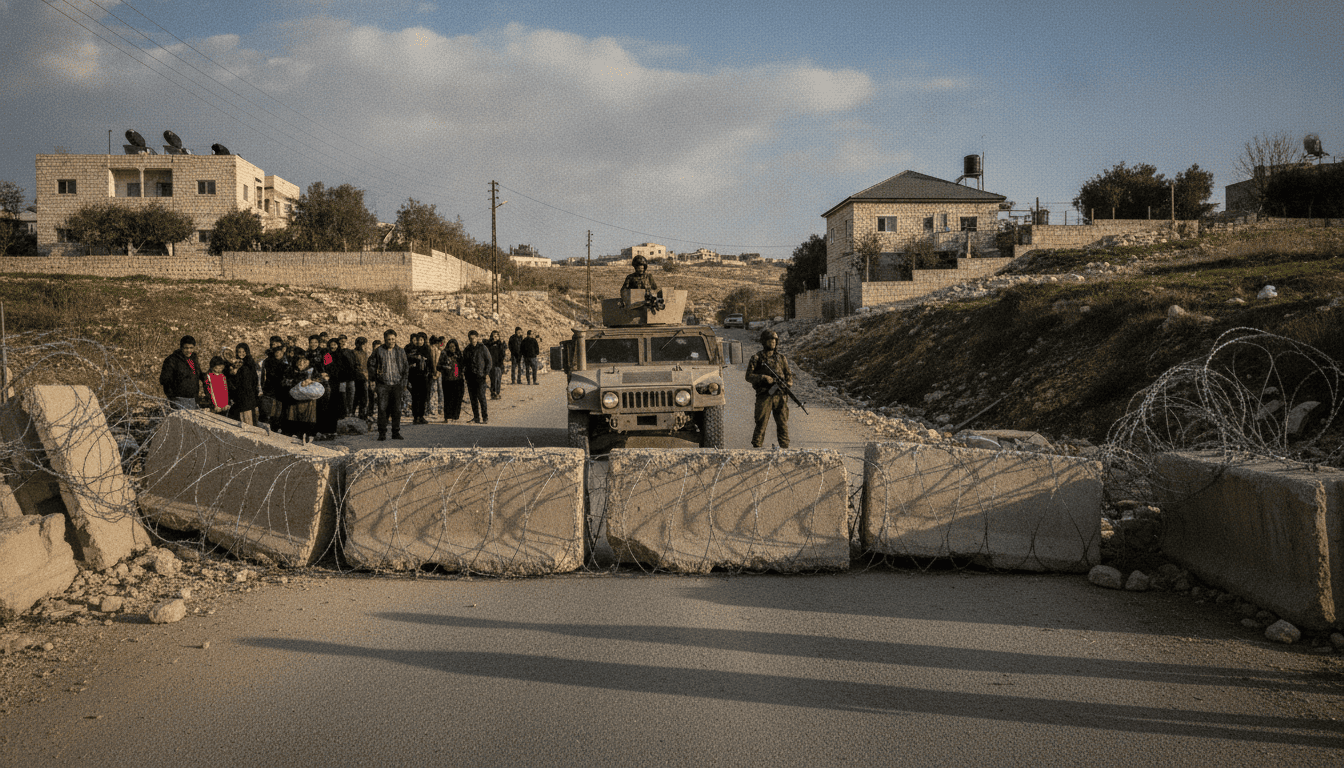
Sinjil clashes erupt after settler attack as residents say town sealed behind gates and earth mounds
Sinjil clashes on 17 July 2026 erupted after Israeli settlers attacked the outskirts of the occupied West Bank town, residents and local sources said. Witnesses described immediate confrontations and said repeated Israeli raids and road closures have left Sinjil isolated behind iron gates and earth mounds. The incident has heightened tensions in the area and prompted appeals from residents and rights groups for restored access.
Settler attack triggers confrontations
Residents reported that the disturbances began when a group of settlers approached and attacked the town’s outskirts, prompting clashes with local residents and subsequent security operations. Local witnesses said stones and projectiles were exchanged and that the confrontation prompted Israeli forces to move into the area. No independent casualty figures were available at the time of reporting, and local accounts differed on the scale and duration of the clashes.
Town cut off by gates and earth mounds
Multiple residents described how access points to Sinjil have been progressively closed, with iron gates erected on roads and earth mounds piled at key entrances. They said these measures have effectively sealed the town from surrounding villages and main supply routes, leaving residents dependent on limited and irregular corridors. The physical barriers have become a daily reminder of the restricted movement many in Sinjil now face.
Repeated military raids cited by locals
Sinjil residents told reporters that the most recent clashes follow a pattern of repeated Israeli military raids in recent weeks and months. They said patrols and incursions have intensified operations around the town, contributing to a climate of fear and uncertainty. Those accounts suggested raids often coincide with settler activity, further complicating efforts to secure safe passage for civilians.
Impact on daily life and services
The closures and security measures have disrupted schooling, healthcare access and agricultural work, residents said, with farmers unable to reach fields and traders facing obstacles bringing goods into the town. Families reported longer journeys to clinics and schools, while local shops described dwindling supplies and customers. The combined effect has strained livelihoods and heightened concerns about longer-term economic damage.
Local appeals and humanitarian concerns
Community leaders and local rights organizations urged authorities and international actors to restore access and remove the physical barriers to prevent further humanitarian consequences. They warned that prolonged isolation risks undermining basic services and could force residents to rely on ad hoc arrangements for food and medical needs. Humanitarian advocates also called for impartial monitoring of the situation to ensure civilian protection.
Context within West Bank tensions
The incident in Sinjil comes amid a broader pattern of friction across the occupied West Bank, where disputes over land, movement and security frequently produce clashes between settlers, Palestinian residents and Israeli forces. Local activists say that recurring closures and confrontations have become a persistent feature that exacerbates communal tensions. Observers caution that without de-escalatory measures the cycle of incidents can continue to inflame relations on the ground.
Residents in Sinjil said they want clear, immediate measures to reopen roads and remove the mounds and gates that now constrain daily life, and they asked for guarantees that civilian movement and safety will be protected. As calls for access and oversight grow louder, the town remains sealed in the wake of the 17 July attack, with families and local officials pressing for swift action to restore normalcy.
