
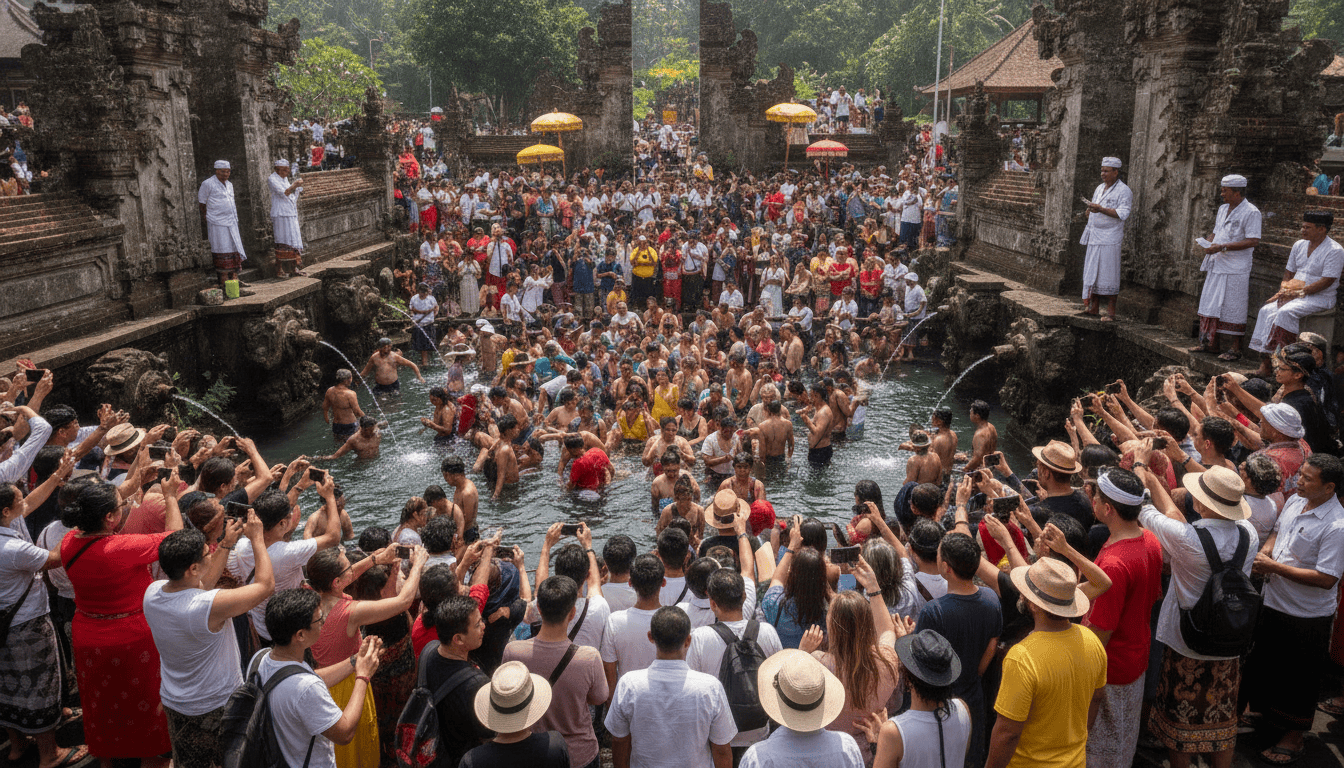
Melukat Ceremony Draws Hundreds of Healing-Seekers in Bali, Sparking Overtourism Concerns
Hundreds of visitors join Bali’s Melukat water-cleansing rituals this summer, reviving the sacred practice while prompting worries about cultural erosion and overtourism pressures.
Pilgrims and Tourists Converge on Sacred Springs
Every day this summer hundreds of people have been taking part in Melukat, Bali’s traditional water-cleansing ceremony, seeking spiritual renewal and relief from global anxieties. The influx includes local Balinese devotees, domestic holidaymakers and international travellers drawn to the ritual’s reputation for healing. Organisers and observers say the steady streams of visitors are transforming sites that were once used mainly by nearby communities into high-traffic pilgrimage hubs.
Spiritual Meaning Rooted in Balinese Hinduism
Melukat is a purification ritual rooted in Balinese Hindu cosmology, where water plays a central role in cleansing body and spirit before important life events. Priests perform guided prayers and symbolic washes at springs, temple courtyards and riverbanks that local families have used for generations. Religious leaders stress that the ceremony’s sacred rules and timing are integral to its meaning, and that the ritual is not merely a spectacle for outsiders.
Local Priests Warn of Ritual Dilution
Balinese priests and village elders report growing concern that the ritual’s spiritual integrity is at risk as large numbers of casual participants attend without proper guidance. Some priests say visitors sometimes perform parts of the ceremony incorrectly, film during private rites or arrive at times that conflict with traditional schedules. Those leaders argue that such behaviour can undermine ceremonies and create tensions between custodians of the tradition and the tourist public.
Economic Benefits and Cultural Strain
The rise in Melukat visitors has created new income streams for local guides, transport operators and vendors selling offerings and sarongs, providing economic relief for some communities. At the same time, residents describe overcrowded temple grounds, littered approach paths and pressure on freshwater sources during peak hours. Officials and community representatives say the financial gains are real but uneven, and that increased revenue has not always translated into adequate site maintenance or cultural education for visitors.
Authorities and Communities Explore Management Options
In response to mounting pressure, several community councils and temple committees are discussing measures to protect the ritual and its sites, including visitor caps, scheduled time slots and mandatory briefings for non-local participants. Some proposals call for clearer signage, dress codes and designated filming zones to reduce disruption during ceremonies. Local governments and tourism bodies say they are consulting stakeholders to balance religious preservation with the livelihoods that tourism supports.
Calls for Responsible Pilgrimage and Cultural Education
Cultural advocates and religious custodians are urging travellers to approach Melukat with humility, to seek permission, and to follow instructions from temple authorities and local guides. Educators recommend pre-visit orientation that explains the ceremony’s significance, appropriate attire and photography rules to reduce inadvertent disrespect. Tourism operators are also being encouraged to include cultural briefings in itineraries and to promote smaller, community-run experiences that return a greater share of revenue to ritual custodians.
The surge in interest in Melukat reflects a broader seasonal trend of travellers seeking restorative experiences, but it has highlighted a delicate trade-off between spiritual practice and visitor demand. As communities consider rules and management strategies, the debate underscores the need for policies that safeguard sacred traditions while allowing respectful access. If stakeholders can agree on practical measures that prioritize the ceremony’s meaning and the well-being of local residents, Melukat could continue to be both a living religious practice and a source of mindful cultural exchange.
