
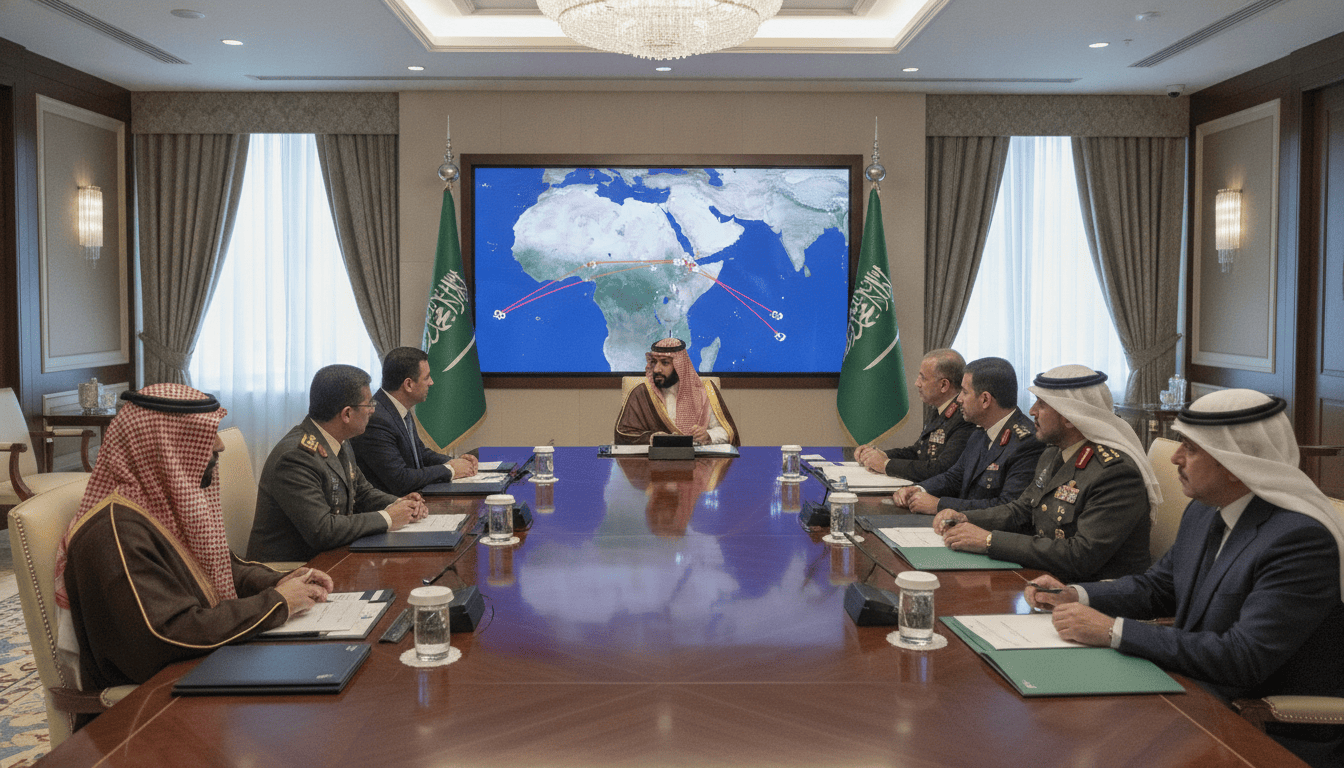
Saudi weighs military options as Houthis renew threats after Sanaa airport incident
Saudi Arabia considers strikes as Houthis escalate threats following a disputed Sanaa airport incident, testing a fragile ceasefire and risking wider regional disruption.
The Saudi government is weighing a range of military and diplomatic responses after a recent escalation with the Houthis, officials and analysts say. Defence Minister Khalid bin Salman signalled that Washington may be permitting Riyadh more leeway for offensive action, but Saudi leadership has not yet approved a course of action. U.S., regional and western sources told Middle East Eye that the conversations reflect divisions inside the royal court as broader tensions between the U.S. and Iran intensify.
Saudi deliberations over possible offensive action
The debate in Riyadh is centered on whether to launch limited strikes against Houthi positions or pursue a more restrained posture backed by intensified diplomacy. Saudi Defence Minister comments suggesting U.S. latitude for action have prompted intense internal discussion, yet no formal decision has been announced.
Officials who spoke with regional media described a range of options under review, from surgical air strikes to stepped-up defensive deployments and deeper coordination with Washington. Analysts say the choice carries high stakes, because any return to wider fighting would quickly entangle regional powers and raise the human and economic costs.
Sanaa airport flight strains fragile truce
Tensions flared after a flight landed in Sanaa carrying a Houthi delegation bound for a funeral in Iran, an event that Riyadh said violated established travel arrangements tied to the ceasefire framework. The Houthis accused Saudi forces of bombing Sanaa airport to block the plane’s return, an allegation Riyadh has denied in public statements.
The incident tested an informal arrangement that had routed flights to Yemen through Amman and Cairo while the U.N.-backed ceasefire framework has largely held. Sources told regional outlets the initial aircraft included Lebanese, Iranian, Syrian and Iraqi personnel with expertise in drone and missile technologies, and that a follow-up flight carried Houthi officials slated for training in Iran.
Missile and drone retaliation targets Abha
In retaliation for the airport attack, Houthi forces fired missiles and drones at Saudi Arabia’s southwestern city of Abha, marking a sharp uptick in cross-border strikes. Riyadh portrayed the strikes as direct threats to civilian infrastructure and energy-related facilities, and analysts warned of higher tempo exchanges if a political solution is not found.
Despite the recent exchange, experts note that both sides have carefully calibrated their strikes to avoid rapid escalation into all-out war. The May 2025 truce at sea has so far prevented a wider maritime conflagration, though observers say the land-based stalemate has been deteriorating.
Energy routes and the risk to global markets
The renewed tensions come at a sensitive time for global energy flows, with the Red Sea serving as a critical artery for Saudi oil exports and the East-West Pipeline carrying roughly 4.5 million barrels per day. Any significant disruption to transits through the Red Sea or the Bab el-Mandeb Strait would reverberate through global markets and add pressure to the Saudi economy.
Some analysts caution that closing Bab el-Mandeb would be an extreme step for the Houthis and could draw the United States and other powers more directly into the conflict. Others argue that media emphasis on the strait serves geopolitical aims, seeking to broaden international involvement in the Iran-related confrontation.
Diplomatic moves, U.S. support and regional warnings
Riyadh has intensified diplomacy to shore up international backing as it assesses options, hosting military-to-military talks with U.S. counterparts in recent days. The deputy commander of U.S. Central Command met the Saudi chief of general staff in Riyadh, and U.S. officials announced approval of the sale of 20,000 Advanced Precision Kill Weapon Systems to Saudi forces.
Regional allies have also weighed in: Pakistan warned the Houthis against attacking Saudi territory, while Gulf capitals pressed Washington for continued support amid rising hostilities. Past episodes of major U.S. strikes against the Houthis, and subsequent pauses linked to Gulf diplomacy, underscore the delicate balance leaders now face.
A growing chorus of experts and former officials says the U.N.-mandated ceasefire architecture has effectively expired and that the conflict remains trapped in a “no war, no peace” limbo. Without renewed international mediation or a credible roadmap to political settlement, both the humanitarian situation in Yemen and regional stability could deteriorate quickly.
The coming days will likely reveal whether Riyadh opts for limited military reprisals, sustained defensive measures, or a push for renewed diplomatic engagement to contain the Houthis and prevent a broader conflict. The choices made now will shape not only Yemen’s future but also the security of key shipping lanes and the economic outlook for the wider region.
