
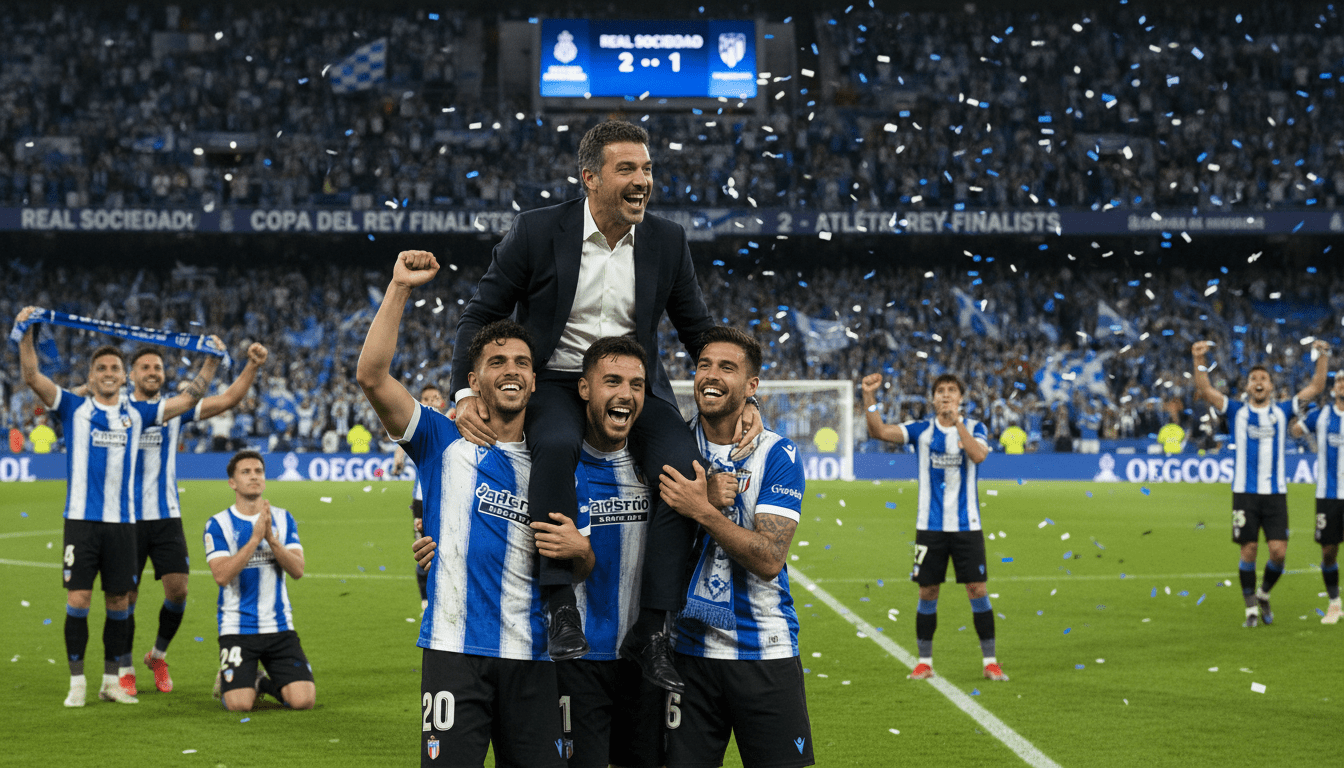
Matarazzo Leads Real Sociedad to Copa del Rey Final Against Atlético Madrid
In under four months, coach Matarazzo has guided Real Sociedad to the Copa del Rey final vs Atlético Madrid, sparking a dramatic revival of the season.
Real Sociedad’s swift ascent to the Copa del Rey final has captured attention across Spanish football. The achievement arrives less than four months after Matarazzo took charge of a squad then threatened by relegation. The turnaround underscores a rapid and measurable change in results, tactics and club morale as the Basque side prepares for a high-stakes showdown with Atlético Madrid.
Rapid turnaround under new coach
Matarazzo’s appointment marked a decisive shift in the club’s direction and priorities. Within weeks, match outcomes began to favor Real Sociedad, and the team climbed away from danger in the domestic table. The coach has emphasized structure, discipline and an assertive mentality that players say has translated into greater consistency on the pitch.
Club officials point to measurable improvements in defensive organisation and transitional play since the new coaching staff arrived. Those changes were particularly visible in cup fixtures, where single-match stakes exposed tactical clarity and mental resilience. The progression to the final is being treated by the club as validation of the managerial change and its short-term strategy.
Route to the final
Real Sociedad’s path to the Copa del Rey final combined disciplined defending with opportunistic attacking. The team navigated several knockout rounds against varied opponents, relying on a compact defensive block and quick counters. Set pieces and compact pressing in the middle third featured prominently in the victories that secured their place in the last match.
Key cup performances showed the depth of the squad and the capacity of fringe players to step up in decisive moments. The coaching staff rotated intelligently to manage fitness while preserving momentum, and those calculated selections proved decisive in tightly contested ties. The cup run also exposed areas for refinement ahead of the final, particularly in sustaining attacking pressure against elite opposition.
Tactical adjustments and key performers
Matarazzo implemented a pragmatic tactical framework that prioritises defensive solidity without sacrificing forward thrust. The side often lines up with a compact midfield that channels play through disciplined wide players capable of quick transitions. Full-backs have been encouraged to support attacks selectively, producing a balanced approach against teams that dominate possession.
Several players have emerged as catalysts for the turnaround, contributing vital goals or defensive interventions at critical moments. The goalkeeper’s improved command of the box and the centre-backs’ cohesion have been notable, as has the influence of a creative midfielder who has linked defence and attack. These individual improvements have combined to form a more resilient collective.
Atlético Madrid matchup and strategic challenges
Facing Atlético Madrid in the final presents a distinct tactical and psychological challenge for Real Sociedad. Atlético are known for their disciplined defensive organisation and lethal counter-attacking, traits that demand focus and adaptability from any opponent. Real Sociedad will likely be required to sustain possession and probe patiently while guarding against swift transitions.
Matarazzo must balance attacking ambition with the need to neutralise Atlético’s strengths, particularly their set-piece threat and experience in high-pressure finals. Match preparation will hinge on detailed scouting, situational rehearsals and mental conditioning to ensure the team can execute its game plan under intensity. The final offers a rare test of whether the recent improvements can translate into silverware.
Club, fan and broader implications
The club’s board has framed the Copa del Rey run as a positive sign for long-term recovery and stability. Advancing to a major domestic final can bolster recruitment prospects, supporter engagement and commercial opportunities. For a club that flirted with relegation earlier in the season, the momentum generated by this cup campaign could be transformative.
Fans have responded with renewed optimism and increased attendance, viewing the final as a symbolic turning point. Local support in San Sebastián has manifested in visible displays and heightened anticipation, reflecting the emotional significance of the cup opportunity. The outcome of the final will shape narratives about the season and influence decisions about resources and continuity in the coaching staff.
Matarazzo described the run to the final as a meaningful milestone for both the dressing room and the club’s supporters, noting how quickly fortunes can change when collective focus and tactical clarity are aligned. Regardless of the result against Atlético Madrid, the coach’s early tenure has already altered expectations and provided a clearer blueprint for the remainder of the campaign.
The Copa del Rey final represents both a reward for Real Sociedad’s recent resilience and a stern evaluation of how far the club has progressed under its new leadership. A victory would consolidate a dramatic recovery and cement Matarazzo’s influence; a defeat would still leave the club with tangible signs of improvement to build on. The coming match will be judged not only on silverware but on whether the foundations laid in recent months are sustainable.
