
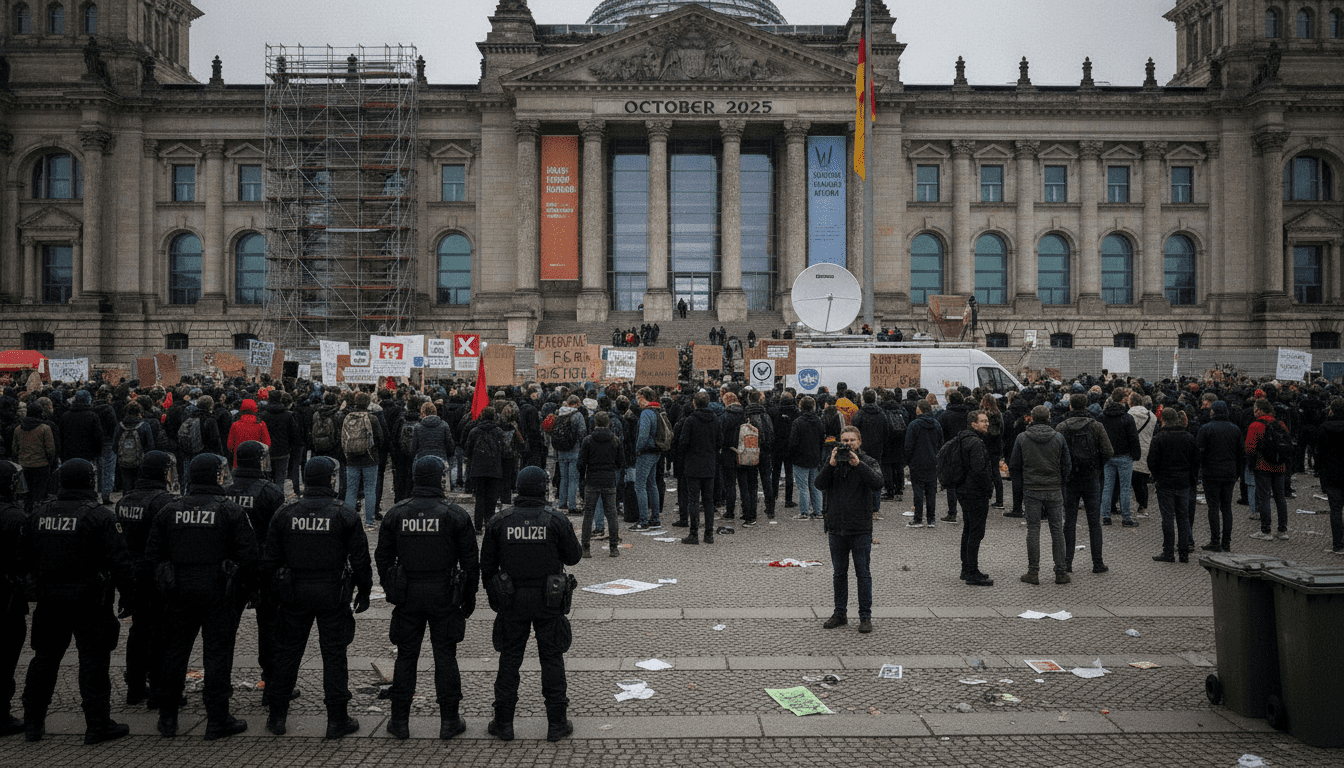
Politically Motivated Crime in Germany Hits Record High after 2025 Elections
Germany records nearly 86,000 politically motivated crimes in 2025, with officials linking the surge to election-related offences and rising political violence.
Germany recorded a record total of politically motivated crimes last year, reaching 85,837 incidents, as federal authorities and security analysts warned of a sharply heightened climate of political confrontation. The rise was driven in large part by offences tied to the accelerated election cycle in 2025, when a federal election and several state ballots took place, authorities said. (bka.de)
Record Total and Election Link
The Federal Criminal Police Office (Bundeskriminalamt, BKA) and interior ministry data show the 2025 figure is the highest since formal tracking began in 2001. Investigators attribute a significant portion of the increase to activity surrounding campaigning, protests and targeted attacks during the run-up to and aftermath of the ballots. (n-tv.de)
Election-related offences were especially prominent, with thousands of reported incidents involving sabotage of campaign materials, intimidation of political actors and public demonstrations that escalated into criminal acts. Police reports flagged a sharp uptick in property damage to party infrastructure and a notable number of propaganda offences tied to election messaging. (telepolis.de)
Right-wing Cases Represent Large Share
Roughly half of the recorded politically motivated offences were classified by authorities as right-wing motivated, according to the aggregated data reviewed by investigators. That sector included a wide spectrum of crimes, from propaganda offences to violent assaults and organized extremist actions. (telepolis.de)
Security services emphasized that the raw count obscures important distinctions: many right-wing incidents involved low-level property damage and propaganda, while a smaller but more dangerous subset comprised violent attacks and organized plots. Officials warned that the numerical dominance of one category does not reduce the threat posed by smaller, more violent networks. (bka.de)
Increasing Left-wing Vandalism and Assaults
Authorities also recorded a marked increase in offences attributed to the left-wing spectrum, driven largely by vandalism and clashes around political events and demonstrations. In 2025 the number of left-wing motivated crimes rose substantially in percentage terms compared with the previous year, an increase that police said reflected intensified protest activity and confrontations. (zeit.de)
Many of these cases involved targeted property damage, particularly at corporate or state-related sites, and street-level confrontations between rival political groups. Analysts caution that spikes in one category often mirror heightened mobilisation and polarisation across the political landscape. (bka.de)
Election Campaigns as Focal Points for Offences
Investigators pointed to the concentrated timing and locations of many offences: campaign periods, rallies and high-profile political events served as focal points for both opportunistic and organised criminal acts. Around the federal vote and concurrent state elections, police recorded elevated rates of offences such as poster damage, threats and harassment directed at candidates and activists. (telepolis.de)
Officials noted that while some incidents appeared spontaneous, others showed signs of coordination, including social-media-driven harassment campaigns and planned attacks on campaign infrastructure. These patterns complicated policing and required coordinated responses across federal and state law enforcement bodies. (bka.de)
Law Enforcement Response and Data Collection
The BKA and state police forces underscored the importance of improved data collection and interagency cooperation in addressing politically motivated crime. Germany’s centralised PMK reporting framework enables federal and regional authorities to categorise offences by motivation—right-wing, left-wing, foreign-ideological, religious and other—supporting targeted prevention and prosecution efforts. (bka.de)
Federal officials signalled plans to bolster resources for investigative teams, increase protective measures for vulnerable political actors, and expand monitoring of extremist networks. Interior ministry spokespeople stressed that better early-warning mechanisms and digital surveillance of coordination channels are priorities for the months ahead. (finanznachrichten.de)
Political Reactions and Preventive Measures
The new statistics prompted cross-party concern, with political leaders calling for stepped-up prevention, clearer rules on online political agitation and enhanced protection for democratic institutions. Some lawmakers urged tougher penalties for targeted harassment and for faster prosecutions of politically motivated assaults. (welt.de)
Civil-society groups and campaign organisations urged caution against overcriminalising protest activity, arguing that democratic debate requires space for dissent while acknowledging the need to confront violent and extremist acts. Experts recommended a combined approach of policing, community engagement and deradicalisation programs to reduce the underlying drivers of political violence. (zeit.de)
The surge in politically motivated crime in Germany underscores the strain that a contentious election cycle placed on public order and democratic norms, prompting fresh debate over how to protect political participation while confronting a rising tide of targeted offences.
