
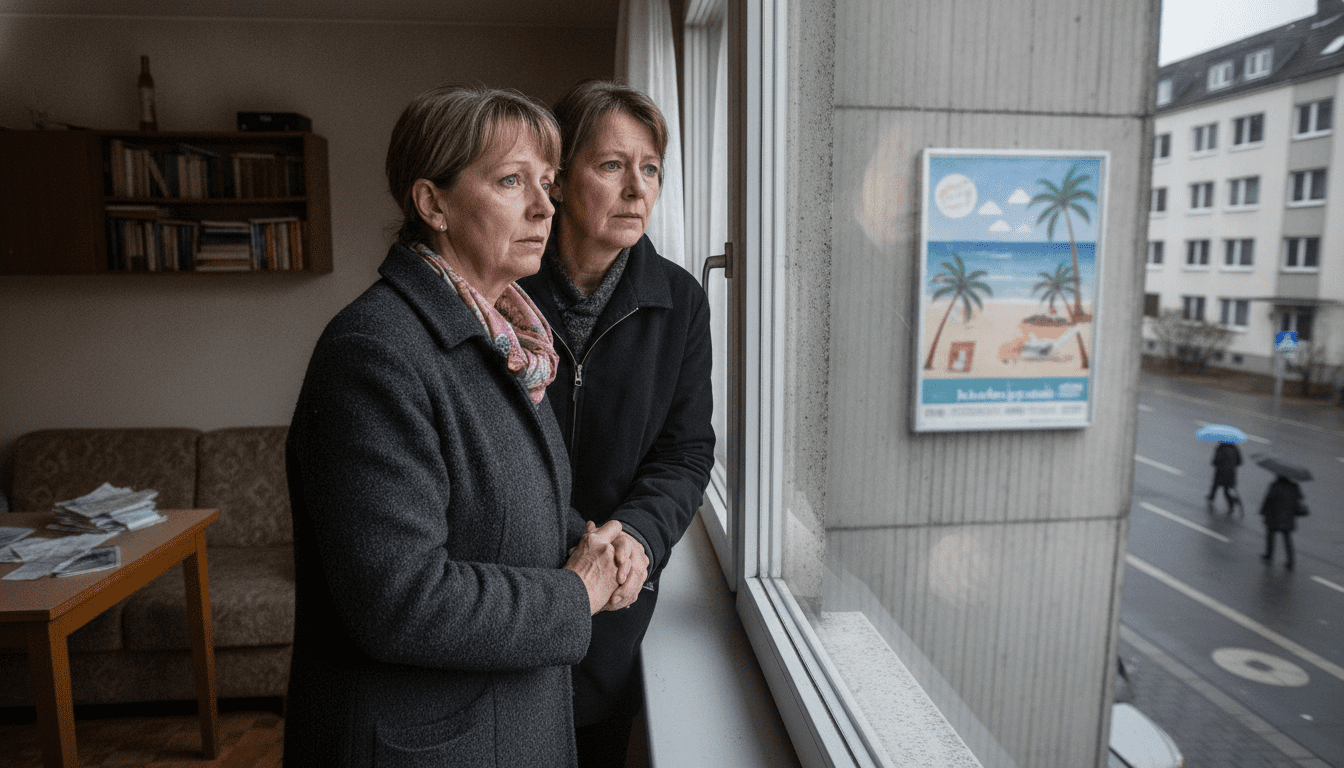
One-fifth of Germans say they cannot afford a one-week holiday, statistics show
One-fifth of Germans report they cannot afford a one-week holiday, with singles and single parents hardest hit; nearly half of the poorest quintile say they cannot travel.
A new report from the Statistisches Bundesamt finds that roughly one in five people in Germany say they cannot afford a one-week holiday, highlighting persistent gaps in leisure access tied to household income and composition. The office also noted that the European Union average is higher, at about 28 percent, underlining that many EU citizens face similar constraints. The data show sharp contrasts across income groups: almost half of those in the lowest income quintile—defined by a net equivalized income threshold near €1,600—said they could not afford a week away.
Survey Results: National and EU Figures
The Statistisches Bundesamt’s figures indicate that 20 percent of respondents in Germany reported they could not finance a one-week holiday, compared with an EU average of 28 percent. The German results place the country below the EU mean, but the proportion remains substantial and affects a significant share of the population. The survey recorded markedly uneven outcomes when respondents were grouped by income and household type.
The income-related divide is stark: 48 percent of people in the poorest fifth of the population reported that they could not afford a one-week trip. That group is measured by net equivalized income, an indicator that adjusts household income for size and composition, and the report places the cutoff at about €1,600 per month. These numbers show that affordability for leisure travel is heavily concentrated among higher-earning households.
Household Composition: Singles and Single Parents Disproportionately Affected
The office flagged singles and single parents as particularly likely to report that they cannot afford a one-week holiday. Single individuals often face higher per-person living costs and limited ability to share household expenses, while single parents may combine caregiving responsibilities with constrained budgets. These household structures therefore experience a double burden: reduced disposable income and heightened logistical challenges when it comes to arranging travel.
For single parents, additional costs such as childcare, travel for multiple people, and reduced opportunities for pooled savings amplify the barrier to taking time away from work. The report’s breakdown by household type underlines how social and family dynamics intersect with economic capacity to shape who can participate in leisure and tourism.
Income Measurement and Methodology Explained
The Statistisches Bundesamt uses net equivalized income to compare living standards across households of different sizes and ages. This method divides total household income by an equivalence scale that accounts for the number of adults and children, producing a per-person value that better reflects real living standards. The report defines the lowest quintile as households with an equivalized net income up to about €1,600, a level that captures those most vulnerable to cost pressures.
Using equivalized income enables clearer comparisons across diverse family types, but it does not capture all dimensions of vulnerability. Factors such as regional cost variations, housing burdens, and temporary income shocks can influence an individual household’s ability to afford discretionary spending like a holiday.
Broader Drivers: Cost of Living and Leisure Affordability
Analysts point to rising living costs, housing expenses, and energy bills as immediate pressures that squeeze leisure budgets for many households. When essentials take up a larger share of income, discretionary spending on travel and recreation is often the first to be cut. Labor market precarity and limited access to higher-paying jobs also play a role in constraining households’ ability to save for trips.
Tourism industry observers note that the cost of travel has increased in some segments even as budget options expand in others, producing a mixed picture for affordability. For low-income households, even modest increases in transport, accommodation, or childcare costs can make the difference between being able to take a short holiday and staying home.
Policy and Industry Responses Under Consideration
The statistics have sparked debate about potential policy responses to improve access to leisure for low-income groups. Proposals discussed by advocates include targeted subsidies, expanded paid leave, and programs that link social support with opportunities for affordable recreation. Public authorities and non-profit organizations have also suggested partnerships with tourism businesses to create discounted offers for vulnerable households.
Industry players have explored flexible pricing and off-season packages to reduce cost barriers, while some municipal and cultural programs aim to provide low-cost local leisure options. Policy discussions are likely to weigh the social benefits of accessible holidays—such as improved health and family cohesion—against budgetary constraints and competing priorities.
Leisure inequalities revealed by the new Statistisches Bundesamt data underline how economic disparities shape not only living standards but also access to rest and recreation. Addressing those gaps will require coordinated approaches from policymakers, employers, and the tourism sector to ensure that the ability to take a one-week holiday is not a privilege reserved for higher earners.
