
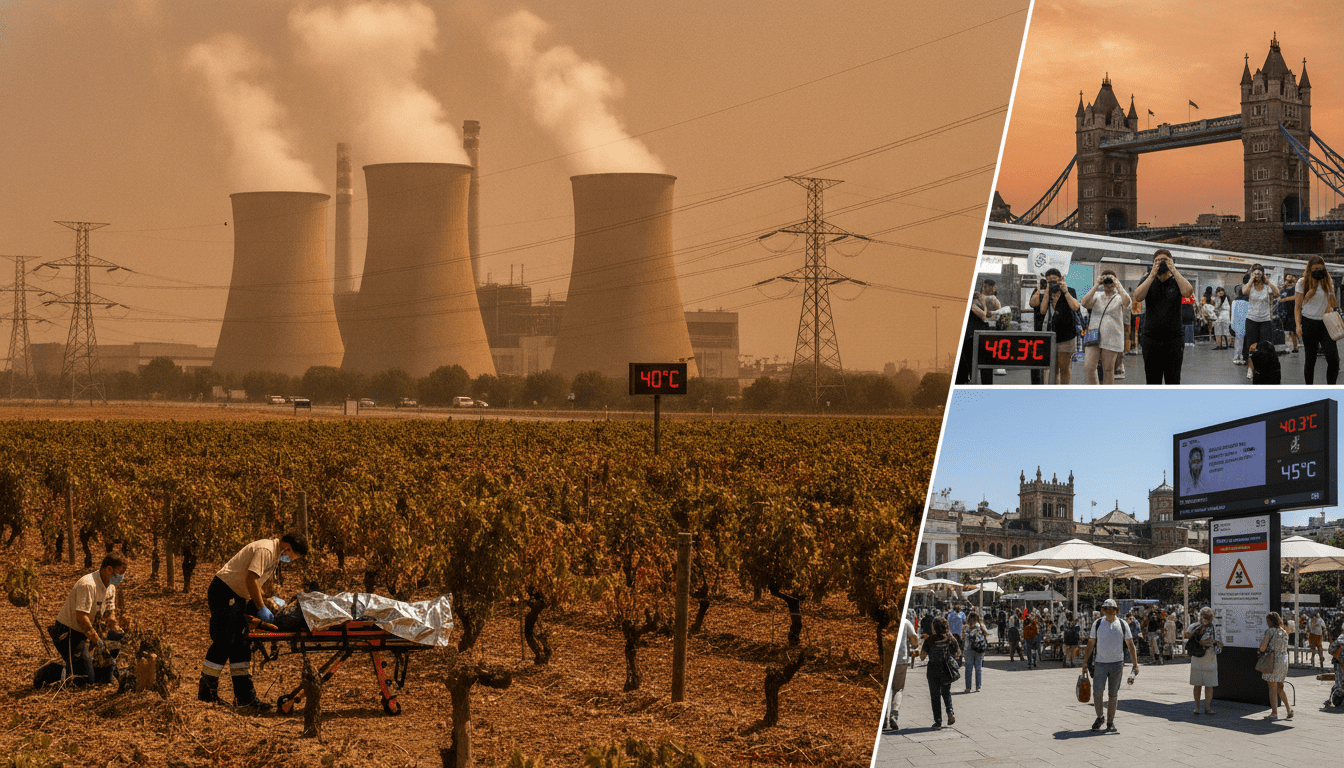
France heatwave causes deadly drownings and record temperatures as power systems strain
France heatwave kills around 20 people in unsupervised swims and shatters temperature records across Europe while authorities warn of power and public service strain.
France’s heatwave has left about 20 people dead after swimming in unsupervised areas and pushed temperatures toward 40°C, officials said, as the event broke records across parts of Europe and strained power and emergency services. Sports Minister Marina Ferrari and regional authorities issued stark warnings against bathing in unauthorized spots as families and vulnerable residents sought relief from intense heat. The extreme conditions coincided with multiple regional alerts and early school closures as officials scrambled to protect public health.
Heat-related drownings and child fatalities reported
Local emergency services reported roughly 20 drowning deaths over the weekend linked to people entering unsupervised waters to escape the heat, prompting a nationwide safety response. Authorities singled out informal bathing locations as particularly hazardous and urged the public to use supervised beaches and public pools where lifeguards are present. In a separate incident in southeastern France, two young children were found unconscious in a parked car outside a house; investigators said heat exposure was the probable cause of their deaths.
Officials also confirmed additional fatalities among older residents in different regions, with local health sources attributing these deaths to heat-related medical complications. The combination of extreme daytime highs and limited availability of cooling in many homes increased risks for the elderly and people with chronic conditions. Local governments reiterated advice to check on isolated neighbors and to follow public cooling and hydration guidance.
Heat alerts cover wide swathes of the country
France’s meteorological service placed 54 departments under the highest-level heatwave alert, reflecting widespread and sustained high temperatures across the mainland. The alert triggered adjustments to public operations, including the early release or timetable changes at some schools and advisories for outdoor workers to limit exposure during peak heat. Municipalities also opened designated cooling centers and extended hours at pools and public fountains to offer relief.
Regional authorities emphasized the need for practical preventive measures, such as shifting outdoor chores to cooler hours, staying hydrated, and avoiding strenuous activity during midday. The warnings were reinforced by statements from government ministers and local officials urging residents to heed safety advice and use supervised facilities for relief.
Power networks and public services feel pressure
The prolonged high temperatures and increased demand for cooling pushed electricity grids toward critical loads in several regions, according to utility operators and local officials. Authorities reported that air conditioning and refrigeration demand rose sharply in public buildings and businesses, stretching distribution networks that are not uniformly equipped for sustained high-load events. Energy officials announced preparatory measures to manage peak consumption and advised consumers to conserve electricity during late afternoon and early evening peaks.
Public transport services also experienced disruptions and timetable changes in some areas as heat affected infrastructure and rolling stock. Local governments warned that emergency services would be operating under heavy demand and asked the public to reserve ambulance services for acute medical emergencies.
Schools and public spaces adapt opening hours and services
Municipalities and school districts across affected regions modified schedules to reduce children’s exposure to heat, with some closing early or shifting outdoor activities to mornings. Educational officials and parent associations coordinated to ensure students had access to shaded areas and water, and to prevent prolonged time in poorly ventilated spaces. Summer programs and outdoor events were reviewed or postponed where necessary.
Public spaces such as parks and municipal pools saw higher footfall as families sought respite, with some cities deploying additional personnel to manage crowds and maintain safety at popular cooling spots. Authorities reminded residents that not all water bodies are monitored and that using designated facilities significantly reduces drowning risk.
Record temperatures across Britain, Spain and western Europe
The heat pulse extended beyond France, with Britain’s meteorological service warning of a multi-day heat event expected to top 39°C in some areas — far above historic June norms — and Spain reporting unusually high readings even in northern coastal cities. Observers noted that several cities, including Bordeaux and Poitiers in France, registered new local temperature highs, while San Sebastián in northern Spain experienced temperatures well above its long-term June averages. Forecasters warned that daytime highs would remain well above seasonal expectations for several days, raising public health and infrastructure concerns.
Data analysts pointed to regional temperature anomalies of 5–10°C above normal in many areas, with some northern zones seeing even larger departures from long-term averages. The pattern amplified demand for cooling and increased heat-related health incidents, prompting cross-border coordination among meteorological agencies and health services.
Omega block pattern and climate change context
Meteorologists attributed the persistent heat to an “Omega block” atmospheric configuration that has trapped a dome of warm air over large parts of Western Europe, while cooler air circulates on either side. The slow-moving high-pressure system has limited wind and precipitation, resulting in prolonged, intense daytime heating and minimal nighttime relief. Researchers cautioned that such blocking patterns can extend heat episodes and intensify their impacts.
Climate scientists warned that human-driven warming is increasing the frequency and intensity of extreme heat events, raising the stakes for preparedness across infrastructure, health systems and urban planning. Experts urged policymakers to accelerate adaptation measures, including improved cooling access, upgraded power networks and targeted protection for vulnerable populations.
France and neighboring countries entered a period of heightened alert as heat, health and infrastructure demands converged, and authorities called for collective precautions to reduce further loss of life.
