
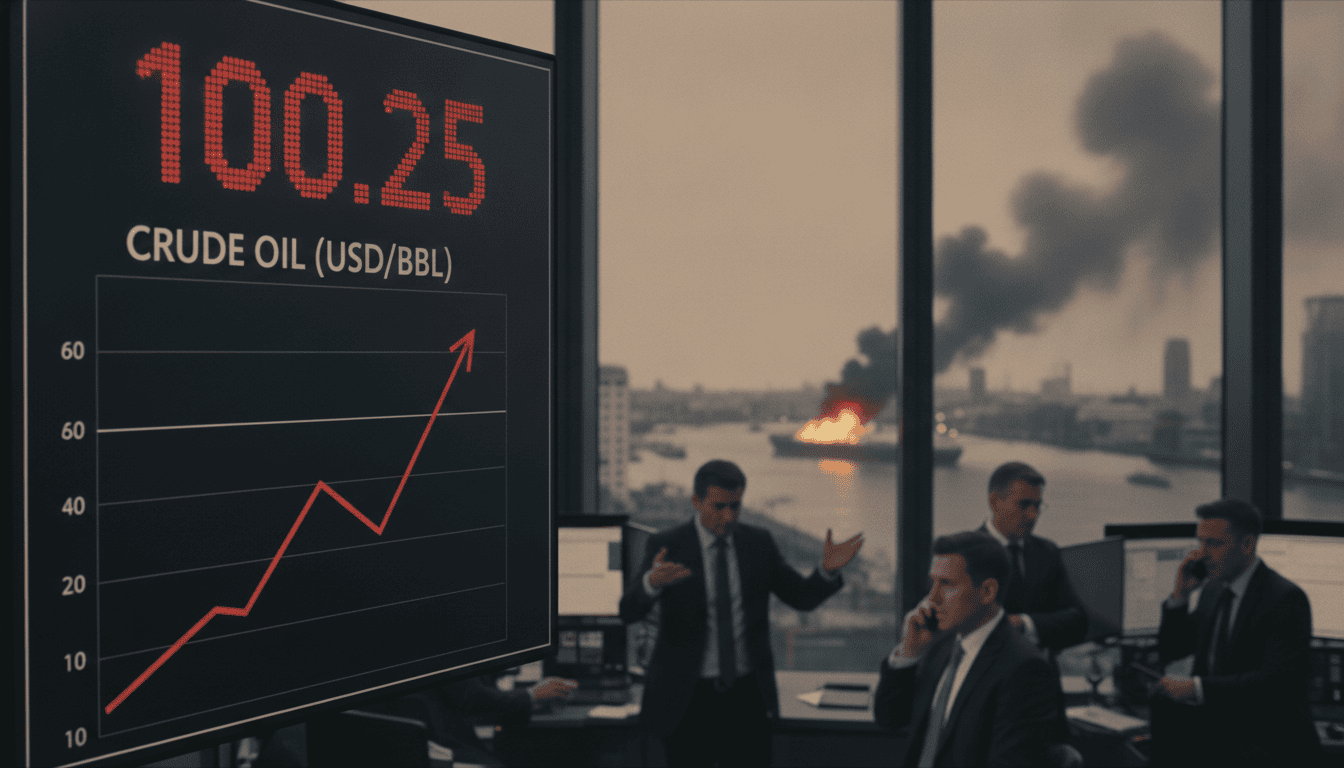
Oil price surges to $100 as Red Sea tanker attacks raise supply fears
Oil price spikes to $100 per barrel after Houthi strikes on tankers in the Red Sea; US attacks on Iran and Kazakhstan output cuts deepen concerns about global supply and transport.
The oil price jumped sharply on Thursday after attacks on commercial tankers in the Red Sea, with Brent briefly topping $100 per barrel as traders reevaluated supply risks. Brent rose about six percent since the open while the US benchmark WTI climbed roughly five percent to just over $90, reflecting immediate market anxiety about transit routes and regional escalation. The surge followed claims by an Iran-aligned militia that it had struck Saudi-flagged vessels, a development that officials in Riyadh confirmed had caused fire damage aboard at least one ship. Markets have already been on edge this year after earlier spikes tied to the broader conflict involving the United States, Iran and Israel.
Brent price reaction and historical context
Brent’s move past the $100 mark represents a significant intraday shift but remains below this year’s peak of about $126, reached in late April when the conflict earlier intensified. Traders cited both the Red Sea attacks and ongoing strikes in the Gulf as catalysts for buying, narrowing the immediate gap between physical market risk and recent price history. Volatility has increased as participants weigh how sustained disruptions to shipping corridors could translate into tighter supply and higher refining costs worldwide.
Houthi militia claims and Saudi confirmation
The Houthi militia, which is aligned with Iran, announced it had fired on two Saudi oil tankers in the Red Sea after declaring a blockade in the area days earlier. Saudi authorities confirmed that one vessel had been struck and that a fire broke out on board, though details on casualties and cargo conditions remained limited. The attacks mark an expansion of maritime risk beyond the Strait of Hormuz and signal a widening of fronts tied to the broader Iran-related confrontation.
US strikes on Iranian targets continue
Overnight US military strikes targeted facilities in Iran, including sites said to store missiles and drones, coastal surveillance installations and air defense systems. The US described the strikes as preventive measures aimed at reducing the capacity for future assaults on merchant shipping and civilian mariners. This marked another night of operations, underscoring how kinetic actions are increasingly intertwined with commercial shipping security and investor sentiment.
Strait of Hormuz disruptions and Red Sea implications
The Strait of Hormuz — a critical conduit for oil and liquefied gas shipments — has been effectively constrained by operations and counter-operations between the US and Iran in recent weeks. Because the Red Sea and its approaches provide an alternative export route for Saudi and regional shipments, attacks there threaten to complicate rerouting options and extend transit times. Analysts say prolonged incidents in either corridor would elevate freight costs, strain insurance coverage for tankers, and could force some operators to suspend voyages through high-risk zones.
Kazakhstan reduces output over Black Sea security concerns
Adding to supply-side pressure, Kazakhstan’s energy ministry announced a cut in oil production, citing security concerns at the Caspian Pipeline Consortium terminal in the Russian Black Sea port of Novorossiysk after repeated drone attacks. Kazakhstan had previously raised shipments to take advantage of tight global markets but reversed course as the security situation at loading points deteriorated. The move follows a separate disruption in May when Russia halted deliveries through the Druzhba pipeline to Germany, affecting European refining feeds and highlighting how conflicts in different regions continue to intersect with global energy flows.
Market outlook and near-term risks for supply
Traders and analysts caution that oil price direction will depend on the duration and scale of maritime attacks, the intensity of US-Iran exchanges, and the stability of export infrastructure from producers such as Kazakhstan. If Red Sea incidents persist and force rerouting or suspension of tankers, physical tightness could re-emerge quickly and put upward pressure on benchmark prices. Conversely, diplomatic de-escalation or effective naval protection for transit lanes could stabilise markets, though risk premiums are likely to remain elevated while uncertainty persists.
Markets entered the session already sensitive to geopolitical shocks, and the latest sequence of tanker strikes and military responses has reinforced that fragility. With key arteries for crude and gas movement under threat, oil price volatility looks set to continue in the near term as participants assess both immediate damage and the potential for further escalation.
