
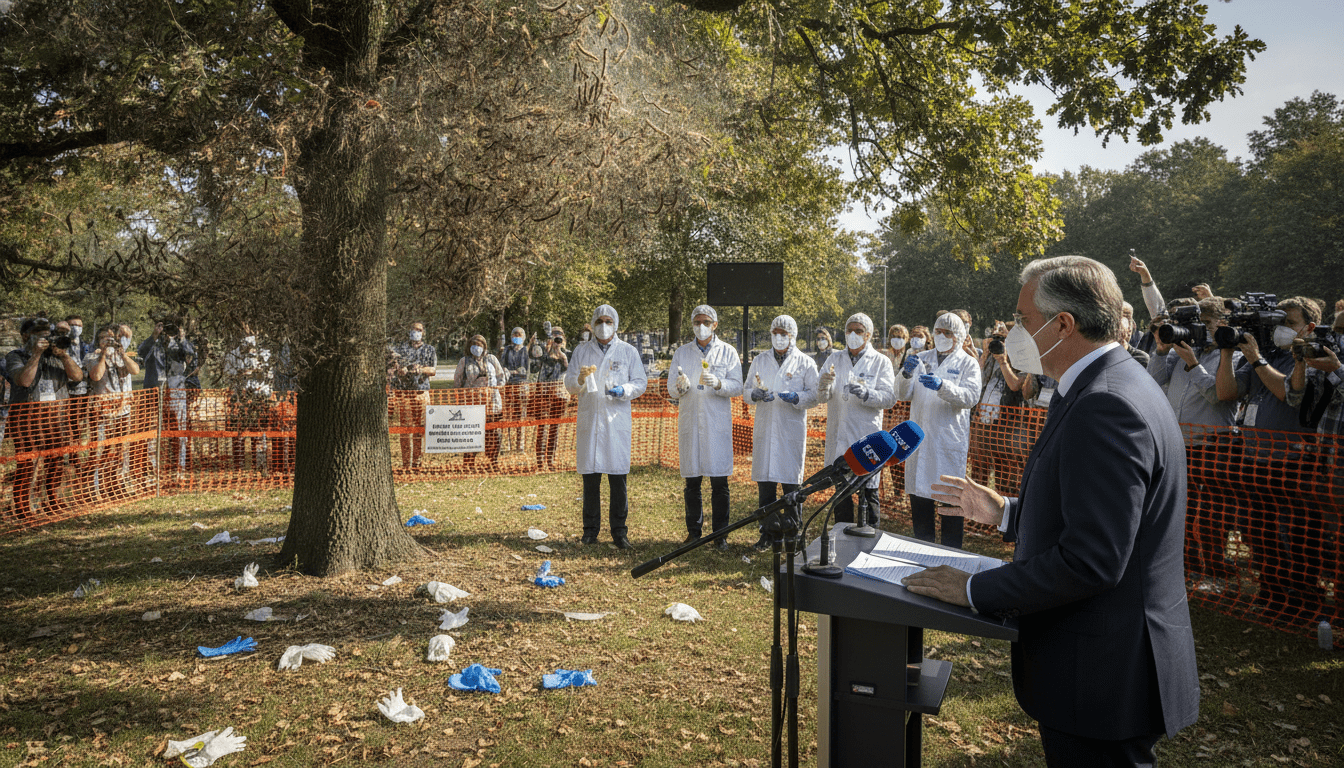
Oak processionary moth infestations rise as environment ministry says targeted pesticide use can be legally justified
Oak processionary moth outbreaks rise in Germany; the environment ministry says targeted pesticide use can be legally justified, but many towns avoid chemicals.
The oak processionary moth is spreading into more populated areas across Germany and is increasingly being treated as a public‑health problem, even as most municipalities still rely on mechanical removal rather than chemical spraying. Federal guidance makes clear that control measures can be applied under biocidal and plant‑protection rules when human health is at risk. (umweltbundesamt.de)
Regional outbreaks reported in multiple municipalities
Local authorities from several towns have reported a sharper rise in nests and caterpillar sightings this season, prompting targeted actions in parks, playgrounds and along frequented walking routes. Municipal statements from towns such as Rodgau and Salzgitter describe intensified monitoring and control efforts where infestations appear near schools and recreation areas. (rodgau.de)
Observers in neighbouring countries have also recorded higher incidence this year, an indicator that the species’ range is expanding across north‑west Europe and placing additional pressure on German municipalities. Monitoring groups in the Netherlands and other states reported above‑average detection rates, and biologists link part of the trend to warm, dry conditions that favour the moth. (nltimes.nl)
Medical risks tied to caterpillar hairs
Public health authorities warn that the caterpillars carry microscopic, barbed hairs that release an allergenic protein and can cause skin rash, eye irritation and respiratory symptoms in sensitive people and animals. Cases range from localized dermatitis to more severe allergic reactions; health agencies urge caution and recommend medical attention for persistent or worsening symptoms. (army.mil)
Because the hairs can detach from nests and remain active for months, exposure risk extends beyond the caterpillars’ active feeding window and can affect anyone who enters contaminated areas. Authorities therefore prioritize clearing nests from high‑use sites to reduce immediate danger while advising the public on avoidance and decontamination measures. (umweltbundesamt.de)
Why chemical treatments are still uncommon
Despite mounting infestations, many cities and districts continue to prefer mechanical removal — vacuuming nests, cutting affected branches or cordoning off trees — over broad pesticide applications. Conservation groups documented that hundreds of municipalities have relied solely on non‑chemical methods in recent years, citing concerns about collateral damage to non‑target insects and broader biodiversity. (bund-naturschutz.de)
Local authorities also point to logistical challenges and public sensitivities when considering sprayed controls: effective insecticide application typically requires precise timing, specialist equipment and public communication to avoid unintended exposures. That complexity helps explain why authorities often reserve chemical options for clearly defined, high‑risk situations. (bund-naturschutz.de)
Legal framework allows targeted biocide use for health protection
Under existing European and national rules, biocidal and plant‑protection products may be deployed in narrowly defined circumstances where they are necessary to protect public health, and guidance documents outline conditions and limits for such interventions. Regulators stress that any chemical treatment must comply with the Biocidal Products Regulation and be proportionate to the actual threat to people in the affected area. (umweltbundesamt.de)
That legal permissibility does not mean unrestricted spraying; authorities must weigh site‑specific environmental protections, buffer zones and seasonal constraints, and document why an exception to non‑chemical practice is warranted. Environmental ministries and forestry agencies expect measures to be targeted, temporary and accompanied by monitoring of ecological side effects. (umweltbundesamt.de)
Alternatives and integrated control strategies
Experts and municipal managers emphasize an integrated approach that combines surveillance, mechanical removal in public spaces, targeted biological agents where appropriate, and public education to reduce human contact. Timing is critical: early‑season monitoring allows removal of larvae before they develop the hazardous hairs, and using trained teams with protective equipment reduces risks to workers and residents. (umweltbundesamt.de)
Where biological products are used, authorities generally prefer narrow‑spectrum agents applied under controlled conditions to limit harm to beneficial insects. Investments in mapping, reporting hotlines and cross‑jurisdiction coordination have expanded in several regions to allow faster, more surgical responses when nests are detected. (landkreis-boerde.de)
Municipalities are urging residents to report sightings, avoid touching nests and follow local guidance on closures or detours in affected parks and trails. With warmer seasons expected to increase the pest’s pressure, public‑health officials and environmental managers say that rapid, evidence‑based action and clear communication will be essential to keep people safe while limiting ecological harm.
