
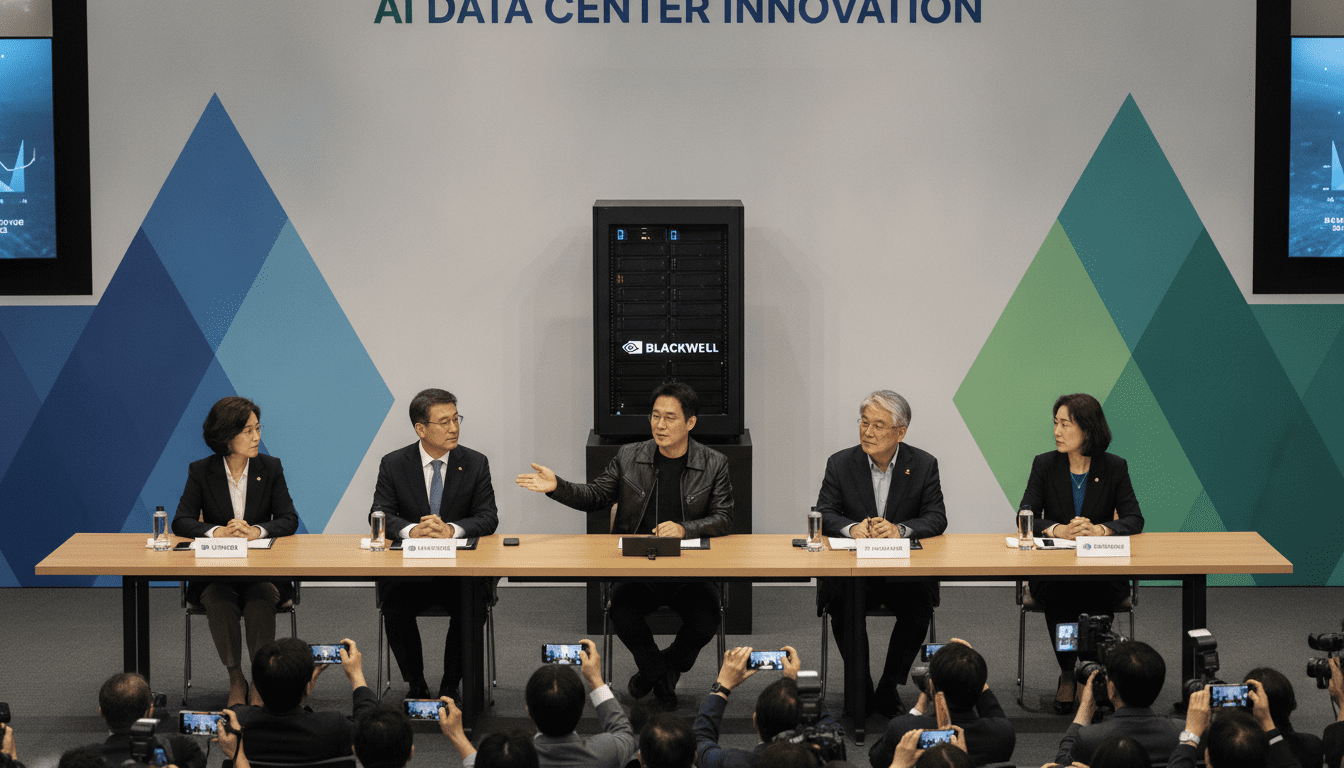
Naver and Doosan to Adopt Nvidia Technology for AI Data Centers
Naver and Doosan to adopt Nvidia technology for AI data centres; Doosan supplies materials for Blackwell chips and seeks reciprocal energy and hardware collaboration with Nvidia.
Naver and Doosan have announced plans to adopt Nvidia technology as they expand and upgrade their AI data centers, marking a new move in the race for compute and energy integration. The agreement centers on the deployment of Nvidia hardware and systems inside the companies’ own facilities, with Doosan also highlighting its role in supplying materials for Nvidia’s Blackwell chips. Both firms described the arrangement as a strategic technology exchange, though they declined to disclose financial terms or a detailed timetable.
Naver and Doosan to adopt Nvidia technology
Naver said it will integrate Nvidia’s AI hardware and software stack into its data center operations to accelerate machine learning workloads and services. Doosan confirmed it will also deploy Nvidia technology across its facilities and expects technical cooperation to support industrial AI applications. Executives framed the move as part of broader efforts to secure advanced compute capacity and tighten integration between hardware and energy systems.
Doosan’s role in the Blackwell supply chain
Doosan representatives noted the company manufactures materials used in Nvidia’s Blackwell chips, placing it in a key upstream position. The companies emphasized that Doosan’s production capabilities are already linked to Nvidia’s semiconductor manufacturing chain. That supplier relationship underpins Doosan’s leverage in securing reciprocal commercial arrangements with Nvidia around energy and infrastructure deployment.
Planned use of Nvidia technology in AI data centers
Both Naver and Doosan plan to use Nvidia technology to optimize inference and training workloads in on-premises AI data centers, according to company statements. The technology package is expected to include Nvidia hardware accelerators, systems integration and potentially software frameworks tailored to enterprise workloads. Naver, as a major internet platform operator, is positioning the upgrade to support generative AI services and internal R&D, while Doosan cited industrial AI and energy management as areas that will benefit.
Reciprocal energy and hardware cooperation
Doosan indicated it expects Nvidia to consider its energy solutions for use at Nvidia facilities or joint projects, signaling a two-way commercial intent beyond a simple supplier-customer arrangement. The conglomerate described plans to offer power and energy-management technologies that align with the high-density power needs of AI racks and cooling systems. In exchange, Doosan said it seeks access to Nvidia’s physical AI technology to accelerate industrial use-cases within its own businesses.
Commercial terms and missing financial details
Neither Naver, Doosan, nor Nvidia released figures or contractual specifics, and company statements did not include purchase volumes, pricing, or investment commitments. Corporate spokespeople framed the announcement as an initial agreement to cooperate on technology deployment and supply-chain coordination rather than a concluded financial deal. Market observers will watch for subsequent filings, procurement notices or pilot-project disclosures that clarify the commercial scope.
Implications for regional AI infrastructure
The collaboration underscores how platform operators, conglomerates and chipmakers are forging closer ties to secure both compute and energy resilience for AI workloads. For South Korea’s technology ecosystem, a deeper link between Naver, Doosan and Nvidia could accelerate local capacity for advanced AI services and create new industrial demand for power and thermal management solutions. The arrangement also highlights the strategic interplay between chip supply chains and data center operators as the industry scales up GPU-driven infrastructure.
The companies said next steps will focus on technical integration, pilot deployments and further discussions on operational timelines, leaving observers to await concrete milestones. As enterprises worldwide race to deploy large-scale AI infrastructure, this cooperation between a leading platform, a diversified conglomerate and a major chip vendor may become a model for combining compute supply with energy and industrial capabilities.
