
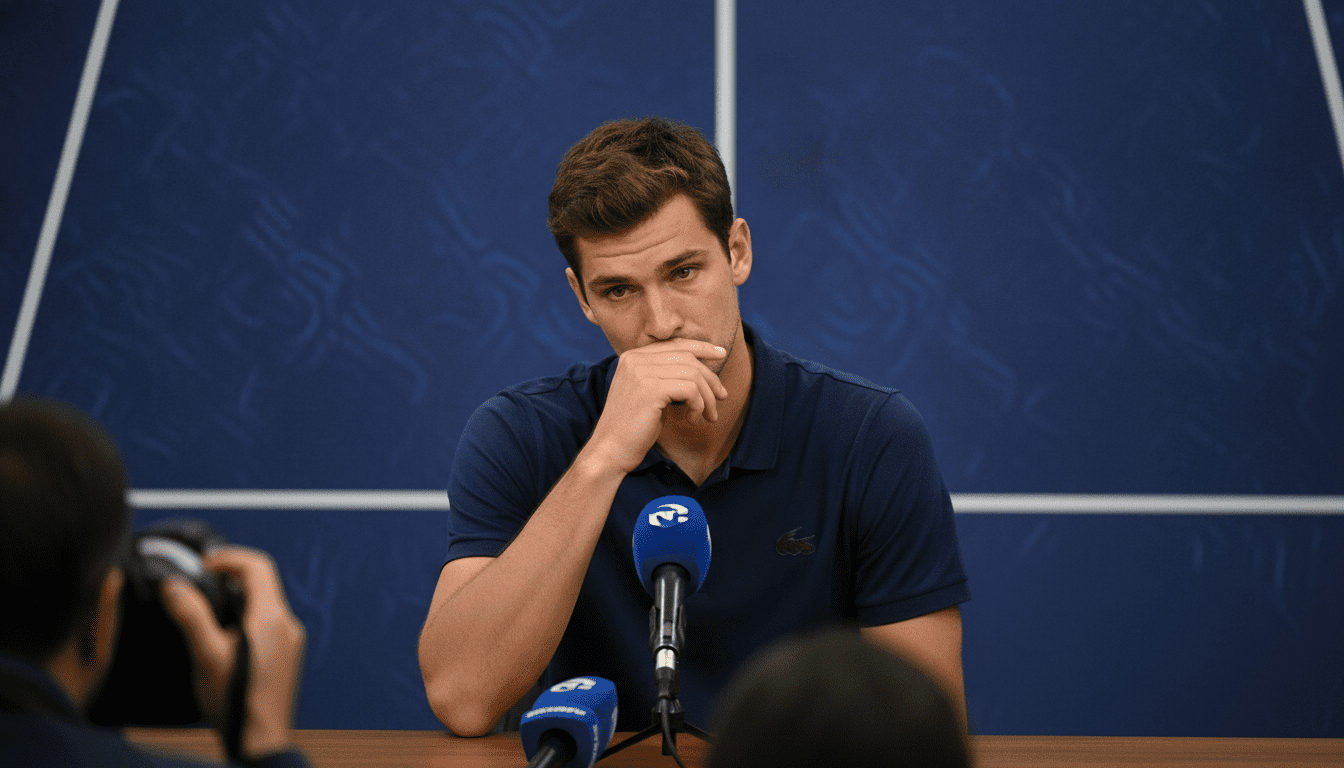
Alexander Zverev’s Grand Slam Quest: From Melbourne Meltdown to renewed resolve
Alexander Zverev’s pursuit of a Grand Slam: his Melbourne collapse, later regret, documentary framing and the tactical and mental steps he’s taking to prevail.
Alexander Zverev’s pursuit of a Grand Slam has taken on new urgency after a high-profile emotional reaction following his loss at the Australian Open, where he was beaten decisively by Jannik Sinner. The moment—marked by public despair and stark self-criticism—reopened questions about whether Zverev can overcome the psychological barriers that have dogged his major final appearances. The episode and its aftermath are now central to a broader narrative about form, identity and the adjustments he must make if he is to finally win one of tennis’s four biggest titles.
Melbourne final and the raw aftermath
Zverev’s defeat in Melbourne was notable not only for the scoreline but for how visibly it affected him off-court. In interviews after the match he questioned his own ability and expressed fear about being remembered as a top player who never lifted a Grand Slam trophy. Those candid remarks spread quickly and were taken by some as evidence of a deeper crisis in confidence rather than the heat-of-the-moment frustration common after a big loss.
The public reaction intensified because Zverev has long been viewed as a leading figure of his generation without a major title to show for it. Media and fans probed whether the player’s mental approach needed the same overhaul as his game, turning a single post-match moment into a broader conversation about long-term career resilience.
Regret and a reaffirmed belief
Within days Zverev walked back the harsher elements of his statements and sought to reframe his outlook. He expressed regret about language that suggested defeatism and reiterated his conviction that he remains capable of winning a Grand Slam. That shift was presented as both a damage-control exercise and a sincere recommitment to the objective that has shaped much of his professional life.
Coaches and allies portrayed the retraction as consistent with an athlete who processes disappointment openly and then returns to work. Observers cautioned against reading a single remark as definitive proof of a career trajectory, noting that elite sport often involves public emotional highs and lows.
Documentary portrait: ‘Der Unvollendete’
Zverev’s recent documentary, titled Der Unvollendete, has given a cinematic frame to the same themes observers saw in Melbourne. The film’s title—literally “The Unfinished”—invites viewers to view his career as an ongoing project rather than a closed verdict. Filmmakers and interviewees trace moments of vulnerability alongside technical and tactical development, underscoring how narrative and performance interact for a public figure in modern sport.
Critics of the documentary praised its willingness to show an athlete wrestling with expectations, while some analysts warned that such exposure can deepen scrutiny when results do not immediately follow introspection. For Zverev, the movie extends his public conversation about completeness and legacy into a medium that cements impressions for a global audience.
Career context and the burden of expectation
Zverev’s standing in men’s tennis is complicated by a blend of high achievement and the conspicuous absence of a major title. He has been consistently ranked among the tour’s top players and has produced victories over the game’s best opponents, yet the Grand Slam trophy case remains the missing piece of the narrative. That gap has become a focal point for commentators and an internal benchmark for the player himself.
The pressure attached to that benchmark is magnified by frequent comparisons to peers who have secured major titles. For many athletes, the interplay between external expectation and internal standards becomes a powerful motivator; for others it can become a constraining force. Zverev’s task is to turn perceived liability into a source of focus rather than a hindrance to performance.
Mental and tactical adjustments under consideration
Following the Melbourne episode, Zverev’s camp has publicly prioritized both psychological work and tactical refinement. Sources close to his team describe an emphasis on routine, match-simulation under pressure and targeted technical drills to sharpen weaknesses exposed in Grand Slam finals. Mental-conditioning resources and clearer strategic plans for best-of-five matches have also been discussed as part of a holistic approach.
Experts say that change in elite sport often requires small, cumulative improvements rather than dramatic reinventions. For Zverev, integrating mental habits with on-court tactics, and delivering both consistently across two-week major events, will be the decisive challenge in translating potential into a major title.
Looking ahead, tournaments and margins will decide whether the documentary’s framing becomes prophetic or merely a chapter in a longer story. Zverev’s next moves—choices about schedule, practice and public engagement—will be watched closely by fans and analysts eager to see whether he can convert talent and experience into the defining triumph his career narrative still seeks.
Ultimately, Alexander Zverev’s Grand Slam pursuit remains unresolved but active, shaped by a high-profile loss, a period of introspection and a visible reorientation of priorities. The coming months will reveal whether the adjustments to his mental game and tactics are sufficient to change the outcome on tennis’s biggest stages.
