
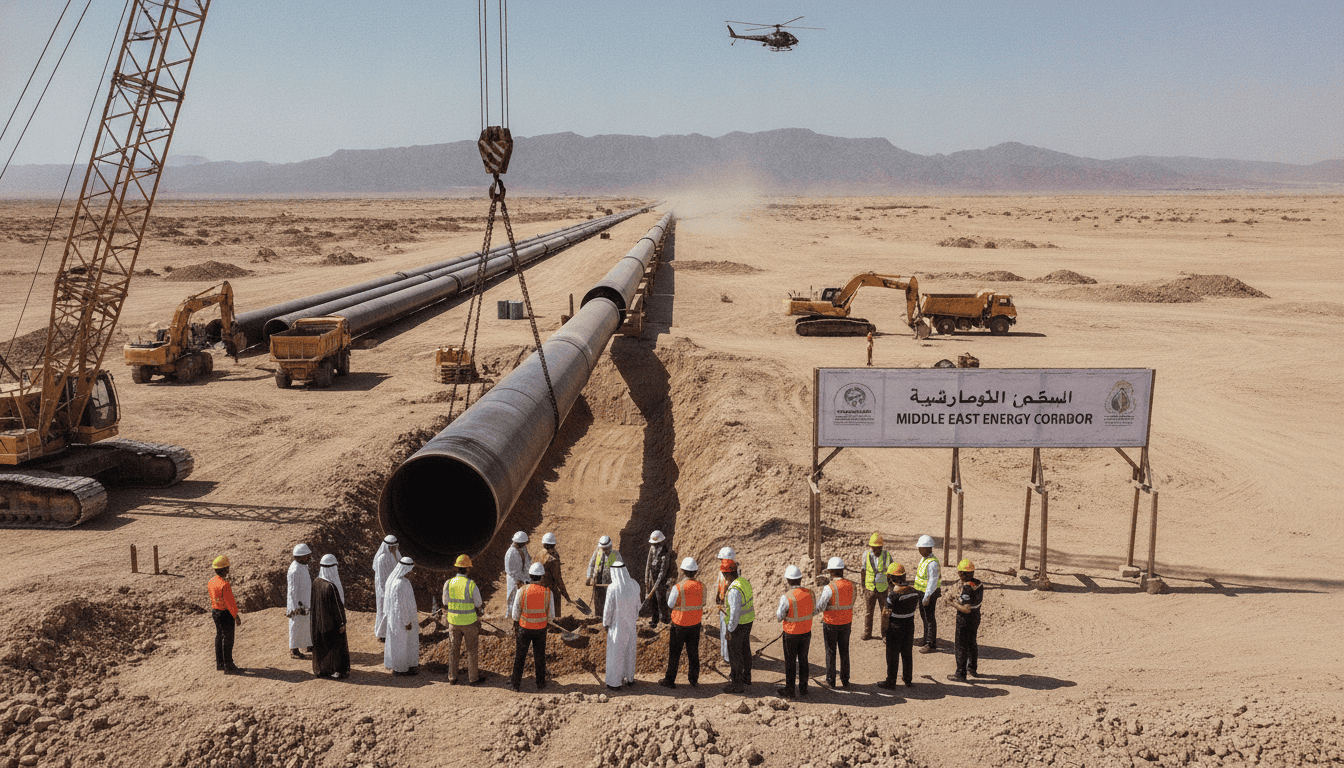
Pipeline Boom Aims to Bypass the Strait of Hormuz as Gulf Producers Rewire Exports
Major Gulf and Levant producers are accelerating plans to bypass the Strait of Hormuz with new cross-region pipelines, seeking to protect oil flows from recurring tensions in the chokepoint. The push to bypass the Strait of Hormuz is driving proposals that would link Mediterranean terminals, Red Sea ports and the Gulf of Oman, and officials and analysts say tens of billions of dollars could be committed to the effort. Industry figures describe the current wave of projects as a strategic shift to reduce reliance on tanker transits through a narrow, politically fraught passage.
Arab producers accelerate pipeline commitments
Regional oil exporters have moved beyond exploratory talks and into planning and contracting stages for multiple pipeline corridors that would divert crude away from the Strait of Hormuz. Energy companies and national oil firms are assessing routes, capacity needs and terminal upgrades, reflecting a determination to create alternative export pathways. Artem Abramov, deputy head of analysis at Rystad Energy, said customers in the region now demand solutions that avoid future disruptions to maritime traffic.
Planned corridors from the Mediterranean to the Gulf of Oman
Proposals under consideration include pipelines running from Mediterranean export hubs south through the Levant and across the Arabian Peninsula to the Gulf of Oman, as well as connections linking Red Sea terminals to eastern ports. Some concepts would allow oil produced in Gulf states to be loaded onto tankers in the Mediterranean or the Red Sea rather than being sent through Hormuz, shortening or eliminating vulnerable sea legs. Companies such as Saudi Aramco have existing refinery and terminal infrastructure, like the Yanbu complex on the Red Sea coast, that could be adapted or expanded to anchor these corridors.
Several routes under discussion would involve multiple countries and new gathering or storage facilities, increasing the complexity but also the strategic resilience of the networks. Planners are studying both large-diameter crude lines and smaller feeder systems that could channel output into larger export trunks.
Costs, contracts and the financial calculus
Industry estimates point to tens of billions of dollars in investment if the most ambitious projects proceed, a sum that would cover pipeline construction, pumping stations, storage tanks and terminal expansions. The price tag reflects difficult terrain, long distances and the need to build capacity quickly enough to reassure markets and insurers. For producers and buyers, the calculation weighs the upfront capital against reduced insurance premiums, lower transit risk and the value of supply security during periods of heightened tension.
Financing models are likely to combine state funding, national oil company capital and private-sector contracts, with long-term offtake and throughput agreements used to underwrite projects. Contractors and equipment suppliers are already being briefed in some capitals as tenders and pre-qualification processes are prepared.
Security drivers: Iran, the US and maritime chokepoints
The immediate motivation for the pipeline surge is the strategic contest in and around the Strait of Hormuz, where Iran has sought to assert leverage over global energy flows and the United States has maintained naval presence to keep the passage open. Recent incidents and messaging from both sides have reinforced producer concerns about recurring disruptions to tanker traffic and the vulnerabilities of concentrated maritime routes. That security backdrop has converted what were once contingency concepts into priority infrastructure moves.
Producers argue that physical diversification reduces the chance that a single incident or campaign could knock out a large share of global crude shipments, and that onshore corridors provide more predictable logistics and easier access for maintenance and security.
Engineering, environmental and regulatory hurdles
Building long-distance cross-border pipelines will confront significant engineering and permitting challenges, from seismic zones and desert terrain to sensitive marine and coastal environments. Environmental impact assessments, land acquisition and rights-of-way negotiations will slow timelines unless host governments agree expedited procedures. There are also commercial complications when routes traverse countries with differing regulatory frameworks, which will require intricate transit agreements and dispute-resolution mechanisms.
Operational safety, spill response capacity and local community considerations will shape final routing decisions and could increase costs. Industry officials stress that meeting environmental and social standards will be essential to secure international financing and contractor participation.
Market implications and the shifting energy map
If implemented, new export corridors would alter long-standing tanker patterns, easing pressure on insurance markets and potentially lowering costs associated with longer tanker journeys and risk premiums. A partial rerouting of exports away from Hormuz could also change refinery feedstock flows in Europe and Asia, as Mediterranean and Red Sea terminals reallocate storage and blending operations. Over time, the additional infrastructure could reshape regional energy hubs and create new chokepoints around terminals and pipeline termini unless planners build redundancy.
Analysts caution that the effect on global prices will depend on the pace of construction and the volume ultimately diverted. Even so, strategic diversification of export routes is likely to be viewed favourably by buyers that prize certainty of supply.
The region’s pipeline-building momentum reflects a broader recalibration among producers: where reliance on tanker transits once dominated logistics thinking, onshore alternatives are increasingly seen as insurance against geopolitical volatility. Whether the projects materialize at scale will hinge on sustained political will, investment commitments and the ability to navigate technical and environmental obstacles.
