
Manchester cafe owner accuses police of offering payments to inform on Palestine Action
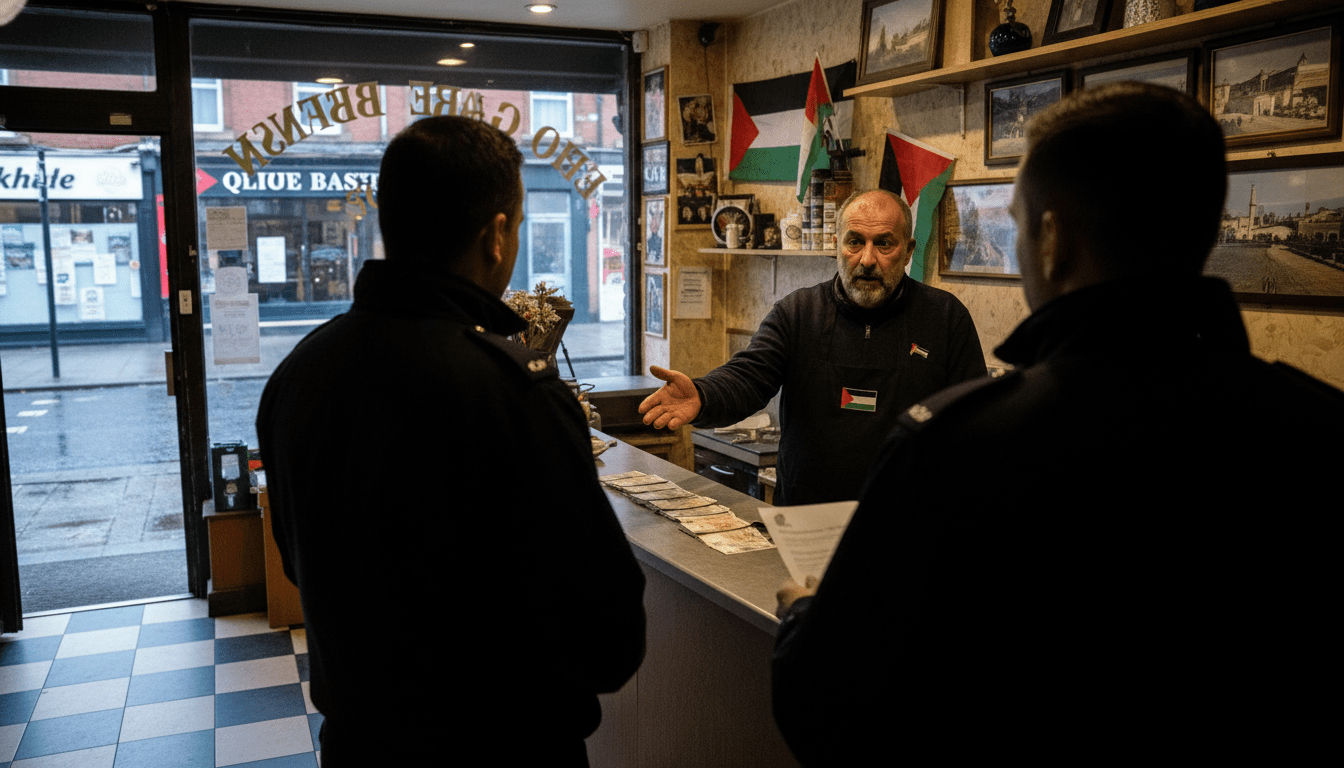
A Manchester cafe owner has accused police officers of offering financial incentives and promises of leniency in exchange for information about Palestine Action, saying the approaches occurred when he went to retrieve devices seized after his arrest. The allegation, made by Shams Sadiq, centers on a meeting at Ashton-under-Lyne Police Station on 15 May and involves claims that officers asked to speak with him “man to man.”
Allegation of inducements
A Manchester business owner, who runs two cafes, says he was told police would reward him if he supplied intelligence on Palestine Action members and activity. He alleges the offers were made while officers were returning electronic devices taken when he was arrested last year on offences said to be linked to the proscribed group.
Sadiq described the encounter as unexpected and said he felt pressured by the framing of the conversation and the nature of the proposals. He has not presented documentary evidence of any payment offers publicly, and his account has not been independently verified.
Details of the county‑line arrest and seized devices
Sadiq’s arrest took place in 2025 during an inquiry into alleged links with direct action attributed to Palestine Action, according to his account. He said officers retained phones and other electronic equipment, which he later sought to recover from the police station.
When he attended the Ashton-under-Lyne station on 15 May to collect the property, he says two officers separated him from other staff and initiated a private discussion about informing. The devices at the center of the visit remain central to Sadiq’s narrative about why the inducement was made.
Palestine Action proscribed and legal penalties
Palestine Action was placed on the list of proscribed organisations in 2025 after a high-profile breach of a military air base, a move that criminalised membership, support and assistance to the group. Under the ban, individuals found to be members or supporters can face significant custodial sentences, with some offences carrying penalties of up to 14 years’ imprisonment.
The proscription aims to deter direct action that threatens national security or public order, but it has also produced heightened policing activity and legal scrutiny of associated protests and campaigns. That legal backdrop is central to why intelligence-gathering and informant approaches carry acute consequences for those accused.
Procedural concerns and oversight implications
If substantiated, offers of payments or informal leniency in return for information would raise questions about appropriate police procedure and oversight. Police services operate under strict rules about handling informants, financial incentives and the integrity of criminal investigations.
Legal experts say any inducement that could amount to coercion or improper promises would likely be examined by independent oversight bodies, though whether a formal complaint or probe has been opened in this case has not been disclosed. Sadiq’s account highlights the tension between proactive intelligence gathering and safeguards for suspects’ rights.
Community reaction and local context
Sadiq is a known local business owner in Manchester, and his claims have resonated within sections of the local community who follow developments around Palestine Action and police conduct. Community members sympathetic to campaigners say allegations of recruitment or improper inducements could chill political expression and fuel distrust.
At the same time, residents who emphasise law-and-order priorities point to the proscription and the need for policing to prevent breaches of secure sites. The clash of perspectives underscores how policing tactics around proscribed groups can become a flashpoint in local debates.
Next steps and verification
Sadiq’s statement forms part of a broader public discussion about policing, informants and how authorities engage with suspected networks linked to proscribed groups. He has recounted the meeting and its timing, but independent corroboration, such as formal records, body-worn camera footage or an official police response, has not been made public.
In matters involving alleged offers of inducement, investigators and oversight bodies typically seek documentary or witness evidence before making findings, and any review would examine whether established protocols were followed. The presence of seized electronic devices and the nature of their return are likely to be recorded in police custody logs, which could be sources for further verification.
The allegations have renewed attention on how law enforcement balances intelligence priorities with legal and ethical obligations when pursuing information about proscribed organisations such as Palestine Action.
