
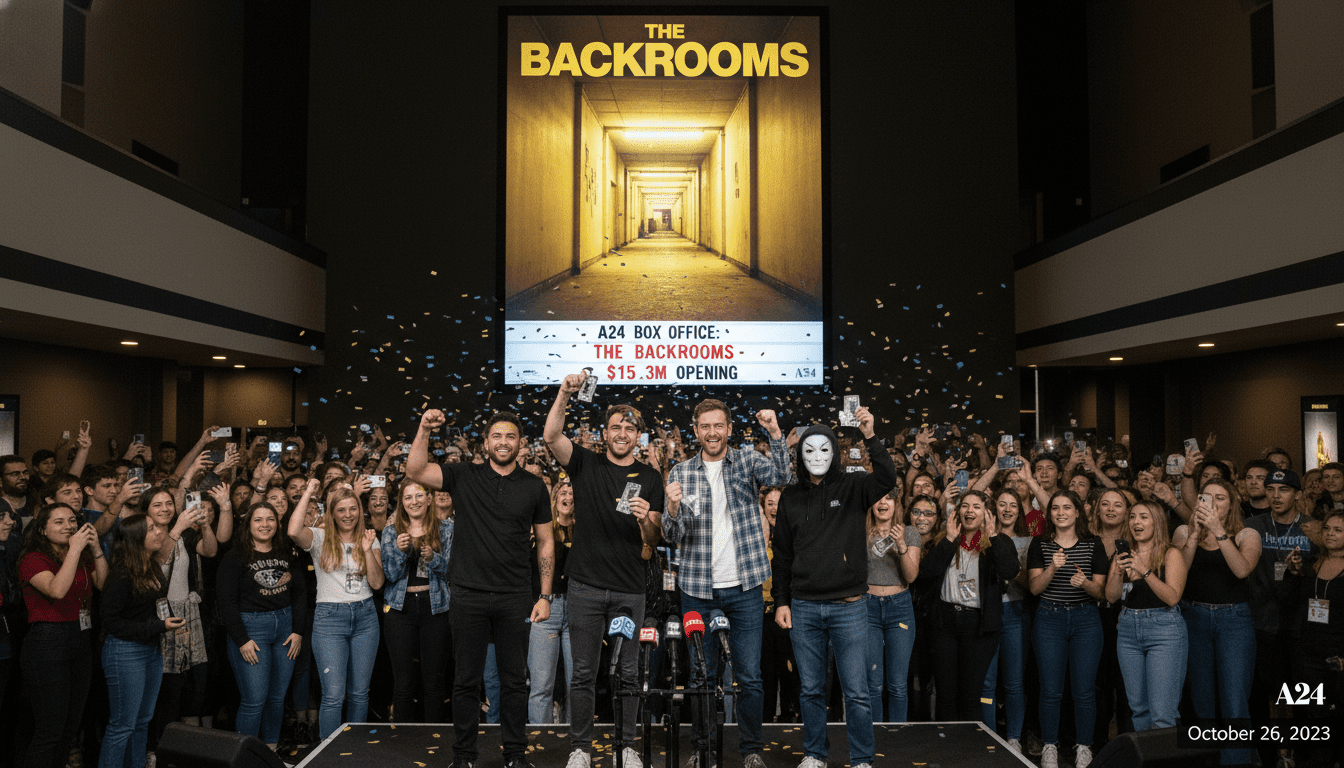
Backrooms’ Box-Office Surge Makes A24’s Biggest Opening as YouTube Directors Reshape Horror
YouTube-to-film transition drives Backrooms success, with the film topping box office charts and highlighting a shift toward creator-led horror releases.
The feature-length Backrooms, directed by Kane Parsons, opened at number one at U.S. cinemas this weekend, propelled by a strong $38 million Friday intake and projections that place its domestic weekend total between $80 million and $90 million. The film’s origin as a viral YouTube found-footage concept and its rapid box-office traction have made Backrooms a breakout phenomenon and set a new opening benchmark for indie studio A24.
Box Office Numbers and Records
Backrooms delivered a striking opening day and is on track to record A24’s largest debut to date, eclipsing the studio’s prior weekend leader. The projected weekend range of $80 million to $90 million would more than triple A24’s previous top opening, signaling a rare commercial performance for an indie-backed horror title.
The film’s revenue momentum came from widespread audience curiosity and the carryover of viral attention created by Parsons’ original online shorts. The scale of the opening has changed expectations for how small-studio releases can perform when they arrive with an established online audience.
Unusual Growth for Obsession
Trailing at number two, Obsession demonstrated an atypical box-office trajectory by expanding its weekend grosses rather than declining. The romantic-wish-gone-wrong horror made roughly $8 million on the most recent Friday and is estimated to total about $28.5 million over the weekend, benefiting from sustained word-of-mouth.
Industry observers noted that Obsession’s cumulative receipts rose in both its second and third weekends, a pattern almost unheard of outside holiday releases. Such repeated weekly growth suggests strong audience engagement and a widening footprint in multiplexes beyond the film’s initial release window.
YouTube as a Talent Pipeline
This weekend’s results contribute to a broader pattern: a growing number of filmmakers who first built audiences on YouTube are translating that attention into mainstream theatrical success. Backrooms and Obsession join Iron Lung — directed by YouTuber Mark Fischbach — as recent examples of creator-led projects achieving significant box-office returns.
Executives and programmers have pointed to creator longevity on the platform as a differentiator. Directors who have spent years producing short films, serialized content, and live streams have developed committed followings that convert into ticket sales when their projects reach cinemas.
Profiles of Breakout Directors
Kane Parsons, the 20-year-old filmmaker behind Backrooms, adapted his viral videos into a feature that amplifies the unsettling, liminal atmosphere of the original found-footage conceit. His ability to expand a short-form concept into a full-length narrative has been central to the film’s appeal.
Curry Barker, who directed Obsession and previously released a longer found-footage piece on YouTube, has similarly parlayed an internet audience into theatrical momentum. Mark Fischbach, known online as Markiplier, demonstrated the same pathway with Iron Lung, which proved that video-game adaptations directed by creators can reach sizable audiences.
Industry Reaction and Studio Implications
Studios and distributors are taking note of the commercial viability of creator-driven horror, and A24’s record-setting opening with Backrooms will likely sharpen interest in scouting digital-native talent. The films’ performances have prompted conversations about marketing strategies that leverage creators’ social platforms alongside traditional campaigns.
At the same time, industry analysts caution that not every online star will achieve equivalent box-office returns; success appears linked to a combination of sustained audience relationships, genre fit, and the capacity to expand short-form ideas into longer narratives. For studios, the calculus now includes assessing which creators possess the storytelling range required for theatrical formats.
What This Means for Horror Cinema
The current weekend’s results underline a potential reshaping of horror’s talent pipeline, where grassroots digital followings feed theatrical demand. The genre has historically benefited from low production costs and strong fan communities, and the rise of creator-driven features may extend that advantage.
If Backrooms and Obsession sustain long-term box-office legs, their performances could encourage more collaborations between indie labels and digital creators, producing a steadier stream of lower-budget, high-impact horror films. That shift would broaden the sources from which studios acquire new IP and reframe how distributors evaluate audience reach.
The box-office outcomes this weekend do more than reward two films; they offer an early indicator that a new generation of filmmakers who honed their craft online can cross into mainstream cinema with commercial and cultural impact.
