
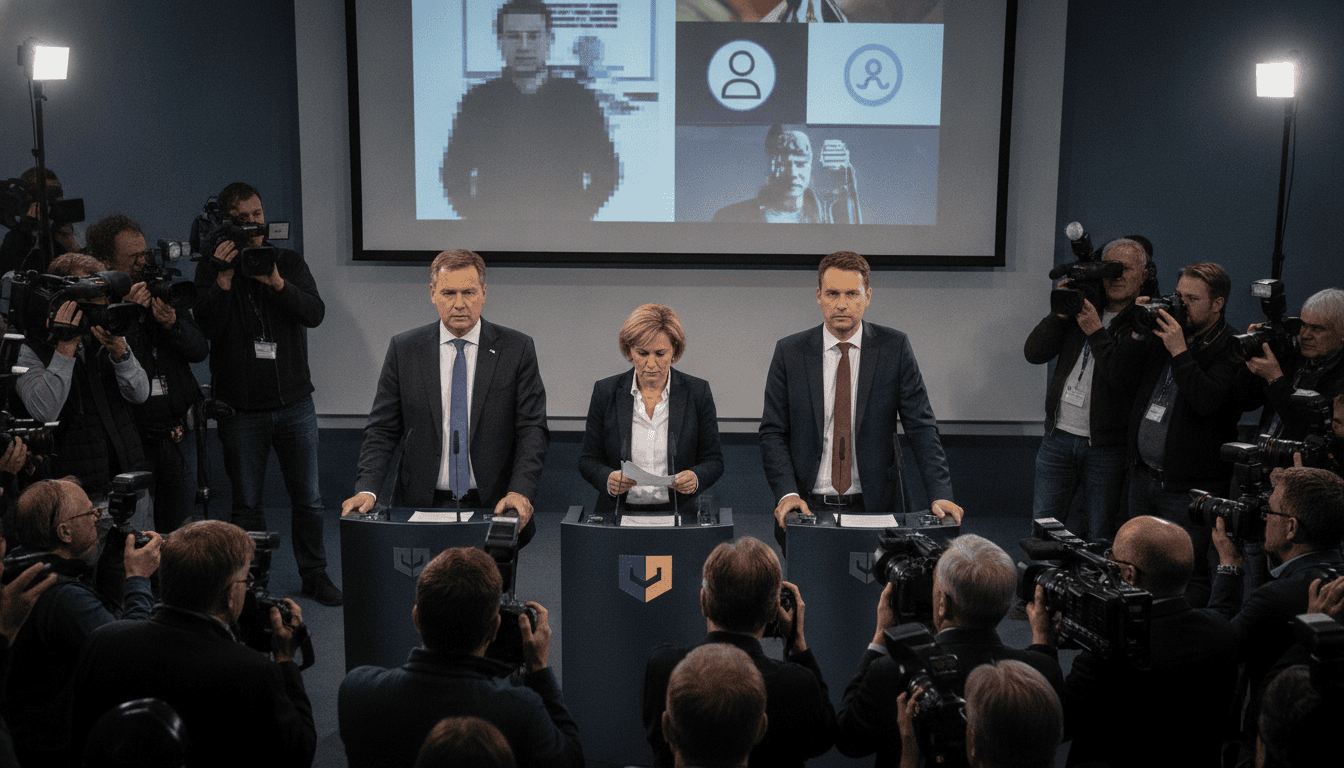
Disinformation campaign targets Sachsen-Anhalt election candidates with fabricated videos on X
Short, dramatic videos on X spread false accusations against Sachsen-Anhalt candidates, using single-frame inserts and fake news logos to mislead voters.
A coordinated disinformation campaign has surfaced on the social network X ahead of the Sachsen-Anhalt state election, circulating short videos that make grotesque and demonstrably false allegations against local candidates. The clips allege crimes ranging from murder to the sexual exploitation of minors, and they pair those claims with music, staged freeze-frames and the visual trappings of established news brands. The campaign’s format and tactics signal a deliberate effort to manipulate voter perceptions during a sensitive pre-election period.
Allegations presented in short-form clips
The videos, each under a minute in length, present stark accusations against candidates from multiple parties, naming individuals and showing photographic images alongside dramatic soundtracks. One clip claims a candidate murdered elderly people to seize their properties, while another accuses a different politician of recruiting minors to secret parties involving sex and cocaine. The brevity and intensity of the clips are designed for rapid sharing and immediate emotional impact.
Use of legitimate news branding to imply credibility
Each video displays the logo of a recognized outlet at some point, with clips featuring insignia that resemble Süddeutsche Zeitung, Bild, FAZ, Welt, Spiegel TV and other national publications. The appropriation of these brand marks appears intended to confer a veneer of journalistic authority on content that lacks verification. By visually borrowing trusted brands, the videos make it more difficult for casual viewers to immediately judge the material’s authenticity.
Subliminal single-frame smear against the CDU
Analysts reviewing the footage have noted a recurring technique: a near-instantaneous single-frame insert that flashes an inflammatory message — for example, a claim that “100% of CDU members are paedophiles.” The frame is displayed for only milliseconds, too brief for normal conscious perception but long enough to register subliminally for some viewers. Such micro-insertions are a recognized manipulation technique and raise ethical and legal questions when used to smear political actors.
Seven clips identified and shared on X
Journalists have catalogued at least seven distinct clips circulating on X that share the same stylistic features: short runtime, dramatic music, repeated stills of candidates and the insertion of brand logos and single-frame messages. Several of the films pause on an almost identical still image repeatedly, a pacing choice that amplifies the sense of urgency and drama. The uniformity across the clips suggests a coordinated production and distribution effort rather than isolated instances of individual mischief.
Risks to the electoral process and public trust
Political operatives and digital-safety observers warn that such content can distort public debate and undermine trust in legitimate reporting ahead of an election. False personal accusations are particularly damaging because they can spread quickly and be difficult to fully retract or correct once widely shared. The combination of sensational allegations and visual cues of credibility heightens the risk that voters will accept falsehoods at face value, complicating the information environment during a campaign.
Platform responsibility and verification challenges
The emergence of these films on X underscores the persistent challenge social platforms face in policing false and harmful political content at scale. Short-form, rapidly shared videos with manipulated audio-visual elements are harder to moderate than text posts, and single-frame techniques are easily overlooked by moderation systems and users alike. The situation highlights the need for faster verification, clearer labeling of manipulated material and more robust reporting channels ahead of critical voting dates.
The videos also illustrate how bad actors adapt familiar tropes — music, arresting imagery, trusted logos — to create material that looks authentic while being fundamentally deceptive. That adaptability complicates responses from election authorities, parties and platforms, who must weigh the urgency of removal against robust processes for identifying falsehoods without suppressing legitimate speech.
Political campaigns confronted with targeted disinformation face difficult choices about rebuttal strategy and legal recourse. Rapid, transparent rebuttals and evidence-based fact checks can blunt the harm, but the viral lifecycle of short videos often outpaces corrections. In the weeks before the Sachsen-Anhalt vote, campaign teams and civic groups will likely need to prioritize voter education on media literacy and offer clear channels for reporting suspected manipulation.
Public authorities, media organizations and technology platforms all have roles to play in countering this form of election interference. Clearer provenance labeling for political content, faster takedown processes for demonstrably false material, and public advisories from trusted institutions can reduce the chance that fabricated accusations influence voting decisions. Observers say those measures are increasingly urgent as political actors harness micro-format media to spread targeted smears.
The appearance of these fabricated clips — combining sensational accusations, stolen brand imagery and subliminal inserts — is a reminder that disinformation campaigns continue to evolve, exploiting new formats and fragile attention spans to sway public opinion. Ensuring a fair and informed election will depend on coordinated action from platforms, media, political actors and the public to expose falsehoods and uphold standards of truthful public discourse.
