
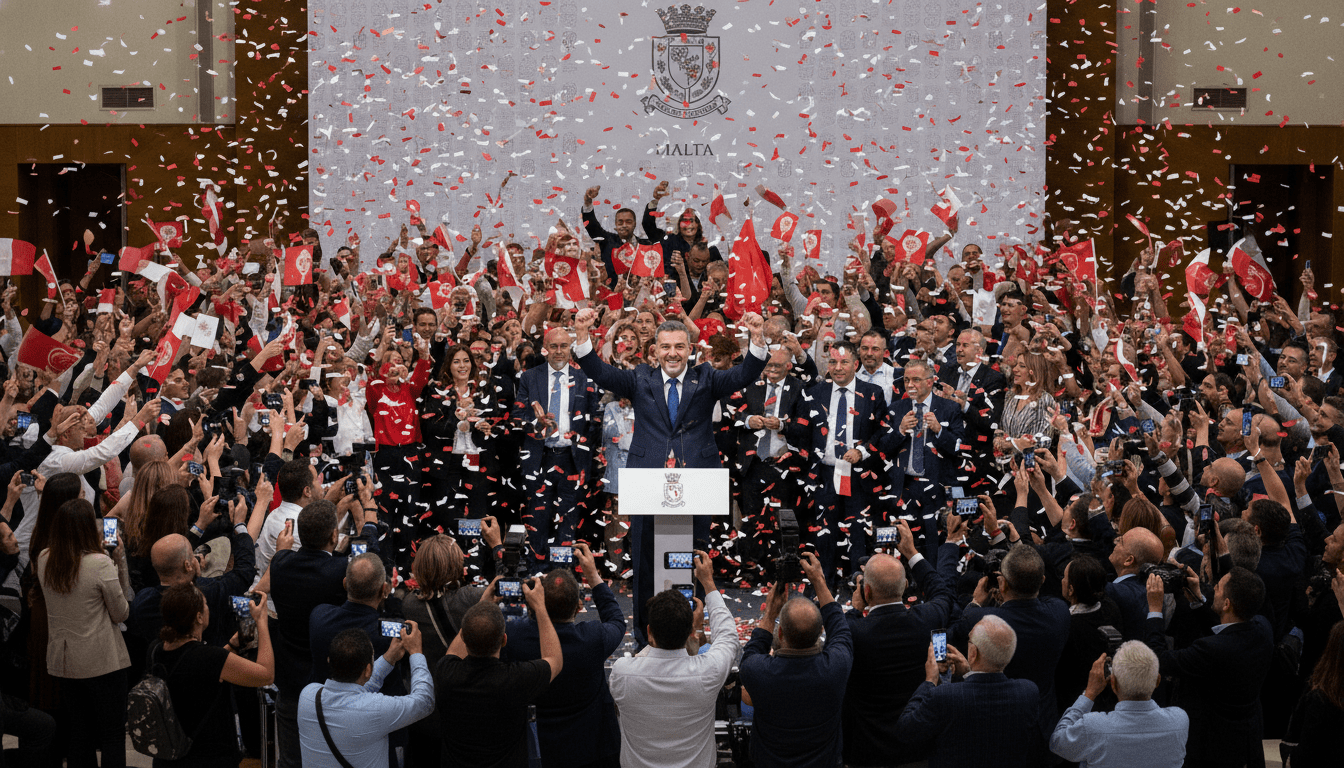
Malta election: Labour declares historic fourth consecutive win as counting continues
Malta election sees Prime Minister Robert Abela’s Labour Party declare a fourth straight victory after early tallies showed a lead over the Nationalist Party, with official results still pending. (marketscreener.com)
Labour claims historic fourth consecutive victory
Prime Minister Robert Abela told television viewers his party had “made history” after agents reported a clear lead in parliamentary vote tallies, and Labour officials moved swiftly to declare victory. Early returns indicated Labour had secured a winning margin large enough for party representatives to celebrate while final counts were still under way. (marketscreener.com)
Opposition leader Alex Borg concedes and urges unity
Nationalist Party leader Alex Borg posted a video message saying he had called Abela to concede and wished the new government well, adding that the public’s decision must be respected. Borg framed the result as a setback for his party but urged supporters to look ahead rather than dwell on defeat. (maltatoday.com.mt)
Counting continues and turnout reported at 87.4 percent
Officials and party observers cautioned that the count was incomplete and the definitive allocation of seats would only be confirmed once all ballots and any transfers were processed. Early official figures circulating in the press put turnout at about 87.4 percent, slightly higher than the previous general election. (marketscreener.com)
Abela called snap vote citing geopolitics and energy concerns
Abela moved to call the election late in April — several months before the end of the parliamentary term — arguing that mounting geopolitical risks and potential energy pressures required a fresh mandate for his administration. Critics had suggested the timing also carried political calculation, but the government defended the decision as necessary to preserve continuity and stability. (en.wikipedia.org)
Campaign centered on economic stability, low unemployment and infrastructure
Labour ran on a platform stressing sustained economic growth, record-low unemployment and stewardship through possible energy disruptions, casting the party as the safer choice for continuity. The Nationalists emphasized infrastructure upgrades and reducing reliance on foreign labour, turning migration and public services into central points of contention. Observers noted the margin appeared narrower than Labour’s commanding result in 2022, setting up debate about how the government will interpret its mandate. (primeminister.gov.mt)
Population density and labour market shifts factored into voter concerns
Malta’s status as one of Europe’s most densely populated countries has magnified debates about housing, public services and the role of foreign workers in the economy, issues that figured prominently in party messaging. Population growth in recent years — driven in part by rising numbers of foreign workers — has intensified pressure on infrastructure and services, a backdrop that shaped the tone of the campaign. (en.wikipedia.org)
The immediate task for the incoming government will be to translate the election outcome into a working parliamentary majority once final tallies and any seat adjustments are certified; until then, Abela has said he intends to govern for all citizens and to pursue the economic and energy priorities he set out during the campaign.
