
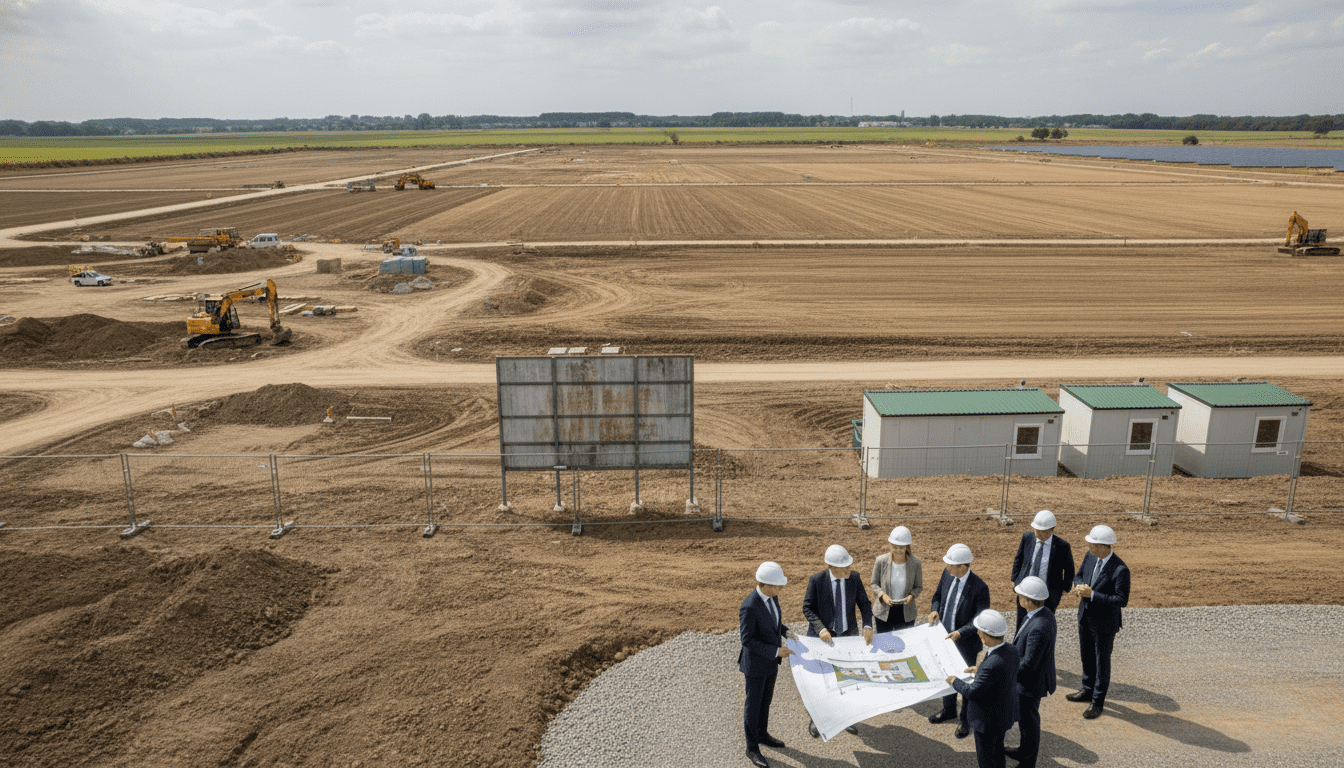
Intel chip factory in Magdeburg site will take years to repurpose, state says
Magdeburg’s Intel chip factory site will take years to redevelop; the state cites contract, financing and planning hurdles while the city moves to buy parcels and pursue a 1,100-hectare high-tech park.
The state government of Saxony-Anhalt warned that the former Intel chip factory site in Magdeburg will not be available for new occupants for several years, Finance Minister Michael Richter said. The delay follows Intel’s cancellation of its planned chip factories, and the state cited the need to negotiate contracts, secure financing and complete planning as key obstacles. Magdeburg has already begun buying parcels and is pursuing a long-term high-tech park for the area.
State expects lengthy reuse process for former Intel site
Saxony-Anhalt officials say legal and financial steps must come first before the former Intel land is offered to new companies. Finance Minister Michael Richter told regional authorities that negotiations over contracts and funding arrangements are necessary and that these processes could extend the timeline significantly. Officials declined to give an exact timetable but indicated the site will not be immediately ready for large-scale industrial occupancy.
The assessment reflects the complexity of converting a site prepared for a single, very large investor into a multi-tenant industrial park. Infrastructure, environmental assessments and municipal approvals will all have to be revisited to suit new developers and different types of manufacturing. State and local leaders say those procedures are unavoidable if the region is to attract stable, long-term investment.
Magdeburg buys additional parcels and aims to regain control
The city of Magdeburg has acted to secure parts of the former Intel footprint and announced in May 2026 that it purchased additional parcels of the site. Municipal authorities said the buyback is intended to give the city greater control over future land use and to prevent speculative ownership from slowing redevelopment. The exact purchase price was not disclosed; Richter described the transaction as a fair deal for the municipality.
City leaders signaled they will continue to acquire remaining parcels as opportunities arise, but they are not yet full owners of the entire area originally slated for Intel. Holding parts of the site allows Magdeburg to shape zoning, infrastructure planning and outreach to potential investors as they negotiate future uses.
Region retains plan for 1,100-hectare high-tech park
Despite Intel’s withdrawal, Saxony-Anhalt and local authorities still plan a high-tech industrial park covering roughly 1,100 hectares around Magdeburg and two neighboring municipalities. The concept aims to attract a mix of semiconductor-related suppliers, data-center hardware producers and other technology firms. Officials said the long-term vision of clustering advanced manufacturing and research remains a central economic development objective.
Planners emphasize that the park’s purpose has broadened from serving a single dominant operator to accommodating multiple companies and smaller-scale factories. That shift could lengthen the time needed to realize the project but may also reduce dependency on one major investor and diversify the region’s industrial base.
FMC identified as a leading candidate, decision due in late summer 2026
Magdeburg officials are pursuing specific manufacturers for the site, naming FMC — a company that has publicly discussed producing chips for AI data centers — as a leading potential tenant. Authorities said they expect clarity about FMC’s plans by late summer 2026 and are in parallel discussions with the federal government and the European Commission about possible support mechanisms. Richter also indicated there are at least three other interested parties, though he did not identify them.
City and state negotiators are focusing on matching site readiness to the technical and financial requirements of prospective firms. That includes considering utility capacity, land subdivision, and the speed at which factory buildings could be permitted and constructed if approved.
Funding, subsidies and contracts remain unresolved
A critical factor in the site’s future is financing. Intel had originally been expected to invest roughly $20 billion, in addition to state-backed aid that would have amounted to about €9.9 billion, a combination of private capital and public support that shaped the original project’s scale. With Intel’s abandonment of the plan, local and federal officials must now reassess what forms of subsidy or credit would be appropriate to attract alternative investors.
The state is engaging with the federal government and the EU on potential financial frameworks for new occupants, Richter said, but nothing has been finalized. Any package would need to balance regional development goals with EU state-aid rules and fiscal constraints at national and regional levels, making the approval process potentially protracted.
Economic ripple effects and regional stakes
The cancellation of Intel’s investment had already prompted concern among local businesses and political leaders about lost jobs and slower growth. Officials now frame the challenge as an opportunity to build a more resilient, diversified industrial base if they can retool the site effectively. Economic development agencies stress the importance of maintaining momentum to avoid long-term blight or speculative land use.
Stakeholders say success will depend on aligning municipal land purchases, state planning, federal funding instruments and the technical requirements of new tenants. That alignment will be tested over the months ahead as Magdeburg seeks to translate the high-tech park vision into concrete contracts and investments.
Magdeburg and Saxony-Anhalt officials say they are pursuing several parallel tracks — land acquisition, investor negotiations and funding talks — and that a coordinated outcome remains possible, though not immediate.
