
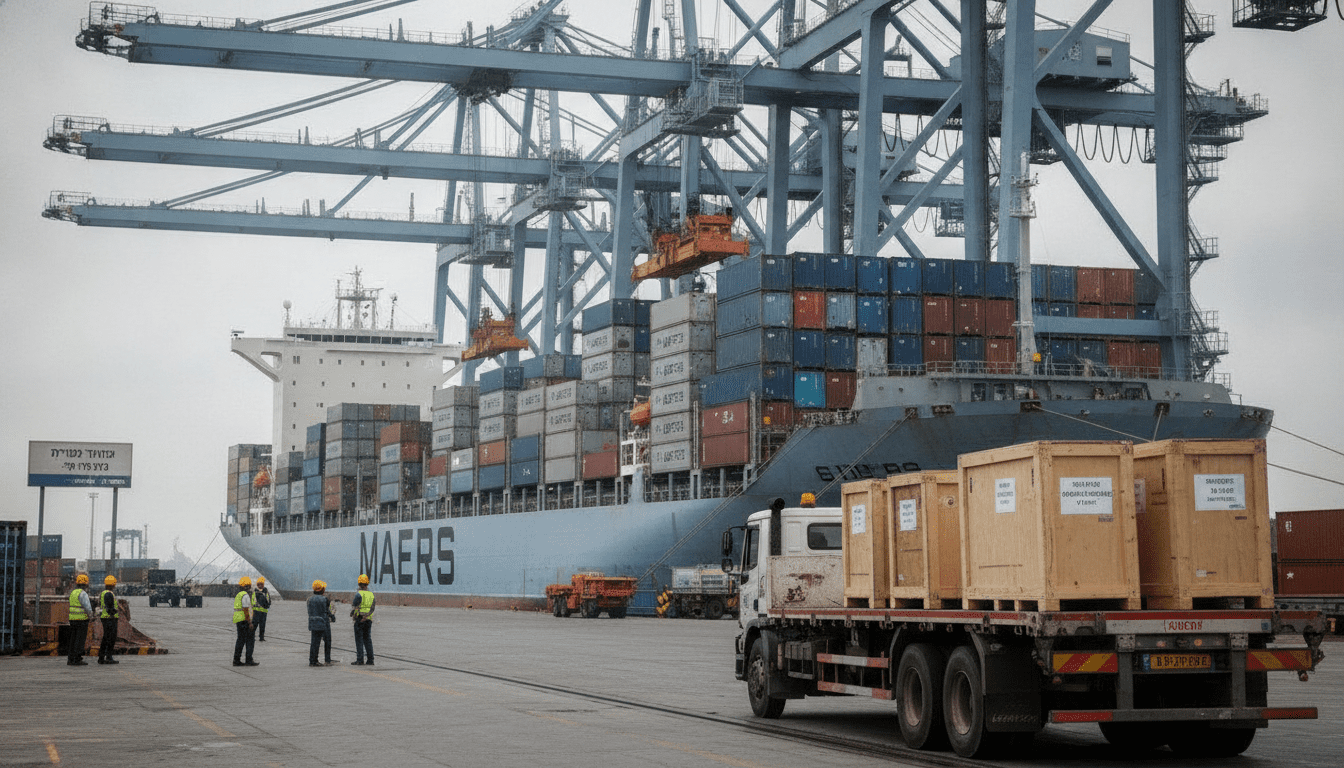
Report: Maersk accused of shipping rifle and bomb components to Israel, NGOs say
New report alleges Maersk shipped rifle, pistol and bomb components to Israel, sparking NGO demands for an immediate halt, investigations and accountability.
Danish shipping giant Maersk is facing fresh allegations that it continued to transport small-arms components and bomb casings to Israel, a report by the Palestinian Youth Movement and Oxfam Denmark published Monday contends. The report, central to the #MaskOffMaersk campaign, says shipping records show Maersk vessels moved rifle and pistol parts, bullet cores and bomb bodies — material the investigators link to weapons used in Gaza and Lebanon. The NGOs contend the shipments continued despite Maersk’s public assurances last year that it would not ship weapons to Israel.
Alleged shipments and investigators’ claims
The investigation draws on bills of lading and shipping documentation to map a sustained flow of components to Israeli defence firms, the report says. It identifies consignments from nine US suppliers and one Indian firm bound for Elbit Systems and IMI Systems, now part of Elbit, between October 2023 and July 2025. The authors assert that the components include cartridge cases for 5.56 mm and 7.62 mm rounds and casings for large MK-84 bunker-buster bombs.
Quantities, suppliers and routes detailed
According to the report, more than 1.42 million kilograms of bullet cores and brass case cups were transported from facilities in New York, Missouri and Michigan to IMI over the specified period. The investigation names US firms including General Dynamics and Elbit Systems of America as suppliers of bomb casings and MPR-series munitions, respectively. It also lists manufacturers of mortar-system components and an Indian producer, Sri Kaliswari Metal Powders, as a supplier of aluminium powder used in explosives, all allegedly moved aboard Maersk vessels.
Maersk’s public statements and corporate controls
Maersk told news outlets that from the outset of the conflict it has a strict policy against shipping weapons or ammunition to Israel and that it has tightened screening and compliance measures. The company says its processes follow EU, US and Danish export controls, the Wassenaar Arrangement and International Traffic in Arms Regulations, and that it has enhanced acceptance procedures as the conflict escalated. Previously, Maersk said it was reassessing work with companies linked to Israeli settlements and argued that some supply chains, such as F‑35 components, are managed by coalitions of partner countries.
Campaigners’ demands and boycott push
Campaign organisers, led by the Palestinian Youth Movement’s international coordinator Nadya Tannous, say policy statements are insufficient and called for immediate operational changes at Maersk. The report demands that Maersk halt small-arms shipments to Israel, conduct robust human rights evaluations across its operations, and cease activities that materially support Israeli military action or face allegations of complicity. Tannous and other activists have framed the effort as part of broader corporate accountability work aimed at firms they say have facilitated the military campaign in Gaza.
Protests, international scrutiny and legal context
Maersk has been the focus of repeated demonstrations at its Copenhagen headquarters over the past two years, and its activities have drawn sustained scrutiny from pro-Palestine activists across Europe. The report cites prior actions and regulatory responses, such as Spain’s May 2024 ban on using its ports for military cargo to Israel. It also references UN-era reporting and human rights work that have scrutinised companies involved in the occupied West Bank and warned of business links to human rights violations. The NGOs’ findings are presented against casualty figures from Gaza’s health authorities that the report cites to underscore urgency.
The shipping company responded to requests for comment by reiterating its commitment to compliance with international law and noting enhanced screening measures; it did not accept the investigators’ allegations. Campaigners say that neither the company’s publicly stated policies nor prior reassessments have translated into the material changes they seek.
The new report is likely to intensify calls for independent investigations and may increase pressure on ports, insurers and commercial partners to reassess their relationships with logistics firms named in allegations. Maersk and the NGOs now stand at a crossroads where commercial practice, export controls and human rights scrutiny intersect, and the coming weeks will show whether the shipping giant changes its operational controls or faces expanded activism and regulatory attention.
