
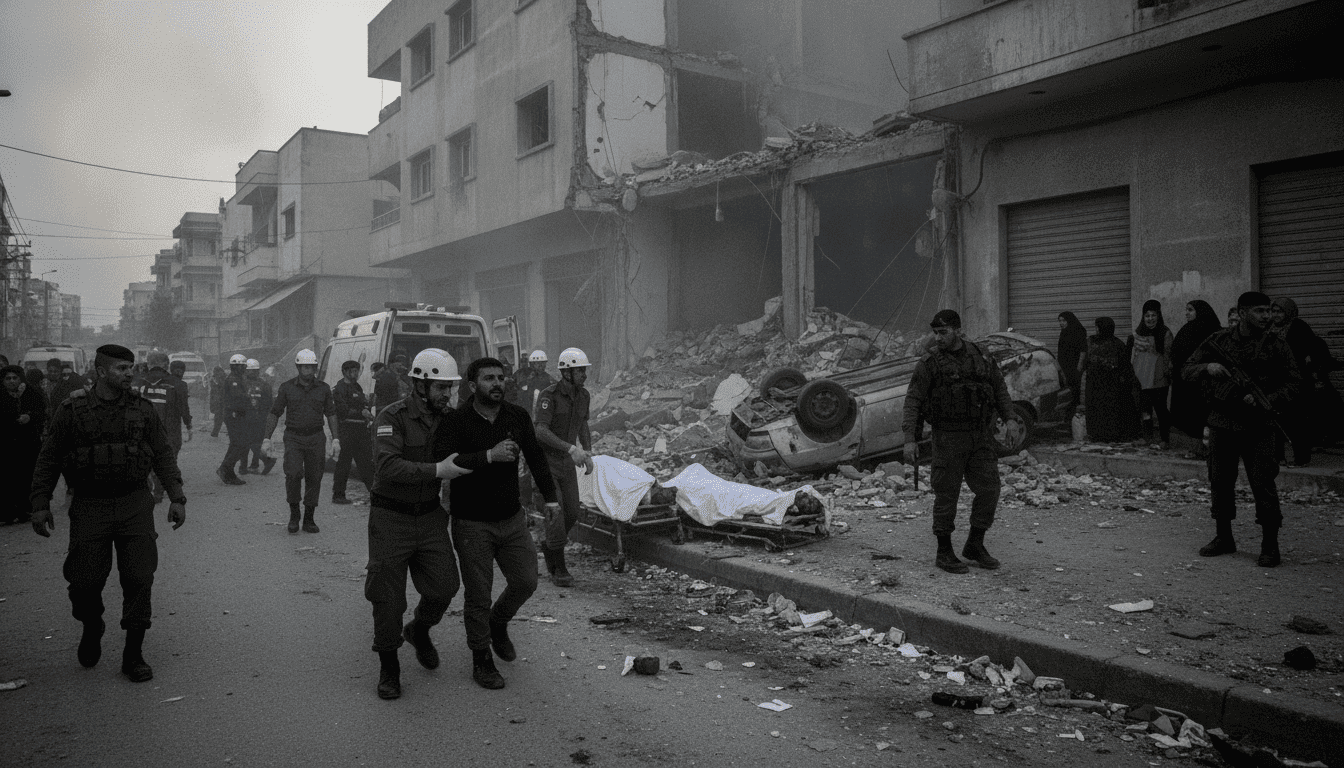
Israeli raid on Saksakiyeh kills two, wounds 22 including three children — Lebanese health ministry
Lebanon’s Health Ministry reported that an Israeli raid on Saksakiyeh on June 6, 2026, killed at least two people and wounded 22, including three children and a woman.
The Health Ministry provided the casualty figures after the strike on the town of Saksakiyeh in the Sidon district, saying the attack occurred on the morning of Saturday, June 6, 2026. Officials did not immediately release the identities of the dead or wounded, or provide details about the circumstances of the strike. The ministry’s statement was the primary source of information available to reporters in Beirut and local media outlets at the time.
Fatalities and Injuries Reported
The Health Ministry said two people were killed in the raid and 22 others were wounded, specifying that three of the injured were children and one was a woman. No further details were provided about the age ranges of the victims, their nationalities, or whether the fatalities were combatants or civilians.
Health officials gave no immediate breakdown of the severity of the injuries, or the locations where the wounded were taken for treatment. The ministry’s brief bulletin emphasized casualty totals but did not describe the weaponry used or the intended target of the strike.
Health Ministry Statement
Lebanon’s Health Ministry released the casualty numbers in a short statement posted on Saturday, June 6, 2026, that did not elaborate on the strike’s cause or responsibility beyond identifying it as an Israeli raid. The ministry’s communication focused on the human toll and urged authorities to investigate, according to the notice.
Officials in the ministry declined to answer follow-up questions from journalists seeking additional context, saying they were still verifying information on the ground. The ministry said it would provide further updates as more information became available.
Visual Evidence from Southern Lebanon
Photographs from southern Lebanon captured smoke rising over populated areas on June 6, 2026, with images showing plumes near Kfar Tibnit and other nearby locations. An AFP photograph widely circulated by news outlets depicted thick smoke over southern hilltops, underlining the intensity of overnight and early-morning bombardment in the region.
Those images, while not showing Saksakiyeh directly, were shared alongside reports of heightened military activity across parts of the Sidon district and neighboring areas. Visual material has been used by local journalists to corroborate accounts of strikes and to document damage to infrastructure in affected towns.
Local Authorities and Emergency Response
Local municipal officials in the Sidon district had not released detailed accounts of the strike by late Saturday, June 6, 2026, and several municipal offices were reported to be awaiting confirmation from national authorities. Requests for comment to municipal representatives and local emergency services went unanswered as teams prioritized on-the-ground response and victim care.
Local hospitals in the broader southern Lebanon region have periodically reported receiving casualties during cross-border incidents, but health facilities did not issue public tallies for this specific event at the time of the ministry’s announcement. Journalists working in the area said access to some sites remained restricted for safety reasons.
Security Context Along the Border
The raid on Saksakiyeh took place against a backdrop of recurring cross-border tensions between Israel and armed groups in southern Lebanon. Those tensions have periodically produced exchanges of fire, airstrikes and artillery incidents that have affected communities near the border, complicating civilian life in towns such as Saksakiyeh and Sidon.
Analysts and regional officials often point to the proximity of populated areas to military positions and the complex landscape of militias and state forces as factors that increase the risk of civilian harm during hostilities. Accurate attribution and independent verification of strikes in such environments can be difficult in the immediate aftermath.
Humanitarian Concerns and Civilian Impact
The inclusion of children among the wounded underscores continuing humanitarian concerns for civilians living near the front lines. Medical responders and relief organizations working in Lebanon have repeatedly warned that repeated strikes and insecurity erode healthcare capacity and heighten the vulnerability of displaced and resident populations.
Humanitarian observers say rapid and transparent reporting of casualties is essential to ensure appropriate medical care and to inform civilian protection measures. Calls for unfettered access for aid workers and medical teams typically increase following incidents that produce multiple casualties in populated areas.
Investigations are expected to follow the Health Ministry’s initial report, with further details likely to emerge as local authorities and national agencies compile accounts and examine evidence. International and regional actors often seek clarifications in the wake of such incidents, and media organizations will continue to monitor official statements and on-the-ground reporting for updates.
