
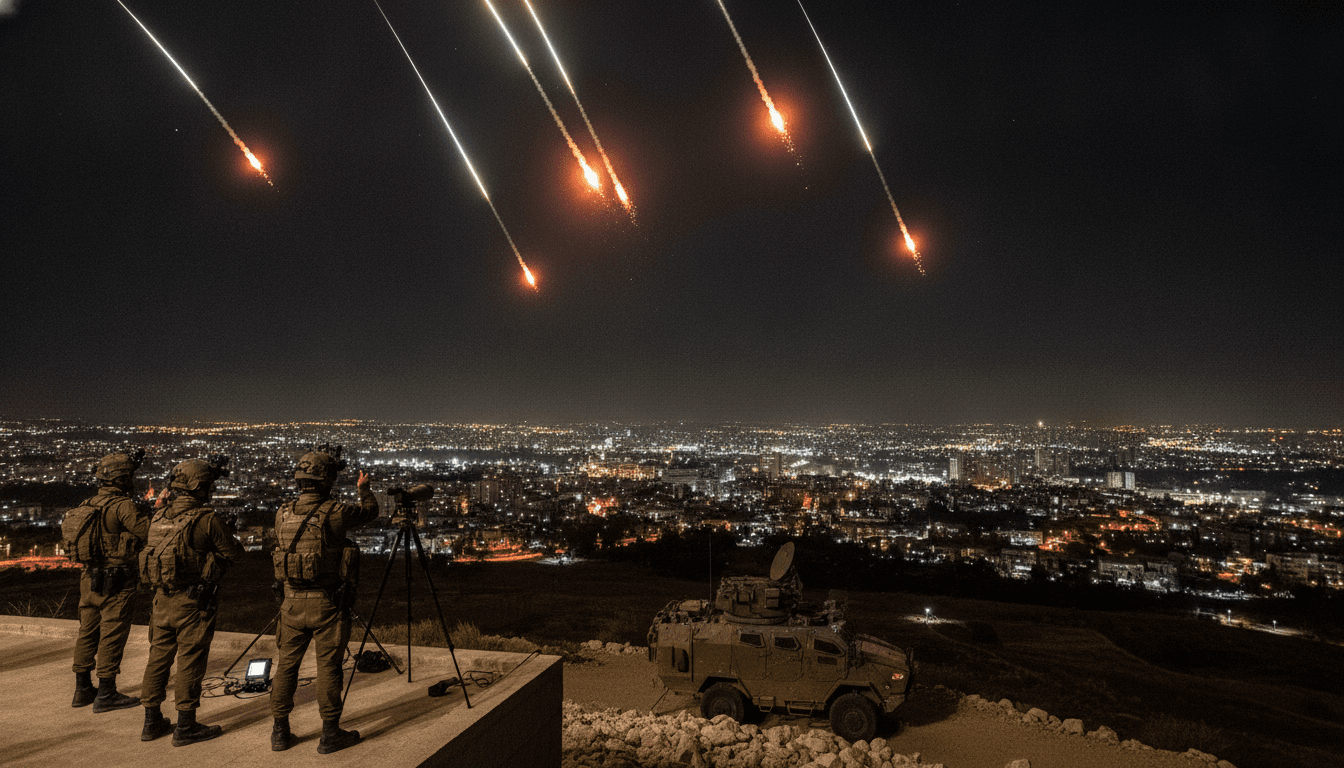
Israel Reports Rockets from Iran; Air Defences Engaged
Israeli military says rockets from Iran were identified targeting Israel, with air-defence systems deployed to intercept the threat as investigations continue.
Initial military statement
The Israeli military announced that rockets from Iran were detected heading toward Israeli territory and that national air-defence systems were activated to intercept them. The statement, released by military spokespeople, said the systems were responding to the incoming threat to protect population centres and infrastructure. Officials did not provide detailed figures on the number of projectiles or locations affected in the initial announcement.
Interception efforts under way
Military officials said interceptors were launched and air-defence batteries were operating to neutralize the rockets from Iran. Commanders described the response as focused on reducing risk to civilians and critical sites while assessing the trajectory and origin of the projectiles. At the time of the announcement there were no publicly confirmed reports of casualties or damage, as assessments were ongoing.
Attribution and evidence cited
The Israeli military attributed the launch to Iranian territory, citing trajectory analysis and intelligence assessments as the basis for that determination. The statement did not detail the specific intelligence used to reach that conclusion, and independent verification was not provided in the immediate aftermath. Analysts caution that attribution in such incidents typically draws on radar tracking, satellite imagery and signal intercepts, elements that militaries often withhold for operational reasons.
Regional security implications
An exchange involving rockets from Iran and Israeli interceptions risks raising tensions across the wider Middle East, where both state and non-state actors maintain active military postures. Past incidents have drawn swift political and diplomatic responses from regional capitals and could prompt further escalation if follow-up actions are taken. Governments and international observers are likely to monitor developments closely to assess whether the incident will affect ongoing security calculations.
Government and international reactions
At the time of the military announcement, senior Israeli officials had not released a broader political response, and there were no immediate public statements from Iranian authorities included in the military’s brief. International partners often call for de-escalation and verification in such cases, and intelligence-sharing between allies could play a role in clarifying what occurred. Diplomatic channels may be used to seek explanations and to prevent misunderstandings that could lead to further confrontations.
Next steps in the investigation
Israeli forces said investigations were continuing to establish the full circumstances of the launch and to determine whether more strikes were imminent. Military and intelligence agencies are expected to publish further details as they verify tracking data and assess damage or impact reports. Officials indicated that additional updates would be provided when more information is confirmed.
The situation remains fluid, with Israeli air-defence systems engaged and authorities assessing the scope of the incident, while regional and international actors watch for developments.
