
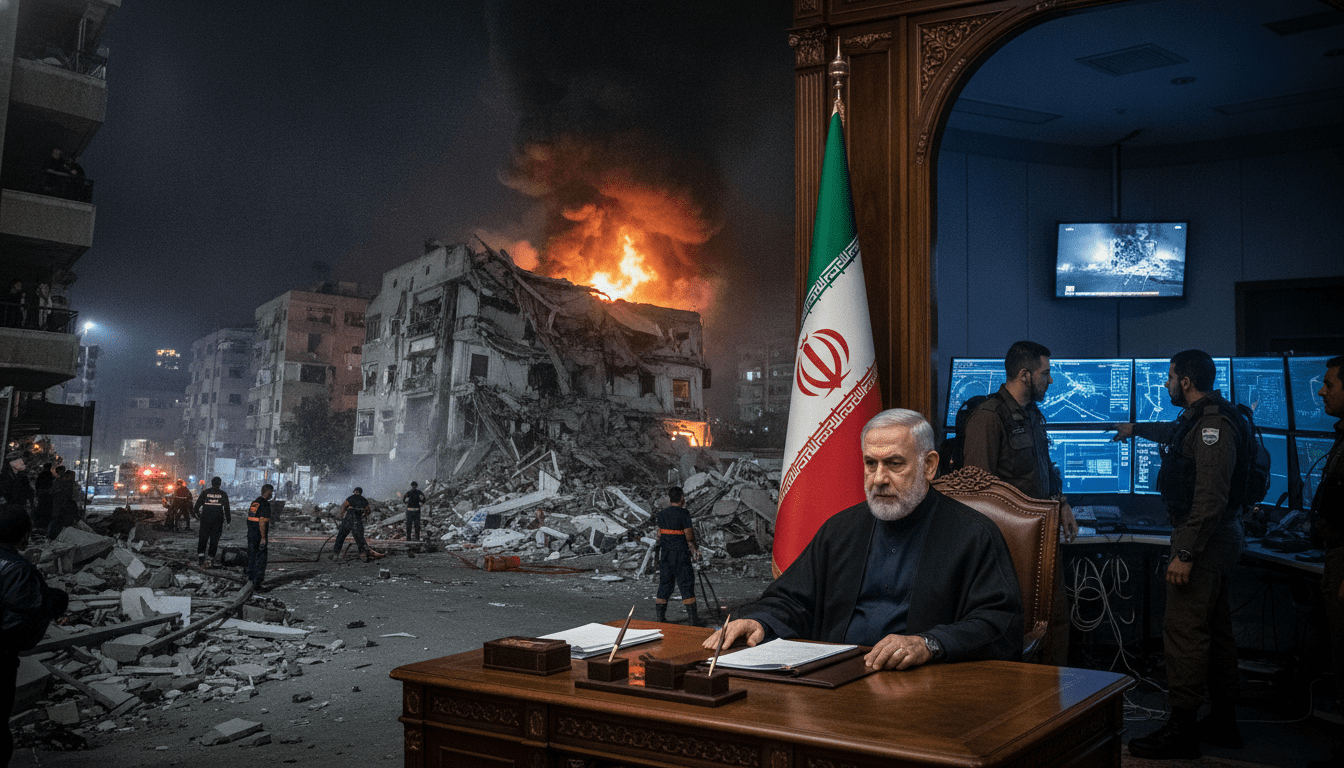
Israeli Air Strikes on Beirut’s Dahieh Follow Hezbollah Attacks, Killing at Least Three
Israeli air strikes on Beirut’s southern Dahieh suburbs killed at least three and wounded six, escalating tensions as Iran and its proxies exchange threats across the region.
Israeli warplanes struck the Dahieh district of Beirut early Sunday, the Israeli prime minister’s office said, targeting what officials described as “terrorist infrastructure” belonging to Hezbollah after the militia launched rocket fire into northern Israel. The joint statement from Prime Minister Benjamin Netanyahu and Defense Minister Israel Katz said the strikes were a direct response to attacks on Israeli territory and aimed at degrading Hezbollah’s operational capabilities. The operation marks a sharp intensification of cross-border exchanges that analysts say risk drawing regional backers further into the confrontation.
Targeted Areas and Israeli Military Claims
Israeli authorities said the air strikes focused on sites they identified as command-and-control and weapons storage facilities in the Dahieh suburbs, a Hezbollah stronghold south of central Beirut. The government framed the operation as a defensive measure taken in response to persistent rocket and missile salvos fired by Hezbollah units into communities along Israel’s northern frontier. Officials emphasized that the strikes were limited in scope but necessary to deter future attacks and to protect civilian areas inside Israel.
Casualties and Damage Reported in Beirut
Lebanese civil defence authorities reported at least three people killed and six wounded in the strikes, with emergency teams working at the scene to recover the injured and assess structural damage. Eyewitnesses and local sources said the building hit had housed offices linked to Hezbollah, and Lebanese media cited unofficial reports that an Islamist militia commander may have been targeted. Streets in parts of Dahieh bore the signs of blast damage, and residents described a pattern of intermittent sirens and military activity that has punctuated the enclave since the strikes.
Hezbollah Attacks Prompting Retaliation
Hezbollah acknowledged conducting strikes into northern Israel in recent days, saying its actions were in retaliation for what it described as Israeli provocations elsewhere on the frontlines. Israeli authorities say Hezbollah’s rocket fire placed civilian populations at risk and that the militia maintains a cross-border campaign to pressure Israel amid wider regional tensions. Military analysts note that both sides have calibrated strikes to signal resolve while seeking to avoid a full-scale war, but they warn that miscalculation or an intensified response could rapidly widen the confrontation.
Iranian Officialdom Questions U.S. Negotiations
The incident reverberated beyond Lebanon and Israel into Tehran, where Iran’s parliamentary speaker and chief negotiator Mohammad Bagher Ghalibaf publicly questioned the point of ongoing talks with Washington. Posting on social media, Ghalibaf said that if the United States lacked either the will or capacity to honor commitments meant to restrain allied proxies, continuing negotiations would be futile. Iran has tied aspects of any deal to a wider cessation of hostilities in the region, including a comprehensive halt to attacks in Lebanon, making the Beirut strikes politically consequential for diplomatic efforts.
Tehran and Israeli Foreign Ministry Trade Accusations
In response to Ghalibaf’s remarks, the Israeli Foreign Ministry dismissed Tehran’s claims and blamed Iran for empowering and directing Hezbollah’s campaign, calling the militia the proximate aggressor in the current round of exchanges. Jerusalem argued that attacks inside Israeli territory came from Iran’s proxies and accused Tehran of trying to insulate itself from responsibility by portraying Israel as the initial provocateur. The interplay of public accusations underscored how localized strikes are now being leveraged for broader diplomatic messaging between Iran and Israel.
Revolutionary Guard Threatens Retaliation
Iran’s Islamic Revolutionary Guard Corps issued a stern warning that the strikes on Lebanese territory would not go unanswered, a statement broadcast on state television that framed the Lebanese operation within Iran’s broader security imperatives. The Guard’s rhetoric signaled a readiness to respond if Tehran judged that its interests or those of allied groups had been materially harmed. Regional security experts cautioned that such public threats increase the risk of reciprocal action by Iranian forces or their proxies, raising the specter of collisions beyond the current Israel–Lebanon exchanges.
Diplomatic Fallout and Regional Risk Assessment
Diplomats from several capitals have voiced concern that the tit-for-tat exchanges between Israel and Hezbollah, combined with Iran’s vocal involvement, could complicate separate negotiation tracks and increase the likelihood of miscalculation. Washington has been positioned as a key interlocutor in efforts to de-escalate and in parallel talks tied to broader regional issues, but statements from Tehran suggest that any diplomatic package will be contingent on concrete steps to halt allied proxy activity. Analysts say that stabilizing the situation will require backchannels and restraint from all parties to prevent localized strikes from triggering a wider conflagration.
The strikes on Dahieh and the swift regional responses underline how fragile the current stalemate has become; as assessments and accusations circulate in capitals from Beirut to Tehran and Jerusalem, the risk remains that a single escalation may draw additional actors into an already volatile equation.
